How to Start a Glamping Business in 2026: A Complete Guide
Nature escapes are on the rise, but comfort still matters. A glamping business meets that demand, offering hotel-style comfort within the growing alternative accommodation sector.
But a pretty view alone is never enough to succeed. You need smart digital systems and real financial planning behind the scenes to win long-term.
Here is our simple, step-by-step business guide to help you plan, launch, and grow a unique outdoor hospitality site that truly lasts.
What Is a Glamping Business?
A glamping business blends camping with hotel-level comfort. Guests get real beds, private bathrooms, and stunning natural views.
It has moved past being a passing trend. A glamping business in 2026 is a serious, growing part of the travel industry.
Guests want to disconnect from daily life without giving up good sleep. A well-run glamping business delivers exactly that balance.
Why 2026 Is a Great Time to Start a Glamping Business
The global glamping market is projected to reach $4.2 billion in 2026, according to Grand View Research. A glamping business today is entering a market built for the long term.
Running a glamping business takes more than pretty tents and good views. It needs solid planning and steady daily habits.
Steady revenue comes to those who run their glamping business with corporate discipline. The operators who view it as a side project typically face consistent financial hurdles.
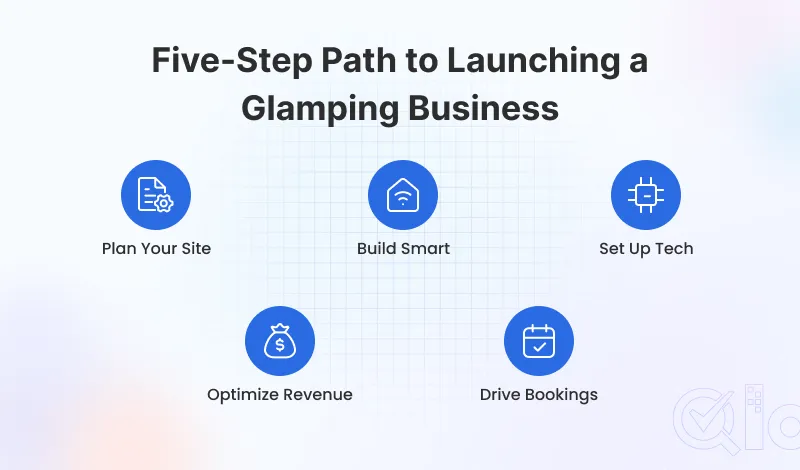
Your Five-Step Path to Launch
The phases matter because they stack together. You cannot successfully market a finished property without locking down your initial structure first.

Step 1: Plan Your Glamping Business Structure
Choose a scenic location with good road access and reliable utilities. These factors support both guest experience and daily operations.
The Cost vs. Lifespan Ratio:
- Canvas Tents: Cost ~$1,000 | Last 3 seasons
- Luxury Domes/Cabins: Cost $20k–$50k | Last 10+ years
Look into local rules before building. Get your pre-opening steps sorted early, starting with land permits, green lights, and proper insurance.
Zoning approval for a glamping business can take 6 to 18 months, since most municipalities lack a clear glamping rule. Lock down fire safety codes and liability insurance before you break ground.
Pro Tip: While built for traditional hotels, you can adapt this pre-opening checklist to map out your own compliance and launch timeline.
Step 2: Design Your Glamping Business the Right Way
Pick structures that survive your local weather. A warm pod works well in cold areas, and a glass lodge suits scenic spots.
Use natural land shapes to give guests privacy. Trees and distance work better than tall fences.
Plan water, power, and waste systems before you build a single tent. Many sites sit off-grid, so you may need a custom solar setup and septic system.
Step 3: Choose the Right Technology for Your Glamping Business
A good property management system keeps your glamping business organized. It handles bookings, housekeeping, and guest messages in one place.
Mighty Oaks Glamping in Devon, UK, faced this exact problem. They needed one system to manage bookings for their unique huts.
Standard software was too rigid for their non-standard layouts, so they chose QloApps. Its open-source code lets them customize the system to fit their unique huts.
They used it to run their booking website, manage payments, and offer discounts to guests. This helped them grow with less daily stress.
A direct booking engine also helps your business earn more. You avoid paying high fees to online travel agencies (OTAs).
Smart check-in tools save time too. Smart locks and automated messages welcome guests without extra staff.
Step 4: Manage Money and Seasons
Every glamping business sees busy summers and quiet winters. Plan your budget around this pattern early.
Use seasonal deals and pricing tools to keep rates competitive. This keeps your rooms full even in slow months.
A private hot tub is a simple way to drive high-value winter bookings for your business.
Build a savings buffer of three to six months of costs. This protects your glamping business from sudden repairs or slow seasons.
Step 5: Market and Grow Your Glamping Business
Check which unit types earn the most profit. Some structures cost more to fix than they earn back.
Optimize your website for local searches like “glamping near me.” This brings more guests straight to your glamping business.
Keep improving your site and service each season. Small updates build strong guest loyalty over time.
Key Takeaways
- Plan each structure in your business as its own small unit.
- Choose weather-ready designs and protect guest privacy naturally.
- Use one property system to manage bookings and staff work.
- Plan your budget around busy and slow seasons.
- Track profit by unit and improve your local search ranking.
Conclusion
A great glamping business always blends natural beauty with simple, smart automation tools. A great location creates interest, but strong operations create a sustainable business.
Successful real-world brands prove that this operational balance works perfectly. Good digital tools help any small outdoor retreat grow fast.
See how Mighty Oaks successfully grew its outdoor brand with QloApps. Read the full case study and start planning your own site today!
Get In Touch
Have questions about starting your glamping business? Our team is here to help you find the right solution.
Reach out to the QloApps team today. We will help you set up the right system for your property.
In case of any query, issue, or requirement, please feel free to raise it on the QloApps Forum