
Airbnb hit 2.5 billion all-time guest arrivals in 2026. Understanding what drives that number is actually one of the best things a hotelier can do right now.
The hotel vs vacation rental debate is not new. What is new is that travelers now have more choices than ever, and hoteliers need a clear answer on where they stand financially.
This blog breaks down which model makes more money and which one makes more sense when you are launching a new property.
What Is a Hotel Business Model?
Hotels earn money from more than just rooms. Dining, meetings, spa access and airport transfers are all things guests pay for without a second thought.
Labor and property costs are high. No one is going to pretend otherwise.
A hotel running at 70% occupancy with solid upselling and cross-selling can out-earn a vacation rental at 90% occupancy. The extra revenue streams make the difference.
What Is a Vacation Rental Business Model?
Vacation rentals include apartments, villas, and private homes. Guests book them for short stays.
A property management system helps owners automate operations and cut the need for daily supervision.
Running costs stay low since there is no large team or restaurant to maintain.
Yet, keeping it simple has a catch. Most property owners hit a wall much sooner than they think.
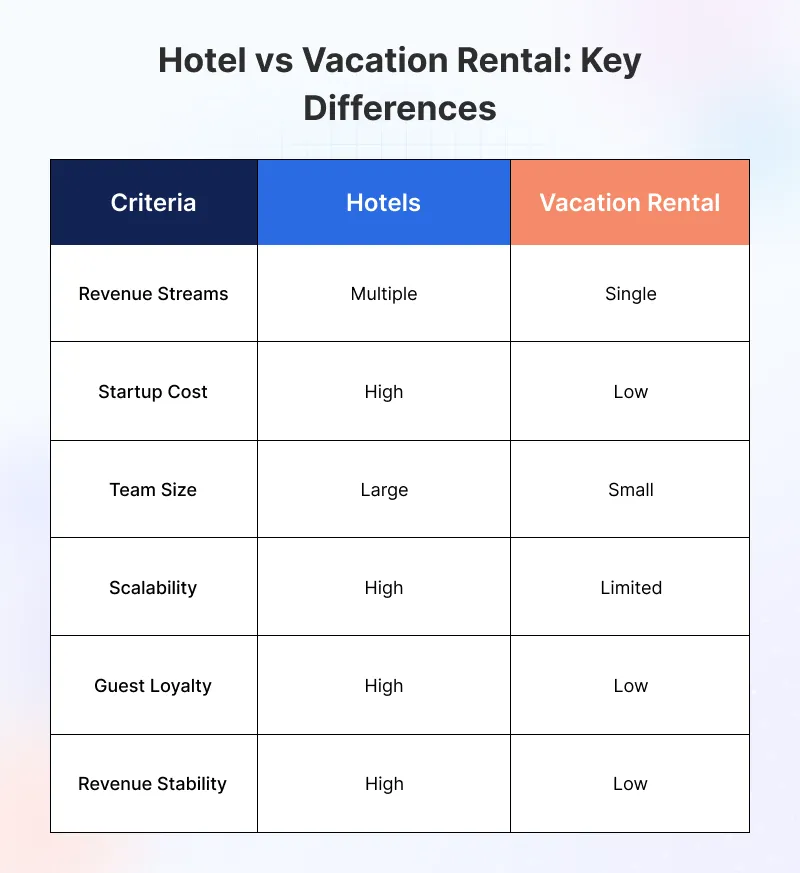
Hotel vs Vacation Rental: Key Differences
On the surface, one might assume the two models are similar because they both rent out rooms. They are not even close once you look at how each one actually runs.
Ownership and Operations
Hotels use big teams and standard operating procedures. Short-term rentals are often just one person juggling everything.
Revenue Streams
Hotels use smart hotel revenue strategies like dining and spa perks. A vacation rental relies only on the nightly booking rate.
Guest Loyalty
A great loyalty program keeps hotel guests coming back. Vacation rentals lack the same consistency.
Scalability
Hotels grow by adding high-end perks to their existing space. Rental owners must buy a whole new property to scale up.
Pricing and Flexibility
Hotels use dynamic pricing to shift room rates by the hour. Most rental hosts set a flat price and hope for the best.
Profitability Breakdown: Hotels
RevPAR is the ultimate KPI metric for tracking hotel health. It measures the revenue earned across all available rooms, not just the booked ones.
The upselling game is where hotels quietly make a lot of money. A guest who books a standard room can leave having paid for breakfast, a late checkout, and a bottle of wine sent to the room.
High operating costs are real, but they are manageable with the right hotel management system tracking every expense and every revenue opportunity in one place.
Profitability Breakdown: Vacation Rentals
A beach house making $400 a night sounds amazing. But that shrinks fast after a 20% platform fee, cleaning bills, and two dead months in winter.
Vacation rental occupancy is often highly seasonal. A few negative online reviews can also impact bookings heavily.
Income potential can still be strong in tourist markets. But it is never as predictable as a hotel running on a solid revenue management strategy.
Head-to-Head: Which Model Makes More Money?
Hotels are more stable over twelve months. When room sales slow down, dining, spa, and other services keep revenue coming in.
Vacation rentals cost less to start and can bring strong returns in peak season. But that income has to carry the whole year, and it usually falls short.
Smart pricing and added services provide a stronger hotel profitability in the long run. That is the gap vacation rentals simply cannot close.
How Hotels Can Stay More Profitable
Direct bookings help hotels avoid OTA commission fees. That immediately improves profit margins.
Hotels should also track local demand and pricing trends. Dynamic pricing improves RevPAR year-round.
Good hotel software automates repetitive backend tasks. Staff can then focus more on the guest experience.
Which Model Suits Your Property?
Hotels work best for multi-room properties with shared facilities. They support stronger long-term growth.
Vacation rentals suit standalone villas and apartments well. They also require lower operational complexity.
Most hoteliers who look at the hotel vs vacation rental numbers honestly end up in the same place. The hotel model gives you more control, more revenue streams, and a business you can actually grow.
Conclusion
Vacation rentals are not going anywhere. In the right tourist spot, they still make good money for the right kind of owner.
Hotels offer more ways to earn and more room to grow. A stronger focus on guest experience will always give you an edge that a vacation rental simply cannot match.
The hotel vs vacation rental debate will continue evolving. Just make sure your numbers are doing the talking.
Get In Touch
Managing pricing and bookings becomes easier when hotel or vacation rental operations stay connected.
With QloApps, you can manage bookings and room availability more easily.
It helps properties stay organized while adjusting pricing based on changing travel demand and occupancy trends.
If you are launching a property or streamlining an existing one, then having the right system in place can make a real difference. Have suggestions? Join the QloApps Forum and share your thoughts.

Be the first to comment.