
A hotel franchise or independent hotel can both turn a strong profit, just through different paths. Knowing how franchise fees work helps you protect your margin.
Independent owners keep all the revenue they earn instead of sending a cut to a parent brand. That freedom comes at the cost of extra marketing work.
The next sections break down real costs and risk for each option, one at a time. Then you can judge which one fits your hotel plans.
What Is a Hotel Franchise?
A hotel franchise lets you operate under an established, well-known brand name. You pay a fee to use that brand’s systems and support network.
Brands like Hilton and Marriott are well-known examples in the hotel industry. Guests recognize and trust these names before they even arrive.
The brand provides a detailed rulebook covering daily standard operating procedures (SOPs) and guest service. This helps maintain consistent quality across every location.
What Is an Independent Hotel?
An independent hotel has no parent brand backing its reputation. The owner sets every rule and defines the property’s identity and style.
Many independent properties operate as small, boutique hotels with local charm. Families often run these unique and personal travel destinations.
Owners choose their own room styles, décor, and daily guest services. Many travelers specifically seek out the charm of these local properties.
Cost Comparison: Franchise Fees vs Independent Overheads
Cost is a key factor in any hotel franchise or independent hotel decision. Each path spends money in different ways.
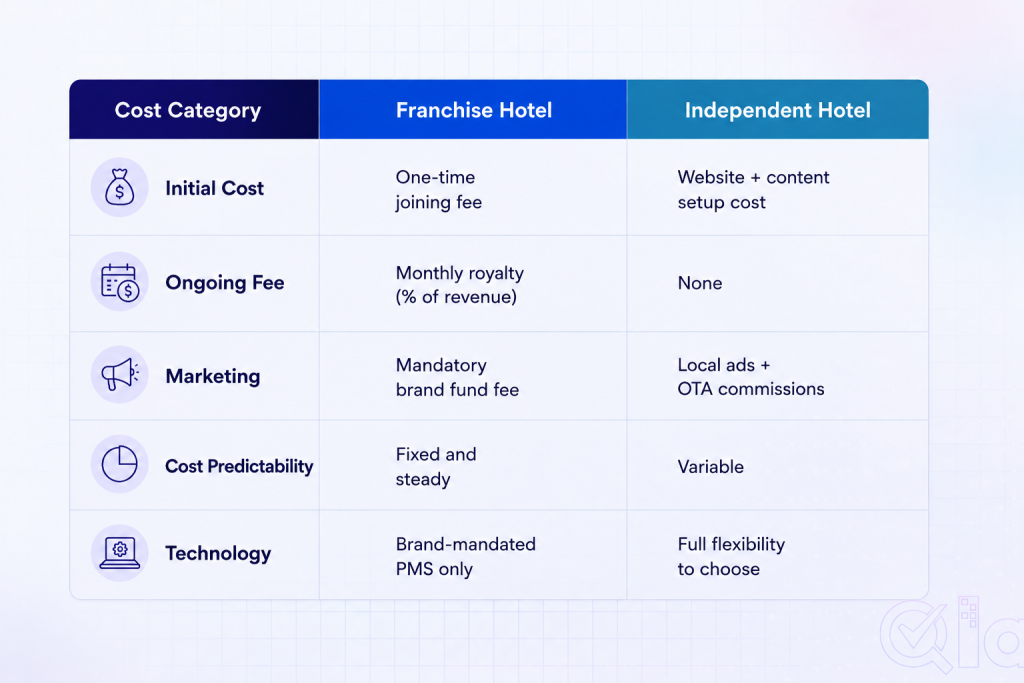
- Initial Franchise Fee
Franchise brands charge a one-time joining fee before you open your doors. This fee often ranges widely based on the brand’s overall market size. - Independent Hotel Marketing Costs
Independent hotels spend directly on their own hotel website and content. This spending builds a distinct online presence without brand support. - Monthly Royalty Fee
Franchise owners then pay an ongoing royalty, usually a share of room revenue. This fee is taken out monthly, no matter your profit margin. - Marketing and Brand Fund Fee
Brands also charge a separate marketing fund fee to support national advertising. This fund pays for ads that help every property in the network. - Local Advertising and OTA Listings
Independent owners also pay for local advertising and online travel agency (OTA) listings. These platforms charge a booking commission on every reservation made. - Predictability of Costs
Franchise costs stay fixed and steady, which makes monthly planning easier. Independent costs change based on owner’s choices. - Technology and Software Costs
Franchise brands often require a specific booking and property management system (PMS). Independent owners can choose any software, such as QloApps, freely.
Revenue and Brand Recognition
Known brands attract guests faster because guests already know the name. Travelers feel confident booking a name they already know, especially on metasearch platforms.
This trust keeps franchise rooms booked steadily through most of the year. Independent hotels must work harder to build that awareness.
Independent hotels often charge higher rates for a unique stay. Travelers are often willing to pay more for that kind of experience.
Operational Control and Flexibility
A hotel franchise or independent hotel gives you different rules. Big brands want every single room to match.
You must buy their beds and follow their cleaning steps. Solo owners get to buy whatever items they like.
You can change your prices or room designs super fast. This freedom helps you save money on daily updates.
Profitability Breakdown: RevPAR, ADR, and Net Margins
Room revenue, tracked through metrics like ADR and RevPAR, helps a hotel franchise or independent hotel estimate total profit. Franchise properties often appear to earn more money upfront.
However, a large share of that franchise revenue returns to the brand. Independent hotels keep the full amount of revenue they earn each month.
Independent hotels may sell fewer rooms in the early months. Over time, they often keep more profit per room sold.
Risk Factors for Each Model
Every hotel business carries some risk, but franchise and independent models face different kinds. A franchise contract typically locks you in for several years.
If the brand suffers negative publicity, your property can feel the impact too. An independent hotel has no such brand exposure, but it also has no safety net.
Independent owners carry the full marketing load on their own. A single bad online review affects them more directly than it would a larger chain.
Which Model Fits Which Hotelier?
A franchise suits owners who are new to the hotel trade and want built-in structure. It works well if you have the capital to cover the initial fees.
An independent hotel owners with a strong vision for their property, and tools like GDS distribution, can help it reach more guests. This path is better with more control over revenue and decisions.
The right choice comes down to your budget, your experience, and how much control matters to you. Either model can build a successful business.
How QloApps Supports Both Models
The right software makes daily operations easier, whether you run a franchise or an independent hotel. QloApps is built to support both.
Independent owners can use it to drive direct bookings and cut third-party fees. This keeps more revenue in-house.
Franchise owners can track daily tasks and check results across their property. The system gives a clear view of profit.
Conclusion
A hotel franchise or independent hotel rewards a different kind of owner. Franchise fees buy you guest trust from day one, before you’ve earned any reviews.
Skip those fees by going independent, and that trust has to be built property by property. It takes longer, but nothing you earn goes to a parent brand.
If your budget can absorb the fees, a franchise gets you to full bookings faster. If owning every decision matters more, independence is the better bet.
Get In Touch
Still deciding between a hotel franchise or independent hotel? The right property management system matters either way you go.
QloApps supports both models with direct booking tools, real-time rate management, and full control over your data. Contact us for a free demo today.

Be the first to comment.