
The majority of hotel rooms are being booked through online travel agencies (OTAs) rather than through any other channel. That number went up last year, and it will go up again.
The global OTA market is set to cross $1.1 trillion by the next decade. A handful of platforms dominate this market, and that is exactly where the gap is.
Starting out is the difficult part. You need the right niche and a proper plan.
This guide covers every step to launch an online travel agency. It also shows how you can get there faster.
What Is an Online Travel Agency?
An online travel agency is a digital marketplace where people book hotels and tours. It works just like a shopping site but focuses only on travel.
While some OTAs sell everything from flights to hotels and car rentals. Others focus on just one thing, like hotels only.
OTAs make money by charging hotels a commission per booking. Some buy rooms at wholesale rates and sell them at a markup.
Why Start an Online Travel Agency in 2026?
Travel started growing again after the pandemic. Bookings are still growing every year around the world.
Modern technology has made it cheaper to build an OTA. You no longer need millions to get started.
Travelers now prefer to book online instead of calling an agent. This shift keeps growing every year.
Niche OTAs are doing well even against big names like Booking.com. A focused approach helps you stand out.
How to Launch an Online Travel Agency (OTA)?
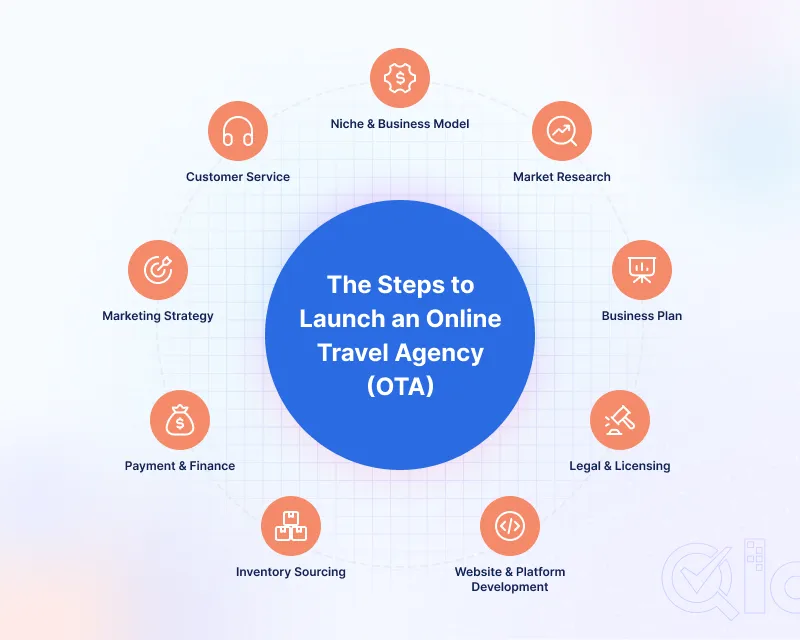
OTA development relies on identical core steps; skip the waste with this lean launch roadmap
Step 1: Pick Your Niche and Business Model
An OTA trying to serve everyone and end up serving no one particularly well. That is where a focused niche like boutique hotels or wellness stays wins.
Pick a business model early: B2C means you sell directly to travelers. B2B means you sell to travel agents who resell your inventory.
A commission model means hotels pay you per booking. A merchant model means you buy rooms up front and sell them at your price.
Step 2: Do Your Market Research
Before anything else, understand who your target travelers are. Their preferences and budget will influence every decision you make.
Look at what other OTAs in your niche are doing and find where they are falling short. Those areas are where you build your advantage.
Use free tools like Google Analytics to check demand by location. This helps you figure out which region to go after first.
Step 3: Write a Business Plan
A business plan isn’t just boring paperwork. It actually forces you to map out your target audience, figure out how you’ll make money, and face the real costs.
Technology, marketing, and legal fees add up faster than most people expect. Open-source platforms like QloApps cut your tech costs significantly and let you launch for far less than a custom build.
Plan for at least 12 months of running costs before you break even. Most OTAs take time to build trust with travelers, and that does not happen overnight.
Step 4: Sort Out Legal and Licensing Requirements
Get your business registered before launching. Check local laws first, since rules change depending on your location.
Some countries require a travel agency license to sell trips. Others only need a standard business registration.
If you plan to sell flights, IATA accreditation may be needed. Look into this early as it takes time to get approved.
Make sure your website follows data privacy laws like GDPR. You also need PCI DSS compliance if you process card payments.
Step 5: Build Your OTA Website and Tech Platform
Treat your site like a digital storefront—it absolutely has to be fast on mobile. To build it, look into open-source code or easy SaaS platforms.
At the very least, you need a smooth booking engine and a secure payment setup. You’ll also want a channel manager to handle live room updates.
Design the site with SEO in mind right from day one. Google needs to find your pages easily if you want to bring in free organic traffic.
Step 6: Build Your Hotel Inventory
You need rooms to sell before you can even think about taking bookings. Start by pitching to independent, local hotels in your area for direct partnerships.
Offer a risk-free deal where they only pay a fee when you land them a guest. Later, hook into a global distribution system (GDS) network to instantly unlock thousands of corporate rooms.
Don’t stress about having a massive catalog right out of the gate. A few listings with great photos and reviews will always outsell a bunch of empty pages.
Step 7: Set Up Payments and Finance
Find a solid payment gateway that actually makes sense for your specific audience. Instead of stressing over every tool, just choose one that local buyers trust.
Multi-language and Multi-currency support is a huge deal if you plan to capture international travelers. People just feel way more comfortable paying in their own local currency.
Track your booking payouts and commissions right from the start. Getting your money math sorted out early will save you a massive headache down the road.
Step 8: Market Your Online Travel Agency
Focus on organic search traffic if you want free bookings over the long haul. Drop some useful travel guides on your site so Google can actually find you.
Since travel is so visual, platforms like Instagram are great for building an audience. Just remember that Google Hotel Ads capture buyers ready to book now.
Don’t overlook email marketing when it comes to bringing past travelers back. Sending out a quick monthly newsletter with cool deals keeps people hooked.
Step 9: Focus on Customer Service
Solid customer service is your absolute best tool for building trust early on. Travelers just want to know a real person has their back when plans go sideways.
Make it a point to answer booking questions within an hour or two. Taking too long to reply essentially hands your potential customers right over to rivals.
Always shoot guests an automated message after they check out to ask for an honest review. Genuine feedback is the fastest way to make your new OTA look legit.
How QloApps Helps You Launch an Online Travel Agency
QloApps is a complete platform designed specifically for managing hotel bookings and marketplaces. It gives you a complete OTA setup without massive fees.
The software bundles a booking engine, property management system (PMS), and channel manager tool into one package. A brand-new agency absolutely needs all three from day one.
You can list dozens of independent hotels and let owners manage their own specific pages. This marketplace model is the fastest way to build a regional brand.
Running the software on your own hardware ensures that you own all your user data. Plus, it naturally handles multiple currencies and global languages.
Conclusion
Building your own Online travel agency takes focus, but the path is clear. The tech required to run a travel platform is now easier to access than ever.
Find your specific niche, launch your core platform, and kick things off with a few solid hotel partners. You can scale the business up as bookings roll in.
Using a solution like QloApps gives you a free head start with a full booking and marketplace platform. It allows you to launch without huge software fees.
Are you ready to build your own agency? Put these nine foundational steps into motion now to get your booking platform up and running smoothly.
Get In Touch
Want to Launch an Online Travel Agency? QloApps is ready to assist!
With QloApps’ Marketplace Module, you can effortlessly manage your multiple properties from one place. So, contact us today!
To get started with this user-friendly software. Just download it and add your property to QloApps.
If you have any suggestions, you can share them on the QloApps forum. For any technical assistance, kindly raise a ticket.

Be the first to comment.