When Should Hotels Offer Discounts to Boost Revenue
Discounts are price reductions offered to encourage bookings. Applied strategically, they help hotels fill rooms during low-demand periods.
When timed correctly, Discounts are not about lowering prices randomly. They are about adjusting rates based on demand to maximize total revenue.
Discounts can help you capture demand and improve overall revenue performance. Let’s explore when this strategy makes sense.
Understanding Hotel Revenue Basics
Hotel rooms represent perishable inventory. Unsold rooms cannot be stored for future sale, and each night’s opportunity expires at midnight.
Occupancy rate and room price work together to drive total revenue. A lower price with more guests often beats a high price with empty rooms.
Revenue per Available Room (RevPAR) tells you how well your hotel turns available rooms into money. Track it every night and use it to guide every pricing decision you make.
When Should Hotels Offer Discounts

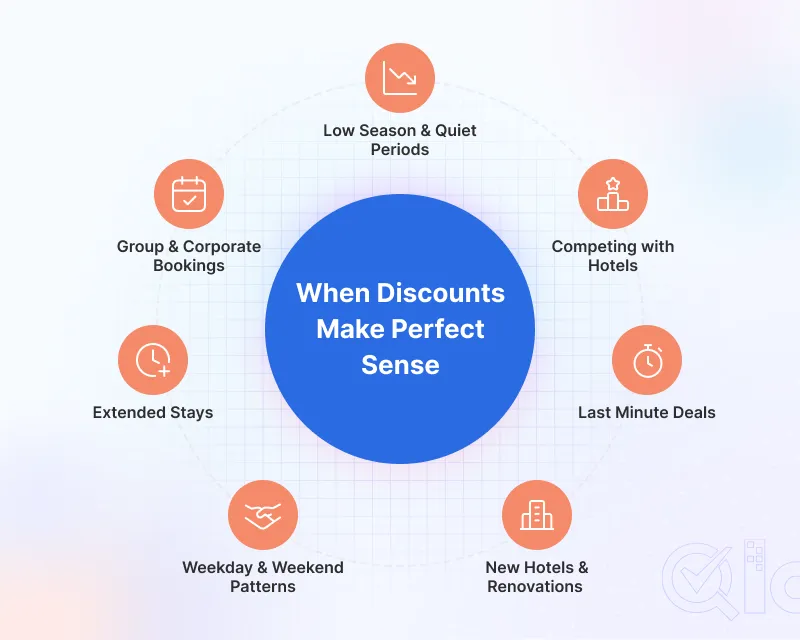
Low Season and Quiet Periods
Every hotel has slow months when rooms sit empty night after night. A discount during these times turns guaranteed losses into real, steady income.
Plan your off-season deals well before the slow period hits. Promoting them months ahead fills your calendar early and builds booking momentum.
Start by finding your quietest months using past booking data. Those slow dates are your best opportunity to put discounts to work.
Weekday and Weekend Patterns
Business hotels fill fast on weekdays but often go very quiet on weekends. Resorts face the exact opposite problem throughout the year.
City hotels can offer weekend packages designed for families and couples. Resorts can run mid-week specials to bring in guests during their slow days.
Understanding your weekly booking pattern is the first step to fixing gaps. Once you know the pattern, the right discount plan becomes much easier to build.
Last-Minute Deals
Empty rooms close to check-in time mean money lost with every passing hour. A last-minute discount brings in spontaneous travelers who decide to book on the same day.
Many hotels use Online Travel Agencies (OTAs) to reach spontaneous travelers fast. Only use this for rooms unlikely to sell, as overusing it trains guests to wait for lower prices.
Apply last-minute deals selectively and track which dates they work best. Done right, they fill gaps without hurting the value guests place on your rooms.
Extended Stays
Longer stays cut your cleaning, laundry, and check-in costs by a meaningful amount. Sharing those savings with guests through a discount makes the deal good for both sides.
Long-term guests also spend more on meals, services, and hotel facilities. This extra spending makes extended stay discounts even more profitable overall.
Tiered discounts that reward longer stays work especially well. Offer a small rate reduction for five nights and a better one for ten or more.
New Hotels and Renovations
New hotels need early guests to build trust, credibility, and online reviews fast. An opening discount attracts those first visitors who help spread the word to others.
Renovated hotels can use special relaunch rates to welcome back past guests. Fresh photos and improved facilities give people a strong reason to return and rebook.
Raise your rates gradually as your reputation and demand grow stronger. Introductory discounts are a short-term tool that delivers lasting revenue benefits over time.
Group Bookings and Corporate Clients
Groups and companies book many rooms at once, giving your hotel reliable income. Offering a discount makes sense because the volume justifies the lower rate per room.
Corporate clients also spend money on dining, meeting rooms, and hotel facilities. Building these relationships creates revenue that goes well beyond the rooms they book.
Negotiate group rates carefully and set clear terms for repeat bookings. Consistent volume discounts done right become one of your most dependable revenue streams.
When to Keep Your Rates High
Peak Season and Special Events
Big events and busy travel seasons bring guests who are ready and willing to pay full price. Cutting your rates during these periods simply leaves a lot of money on the table.
Protect your peak season pricing as firmly as you can. These high-demand windows help make up for the revenue you lose during slower months.
Guests expect to pay more during popular periods and plan their budgets accordingly. Hold your rates with confidence and focus on delivering an experience worth every dollar.
When Service Needs Fixing
Low bookings are not always about price, so cutting rates will not always solve the problem. Sometimes guests avoid your hotel because of poor reviews or a bad past experience.
Read your reviews carefully and take the feedback seriously. If guests mention cleanliness or rude staff, fix those issues before you touch your pricing.
A discount will not save a stay that disappoints. Great service at a fair rate builds the kind of reputation that fills rooms without heavy discounting.
Smart Ways to Use Discounts
Let Technology Help
A good property management system watches demand and recommends the best rate for you. Dynamic pricing adjusts your room rates automatically based on bookings, season, and competition.
Set automated rules that trigger a discount when rooms stay unsold close to the check-in date. The system handles pricing while you focus your energy on your guests.
Technology also tracks which discount offers drive bookings and which ones fall flat. Use those insights to sharpen your strategy and stop spending on deals that do not work.
Target the Right People
Past guests already trust your hotel and are your most valuable discount audience. A personal email with a special rate brings them back at a lower cost than finding new guests.
Better rates on your own hotel website save the commission fees you pay to booking platforms. This protects your profits while building a stronger direct relationship with your guests.
Loyalty programs give your best guests exclusive rates that no OTA site can match. Rewarding repeat guests with special access is one of the smartest long-term discount strategies.
Add Value Instead of Discounts
Free breakfast or a room upgrade feels generous to guests but costs far less than a big rate cut. These extras lift the guest experience without directly reducing your room revenue.
Small perks like late checkout or a parking pass make guests feel genuinely appreciated. This lets you compete on experience rather than just competing on price.
Guests who feel well looked after spend more, tip more, and leave better reviews. Adding value is a smarter long-term move than discounting your way to thin margins.
Measuring Your Success
Track your Key Performance Indicators (KPIs) like occupancy rate and total revenue together as a complete picture. No single number alone tells you whether your discount strategy is truly working.
Test different discount levels across seasons to find out what actually drives bookings. Compare results year over year and use what you learn to plan smarter, sharper deals.
Every discounted booking must still cover your costs, like cleaning, utilities, and platform fees. Checking this regularly keeps your discount strategy profitable and not just busy.
Conclusion
Discounts work best when you use them at the right time and for the right guests. They fill empty rooms during slow periods and attract travelers who would not book at full price.
Let your data and booking patterns guide every pricing decision you make. Reacting based on gut feeling costs more money than a clear, evidence-based strategy ever will.
A smart discount plan built on the right habits turns slow seasons into steady, predictable growth. Start reviewing your occupancy patterns today and put your slow periods to work.
Get In Touch
Do you want to attract more guests to your hotel? Let’s work together with QloApps to make it happen!
QloApps allows hotels to create, track, and manage discounts effortlessly.
You can download and install QloApps on your system or server.
If you have any further topics to discuss, please contact our QloApps Support Team.