
Hotel accessibility is an opportunity most independent hotels have yet to fully embrace. Getting it right builds real guest loyalty.
A missing ramp or an unclear room listing can quietly cost you a booking. Small, thoughtful fixes close that gap fast.
Independent hotels often assume accessibility means big construction costs. Most fixes in this guide cost very little to start.
This guide walks through rooms, common areas, your website, and staff habits. Start with whichever section fits your hotel right now.
What Hotel Accessibility Really Means
Hotel accessibility covers how easily a guest can use your property, from the front door to the shower rail. It is bigger than most owners assume.
Ramps and wide doors are a good start, but guests also need clear signs, simple menus, and helpful phone support.
A basic wooden ramp can cost less than one new mattress for a room. A printed sign with clear directions costs even less than that.
Why Hotel Accessibility Matters for Independent Hotels
About 15 percent of the world’s population lives with some form of disability, according to the WHO. That is a guest segment most hotels barely reach.
Guests who feel comfortable tend to leave strong reviews and book direct next time. Direct bookings skip the online travel agency (OTA) commission entirely.
Word travels fast in caregiver and senior travel groups on Facebook and WhatsApp. One good online review there can bring several new bookings.
Accessible Room Essentials
A handful of features make a room genuinely usable, not just labeled accessible.
- Wide doorways and clear floor space for wheelchairs
- Roll-in showers, grab bars, and adjustable beds
- A handheld showerhead for easier, safer bathing
- Visual and vibrating alerts for deaf or hard of hearing guests
- Outlets, switches, and thermostats within easy reach
Once a room has these features, tag it as a separate room type in your property management system (PMS). Guests can then filter and book it directly, instead of calling to check.
Property and Common Area Basics
A few upgrades outside the room matter just as much as what is inside it.
- Step-free entrances with smooth, wide pathways
- Parking spots placed near the main entrance
- Signs with large text and strong color contrast
- Reception counters with open space underneath
- Dining tables with enough legroom for wheelchairs
Include these details in your property description as well. A guest checking your hotel amenities page should not have to guess or call ahead.
Making Your Hotel Website and Booking Engine Accessible
Most guests decide on a hotel long before they ever dial the front desk. Your hotel website does that convincing on its own.
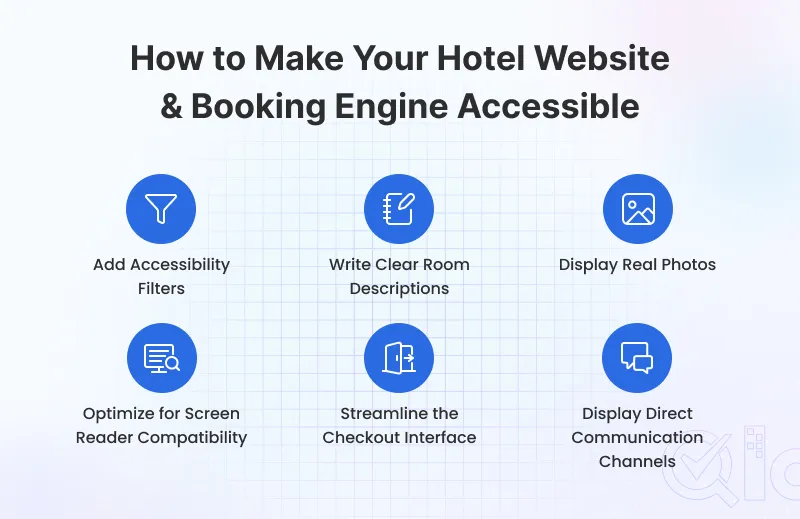
Add Accessibility Filters
Guests have different needs, from step-free access to a roll-in shower. Filters by room type and amenities help each guest find the right fit fast.
Write Clear Room Descriptions
Vague labels like ‘accessible room’ leave guests guessing. Strong hotel room descriptions state the exact door width or note a step-free shower.
Show Real Photos
Words alone rarely capture what a grab bar or roll-in shower actually looks like. A single clear bathroom photo settles more doubts than pages of description ever could.
Make Your Site Screen Reader Friendly
Screen readers help guests with visual impairments navigate and book with ease. A snag you find during testing is a snag a real guest will face too.
Keep Forms Short and Simple
Booking forms with too many unclear fields drive guests away fast. Keep hotel checkout short, and label every field in plain words.
Add a Direct Contact Option
Even a great website can’t answer every question a guest has in mind. A visible phone number or WhatsApp link lets them reach out directly.
Staff Training and Guest Communication
A guest asking about accessibility deserves a clear, confident answer. Train your front desk staff to know every accessible feature on the property.
Send a short pre-arrival note covering entrances, parking, and room layout. This helps guests plan and avoids confusion at check-in.
Ask guests directly what they need instead of making assumptions. This small step builds trust and prevents avoidable mistakes.
Simple Accessibility Checklist to Get Started
Use this hotel accessibility checklist to guide your next round of updates.
Quick wins:
- Train front desk staff on every accessible feature on the property
- Add clear, high-contrast signs across the property
- Write accessible room descriptions with exact door widths and shower details
- Add real photos of accessible rooms and bathrooms
- Add a visible phone number or WhatsApp link for direct guest contact
Medium updates:
- Add accessibility filters to your booking engine
- Tag accessible rooms as a separate room type in your PMS
- Shorten booking forms and label every field in plain words
- Test your website with a screen reader and fix any snags
- Send pre-arrival notes covering entrances, parking, and layout
Bigger investments:
- Build step-free entrances and accessible parking
- Install roll-in showers and adjustable beds in key rooms
- Widen key pathways and clear away clutter
Pick two items from the quick wins list and finish them this month.
Conclusion
Hotel accessibility rarely needs a full renovation to get started. It needs attention to detail most hotels never check.
A few properties that added two or three items from this list saw more repeat bookings within a year.
Start with one step, whether that is training staff or fixing your website. The rest can follow at your own pace
Get In Touch
Ready to make your direct booking engine accessible to every guest? QloApps gives you complete control over your hotel website’s design, room filters, and checkout flow
Our technical team helps you customize modules and launch a high-performing system. Contact QloApps to get started today.

Be the first to comment.