
A booking engine can help hotels attract more direct bookings, but reservations are only one part of running a property.
Many hotel owners discover this as their bookings start to grow. Rooms need to be assigned, housekeeping teams need updates, and guest requests begin arriving throughout the day.
This is where a hotel property management system becomes just as important as a booking engine.
A booking engine may complete the reservation, but running the hotel requires much more than taking bookings.
That is why hotels use tools that help manage daily work and improve the guest experience.
Why Booking Engines Feel Like Enough at First
There is a reason booking engines became so popular.
They solve an obvious problem. Guests can check room availability, compare rates, and complete a reservation without calling the hotel.
For smaller properties, this can feel like a complete solution.
The challenge usually appears when booking volume increases.
As occupancy grows, staff manage more guest requests. They coordinate housekeeping schedules, update room status, and keep information accurate across booking channels.
At that point, hotels start looking for better ways to manage daily operations.
So, what else do hotels need besides a booking engine? Let’s look at the tools that help manage day-to-day hotel operations.
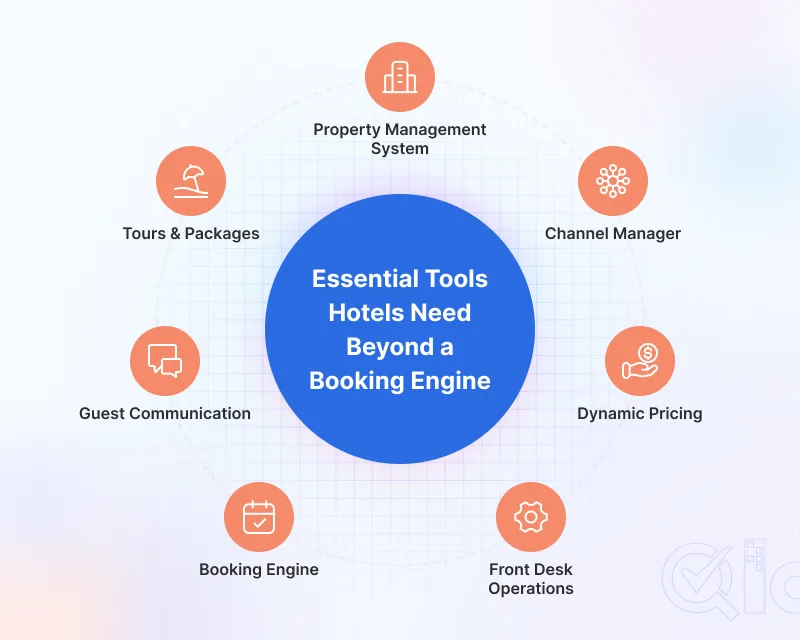
1. Property Management System (PMS)
Many hotels start with spreadsheets because they feel simple and familiar. As occupancy increases, manual processes become harder to manage.
Staff need quick access to guest information. Front desk teams need accurate room status. Housekeeping schedules must stay updated throughout the day.
Managing everything manually can slow staff down. This is where a hotel property management system becomes essential.
A PMS brings reservations, room inventory, housekeeping updates, guest profiles, and billing information into a single platform.
Instead of searching through multiple systems, staff can manage daily hotel operations from one place.
For many hotels, the PMS becomes the main system for daily operations.
2. Channel Manager
Today’s travelers rarely book rooms from just one website. Some guests book directly through the hotel website. Others prefer OTAs and travel marketplaces.
Many compare several booking channels before making a decision. Keeping room availability updated across all channels can be difficult.
Without automatic updates, hotels can accidentally sell the same room twice.
For that reason, many hotels use systems that help them manage room availability and pricing across multiple booking channels.
A channel manager automatically updates inventory across connected channels, helping hotels reduce manual work while maintaining accurate availability.
3. Dynamic Pricing Tools
Hotel demand has a habit of changing when you least expect it. A quiet week can suddenly turn busy because of a local event, while a promising period may end up slower than expected.
Hotels that continue using fixed room rates throughout the year often miss opportunities to improve revenue.
This is where dynamic pricing tools become valuable.
These tools help hotels adjust room rates based on occupancy, booking trends, market demand, and revenue goals.
As a result, hotels can make pricing decisions backed by real data instead of relying on guesswork.
4. Front Desk Management Tools
Guests may never know how many systems a hotel uses behind the scenes. What they remember is how the stay felt.
Most guests decide how they feel about a hotel within the first few minutes of arriving.
A smooth arrival creates confidence. A confusing check-in process or unnecessary waiting can have the opposite effect.
This is why efficient front desk operations remain so important.
Front desk tools help staff manage arrivals, room assignments, guest requests, and communication. They also help teams work together and respond faster during busy periods.
As a result, even small improvements at the front desk can improve guest satisfaction and loyalty.
5. Guest Communication Tools
Most guest communication issues start with something small. A traveler cannot find their booking confirmation.
Someone wants to know whether an early check-in request was approved.
Another guest is looking for arrival instructions before reaching the property. None of these situations are major problems on their own.
But when they happen repeatedly, they create extra work for staff and can lead to unnecessary frustration for guests.
Guest communication tools help hotels keep travelers informed before arrival, during their stay, and after check-out.
Clear communication reduces confusion and improves the guest experience.
6. Tours and Package Management
Think about your own trips. The memories usually come from the things you did, not just the place where you slept.
A comfortable room matters, but experiences are often what guests talk about when they return home.
Guests often look for local attractions, guided tours, transport, and memorable activities. Hotels can earn more by offering these experiences without adding more rooms.
In addition, tour packages and local experiences help guests spend more and enjoy their stay.
In many cases, the overall experience becomes just as important as the stay itself.
Why Connected Systems Matter
Over time, those individual solutions become part of everyday operations.
The real value comes from having these systems work together. The goal is to connect all these tools.
A booking engine manages reservations, while the other tools support hotel operations, pricing, guest communication, and distribution.
However, each tool provides value on its own. Together, they work much better.
Hotels gain better visibility into operations while staff spend less time solving problems and more time helping guests.
That is what modern hotel management is really about.
Conclusion
A booking engine is an essential part of modern hotel technology, but it is only one piece of the puzzle.
As hotels grow, they need solutions that support operations, pricing, communication, and revenue management.
Each tool helps improve hotel operations and creates a better guest experience.
The hotels that perform best in 2026 are not the ones with the most software. They are the ones that connect the right tools to support every stage of the guest journey.
Get In Touch
Looking for more than just a booking engine? Manage hotel operations, guests, and revenue from one platform with QloApps.
QloApps helps hotels manage reservations, operations, guest experiences, and revenue from a single platform.
Have suggestions? Join the QloApps Forum and share your thoughts.

Be the first to comment.