
Hotel OTA distribution has changed more in 2026 than at any other time. Hoteliers now deal with rising commissions and many new booking channels.
A weak distribution plan means lost bookings and lower revenue. Hotels that manage their channels well make more profit and attract more guests.
This blog covers some of the latest trends shaping hotel OTA distribution in 2026. Each trend can help you make smarter decisions for your property.
What Is Hotel OTA Distribution?
Hotel OTA distribution is the process of selling rooms through online travel agencies (OTAs) like Booking.com and Expedia. They display your rates and availability to travelers online.
OTAs do not send you bookings for free. Every reservation they generate costs you somewhere between 15 and 25 percent of what the guest paid.
Keeping your rates and availability accurate across all platforms is what good OTA distribution actually looks like. It helps you to avoid overbooking.
Why Hotel OTA Distribution Management Matters in 2026
OTAs drive a large share of online hotel bookings every year. A listing that is not managed well loses guests before they even check your price.
A poorly managed channel can lead to rate mismatches and overbookings. Both problems hurt your hotel revenue management and damage guest trust.
Guests in 2026 check OTAs and metasearch sites before they book. Hotels that stay consistent across all channels win more bookings overall.
8 Latest Trends in Hotel OTA Distribution Management for 2026
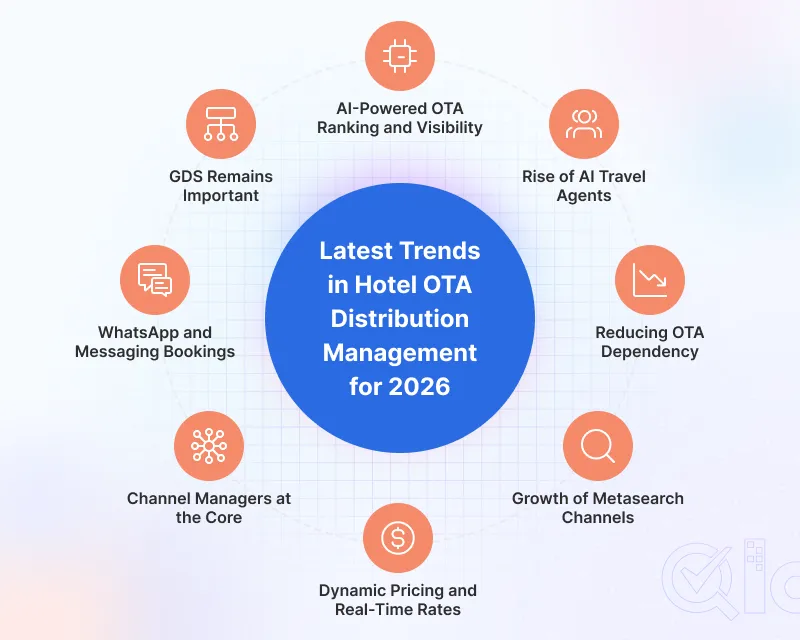
Trend 1: AI-Powered OTA Ranking and Visibility
OTAs now use AI to decide which hotels show up first, and price is just one part of it. Your online review scores and how accurate your listing content is both play a role.
Hotels with outdated photos or unclear amenity details rank lower. Keeping your OTA profile updated is a core part of hotel OTA distribution.
AI also checks your response time and cancellation policy. Hotels that score well on these get more visibility without paying more for ads.
Trend 2: Rise of AI Travel Agents and Agentic Booking
AI travel agents plan and book trips on behalf of guests automatically. They work through apps and messaging platforms using simple conversations.
Some travelers now rely on AI for hotel recommendations and trip planning. This trend is gradually gaining momentum.
Hotels with slow systems often get skipped by AI booking tools entirely. A connected hotel property management system keeps your property visible in these searches.
Trend 3: Growing Push to Reduce OTA Dependency
Hotels that get more than 60% of bookings from OTAs face a real risk. One commission increase can hurt their revenue overnight.
The goal for most hotels in 2026 is to bring OTA share down to 35 to 45%. A stronger hotel booking engine and loyalty programme can help.
Google Hotel Search lets guests compare OTA prices with your direct rate. This gives hotels a low-cost way to grow their direct booking channel.
Trend 4: Metasearch Channels Gaining More Bookings
Google Hotel Search and Trivago are growing fast as hotel discovery tools. Guests use them to compare room rates before they decide where to book.
Metasearch connects a guest directly to your hotel booking engine. This means you pay less commission compared to a standard OTA booking.
Hotels using metasearch can shift high-value bookings away from costly OTAs. It is one of the smartest moves in a hotel distribution strategy for 2026.
Trend 5: Dynamic Pricing and Real-Time Rate Management
A fixed room rate no longer works when demand shifts every day. Events and competitor moves change what guests are willing to pay.
Dynamic pricing tools adjust your rates based on real market data. This helps hotels earn more per room without hours of manual work.
Keeping hotel rate parity across all channels is harder without automation. A channel manager keeps rates in sync so guests never see a mismatch.
Trend 6: Channel Manager as the Core of Hotel Distribution
A hotel channel manager updates your rates across all OTAs at once. Without one, overbookings and pricing errors happen regularly.
Connecting your channel manager to your hotel property management system helps. Both systems together keep booking data accurate around the clock.
Manual hotel channel management is too slow and too risky in 2026. Hotels that automate this process save time and protect revenue every day.
Trend 7: WhatsApp and Messaging Platforms as New Booking Channels
WhatsApp is becoming a real hotel direct booking channel across Asia. Guests use it to confirm reservations without visiting an OTA at all.
Hotels using WhatsApp for bookings reduce OTA dependency without heavy spend. It also puts guest communication in one place and improves the experience.
Mobile hotel booking now accounts for 45% of all travel bookings. Messaging tools help you reach guests where they already spend their time.
Trend 8: GDS Still Matters for Corporate and Group Travel
Amadeus and Sabre are the main booking tools for corporate travel managers. They connect hotels directly to travel agencies and company travel programmes.
Hotels that skip the global distribution system (GDS) miss out on high-value corporate accounts. These guests book longer stays and cancel far less often.
Adding GDS to your hotel distribution channels gives access to corporate travellers. It builds a more stable booking base alongside your OTA revenue.
Conclusion
Hotel OTA distribution in 2026 means more than just listing rooms online. A smart strategy uses OTAs alongside direct bookings and metasearch channels.
Hotels with a strong hotel channel manager and growing direct bookings save on commission. The right hotel management software keeps every channel connected.
Start by reviewing your channel mix to find where you lose bookings. Better hotel OTA distribution can make a big difference to revenue this year.
Get In Touch
If you are a hotel owner and are looking for a complete solution to manage your property, then QloApps is the best solution for you.
QloApps offers the exact features you’ll need to run and effectively manage your property from day one.
To get started with this user-friendly software. Just download it and add your property to QloApps.
If you have any suggestions, you can share them on the QloApps forum.
For any technical assistance, kindly raise a ticket.

Be the first to comment.