
Most hotels today use a Property Management System (PMS) to manage daily operations. How well it works for staff depends on the quality of its user experience.
The user experience (UX) of a PMS directly shapes how smoothly hotel operations run each day. A well-designed system helps hotel staff complete daily tasks with greater speed and accuracy.
This blog answers how PMS user experience drives better hotel results. From front desk speed to guest satisfaction, the impact is clear and real.
Understanding PMS User Experience
User experience is more than how a system looks on a screen. It defines how easy the system is to use and integrate into the workflow.
A strong user experience means easier navigation, fewer steps, and fast task execution. It removes confusion and helps all staff work with more clarity and focus.
Hotels treat user experience as a priority when they choose a new system. A system that is easy to use saves time, reduces errors, and keeps staff focused on guests.
How Good PMS User Experience Impacts Hotel Operations
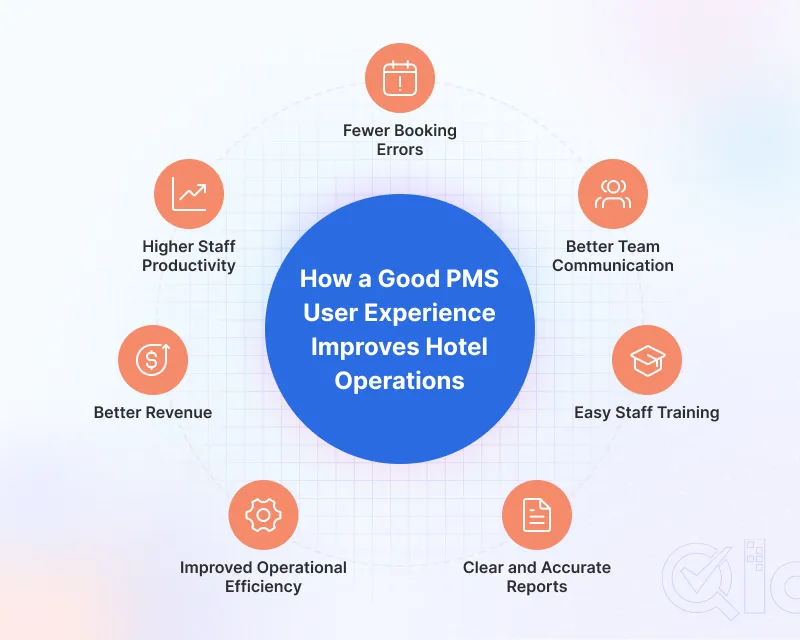
A well-built PMS drives meaningful improvements across all hotel teams. When one area runs better, the whole hotel benefits as well.
It creates real gains across six core areas of hotel operations. Each one ties directly to how well a hotel serves its guests.
The results are clear and measurable. Hotels that invest in good system design see real improvements in daily operations and overall performance.
1. Operational Efficiency at the Front Desk
A clear system helps front desk staff handle check-ins and check-outs with speed. It also cuts errors in room assignments and avoids overbooking.
When the interface is simple, staff spend less time searching for key details. Guests receive faster service and a much smoother arrival as a result.
The front desk sets the tone for every guest’s stay. A strong user experience provides staff with the assets to make that first impression count every time.
2. Interdepartmental Coordination and Communication
A well-built system connects all hotel teams on one platform. Teams can view and act on tasks in real time with no delays.
When all teams work from the same system, service gaps close faster. Teams stay aligned and respond to guest needs with greater speed and care.
A clear system removes the confusion caused by using broken-up tools. It helps build a more united and effective hotel team over time.
3. Staff Training, Onboarding, and Workforce Productivity
A simple-to-use system helps new staff learn fast and build confidence sooner. It cuts staff training costs and helps new hires settle into their role with ease.
When staff can use the system on their own, their output grows and supervision drops. They can give more time to guests rather than asking for guidance.
Poor tool design leads to staff stress and high staff turnover. A system with a great user experience helps hotels keep skilled and happy staff.
4. Revenue Management and Reservation Accuracy
A clear PMS helps staff set prices and manage bookings with ease. Fewer errors in rates and rooms lead to steadier hotel income.
A system makes it easy to manage upgrades and handle dynamic pricing with speed. Staff can act on new revenue opportunities without delays or confusion.
Correct bookings across every Online Travel Agency (OTA) channel builds guest trust and reduces costly errors. Strong user experience in the system protects hotel income and its good name.
5. Reporting, Analytics, and Strategic Decision-Making
A good system presents key data in a clear format for managers. Simple dashboards make it easy to spot trends and take fast action.
When reports are easy to read, hotel managers make faster and well-informed decisions. They spend less time on complex data and more time leading their teams.
Good report design and analytics turn raw numbers into clear insights for hotel leaders. It gives managers what they need to drive steady growth and improvement.
6. The Indirect Impact on Guest Satisfaction
When staff use an easy system, they spend less time on admin tasks. This lets them give full attention to delivering a warm guest experience.
Confident staff give better and more personal service to every guest. Guests notice this and are more likely to come back and share feedback.
Guest satisfaction and good online reviews grow when hotel operations run well. Great user experience behind the scenes leads to strong service at every guest touchpoint.
Key Attributes of a PMS with Exceptional User Experience
A great Property Management System stands out through its simplicity and speed. Clear labels and fast task completion help staff work with confidence from day one.
Intuitive navigation and real-time visual control are vital for hotel teams. A color-coded room calendar with live updates gives staff a full picture at one glance.
A role-based design ensures every team member sees only what they need. Smart validations and guided workflows reduce mistakes and keep daily operations running smoothly.
Conclusion
All hotel work ties back to how well the Property Management System serves its users. Better teams, efficient onboarding, and healthy revenue all follow from a great system.
Hotels must treat user experience as a primary factor when selecting or upgrading their system. It is not optional but a core part of how well the hotel runs each day.
Hoteliers should check how easy their current system is to use each day. Investing in a great user experience is a key step toward better service for every guest.
Get In Touch
If you are a hotel owner and are looking for a property management system with a great User Experience. Then QloApps is the best solution for you.
QloApps offers various features to enhance your hotel business. Such as Virtual tours, Tours and Packages, Channel Manager, Front Desk, Cloud PMS, 100+ Add-ons, and many more.
To get started with this user-friendly software. Just download it and add your property to QloApps.
If you have any suggestions, you can share them on the QloApps forum. For any technical assistance, kindly raise a ticket.

Be the first to comment.