
In the hotel business, it’s not enough to just fill up your rooms. What really matters is understanding exactly how much money each type of booking actually brings in.
Many hotel owners do not notice the revenue gap between walk-ins and online bookings.
Walk-in guests usually pay a fixed front-desk rate, often with small discounts, and prices rarely change with demand.
Hotels that ignore this gap miss chances to price their rooms based on current demand. They also struggle to manage revenue and grow in the long run.
When hotels understand this gap, they can make smarter decisions. As a result, they can improve profits over time.
What Is the Revenue Gap ?
This revenue gap basically shows the real difference in how much money you can actually make from walk-in guests versus those who book online. Each channel adds to your bottom line in its own way.
Most walk-in guests usually pay the standard front desk rate, sometimes after negotiating a small discount. That price often remains unchanged even when demand rises.
However, online bookings work differently. The rates keep changing in real time based on how full the hotel is, events nearby, or the season.
Because of this, online bookings often bring more revenue per room than walk-ins. Over time, that small difference adds up and creates a hidden gap in total revenue.
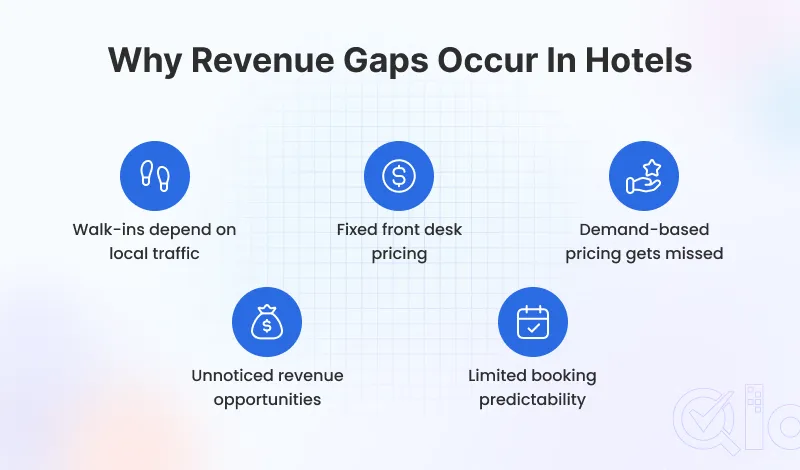
Why Walk-In Bookings Often Limit Hotel Revenue
Walk-in guests can help fill empty rooms quickly, but relying too much on them can reduce overall revenue growth.
Limited Guest Reach
- Walk-in bookings rely entirely on physical traffic and hotel visibility. Only travelers already present nearby can book your hotel. This limits how many guests can find your property.
- Unlike online hotel bookings, walk-ins reduce your chance of reaching travelers from other cities or countries.
Fixed Pricing Structure
- Hotels often use static pricing for walk-in guests. Front desk teams may not adjust rates according to live demand, causing hotels to lose premium pricing opportunities during busy periods.
- This weakens the effectiveness of your hotel pricing strategy.
Lower Occupancy Predictability
- With walk-ins, you barely get information about guests. It becomes harder to track guest habits and preferences, causing missed opportunities for marketing and personalized offers.
The way the front desk team talks to them and quotes prices can be quite inconsistent. Sometimes that alone is enough to lose the booking.
That’s why the overall experience at reception plays a big role in turning more walk-ins into actual revenue.
How Online Hotel Bookings Improve Hotel Revenue Management
Modern online hotel bookings provide structured systems that help hotels generate stronger and more predictable revenue.
Better Reach
- Online booking platforms show your hotel to a larger audience. Guests from different locations can find and book rooms instantly.
- This helps increase booking volume and hotel sales performance.
Dynamic Pricing
- With online booking systems, hotels can adjust prices in real time according to occupancy, demand, events, or competitor trends.
- This improves hotel revenue management and helps increase room profitability.
- Many hotels use hotel revenue optimization strategies to adjust pricing dynamically and increase booking profitability during high-demand periods.
Advanced Reservations
- Guests can reserve rooms in advance, giving hotels greater visibility into future occupancy and allowing better planning.
- Advance reservations help maintain a stable hotel occupancy rate.
Upselling Opportunities
- Online booking engines can offer upgrades during booking. They may promote add-on services such as meals, airport transfers, spa, or premium room options.
- It eventually increases total hotel booking revenue per reservation.
Revenue Opportunities Hotels Commonly Miss
The biggest loss is not lower pricing alone but the missed revenue opportunities caused by limited booking channels.
Hotels relying mostly on walk-ins lose access to:
- Early reservations
- Peak season pricing
- International travelers
- Repeat online customers
- Upselling opportunities
- Better booking insights
Without strong digital booking channels, hotels lose valuable revenue that could contribute to long-term business growth.
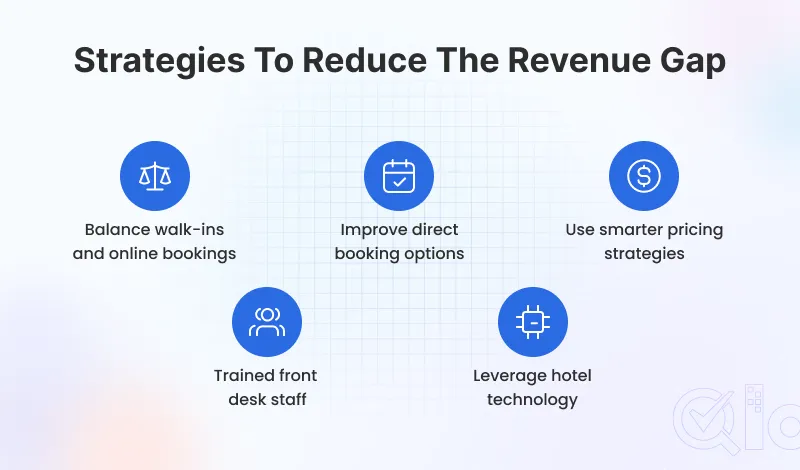
Bridging Gap Between Walk-Ins and Online Hotel Bookings
Smart hotels do not choose one booking type only. They understand that both booking channels are important. Instead of choosing one over the other, the goal should be to balance both effectively.
Improve Direct Booking Options
- Hotels should build an easy booking website. This encourages guests to book directly online.
- Hotels looking to increase direct hotel bookings should focus on creating a fast and user-friendly booking website.
Use Better Pricing Strategy
- Hotels should adjust rates based on demand. This helps increase profits during busy times.
Optimize for Mobile Booking
- Most travelers now book through smartphones, so a mobile-friendly booking system is essential for conversions.
Train Front Desk Staff
- Staff should know how to handle walk-ins well. They should also promote future direct bookings.
- Hotels can give discounts or perks for direct bookings. This helps attract more guests.
Technology Helping to Close the Revenue Gap
Technology plays a major role in reducing the revenue gap between walk-ins and online bookings. Hotel management systems can help by:
- Syncing room inventory in real time
- Updating rates instantly
- Tracking guest behavior
- Improving booking analysis
- Support hotel revenue management decisions
These tools help hotels earn more from every booking. Using modern hotel management software allows businesses to centralize booking management and improve operational efficiency.
Implementing hotel front desk automation can help hotels reduce manual errors, improve booking accuracy, and streamline operational efficiency.
Changing Guest Booking Habits
Traveler preferences have shifted greatly over the years. Most guests now prefer online hotel bookings because it is quick, simple, and easy to use.
Online booking allows travelers to:
- Compare pricing instantly
- Read reviews
- Explore hotel amenities
- Book anytime from anywhere
Because of this, walk-ins are becoming less common. Hotels must adapt to this shift to remain competitive.
Conclusion
The hidden revenue gap between walk-ins and online hotel bookings is a real challenge that directly impacts hotel profitability.
While walk-ins fill rooms but limit pricing and growth. Online hotel bookings offer wider reach, better pricing, and higher revenue.
Hotels that use both booking methods wisely can improve their hotel occupancy rate and profits. They can also grow their business over time.
In modern hospitality, success is not just about selling rooms but about maximizing the value of every booking channel.
Get in Touch
Want to boost your hotel’s revenue and finally close that gap between walk-ins and online bookings? The right technology can really change the game.
With QloApps, you can handle all your bookings in one place, fine-tune your pricing whenever needed, and make front desk operations much smoother, without jumping between different systems.
Got questions or any suggestions? Feel free to join the QloApps Forum and share your thoughts with the community there.
Need technical help? Just raise a support ticket, and our team will be happy to assist you.

Be the first to comment.