How to Set Up Multi-Property Hotel Chain on Minimal Budget
Multi-property hotel chain setup does not have to cost a fortune. Running one hotel is hard enough. Running two or three at the same time is a completely different level of stress.
You have different staff, different locations, and different guest expectations. Somehow you need to keep it all straight without losing your mind or your money.
But every time hoteliers looked at the cost of traditional hotel software, they froze. Licensing fees per property, installation charges, and IT staff salaries add up fast.
Many of them gave up on the idea entirely. Here is the truth. You do not need an expensive enterprise system to run multiple hotels.
You just need the right approach and the right tools. Let me walk you through exactly how to set up a multi-property hotel chain setup without spending a fortune.
What Is a Multi-Property Hotel Chain?
A multi-property hotel chain simply means one business operating two or more hotels under the same management.
You own the properties or manage them for different owners. But you run operations from a central point.
This could be two budget hotels in the same city. Or three resorts in different states. Or a mix of properties in various locations.
The goal is to manage all properties efficiently while keeping costs low. This is where smart software choices make all the difference.
Choose a Cloud Based Property Management System
Your property management system is the brain of your hotel chain. It handles reservations, guest profiles, check ins, and billing.
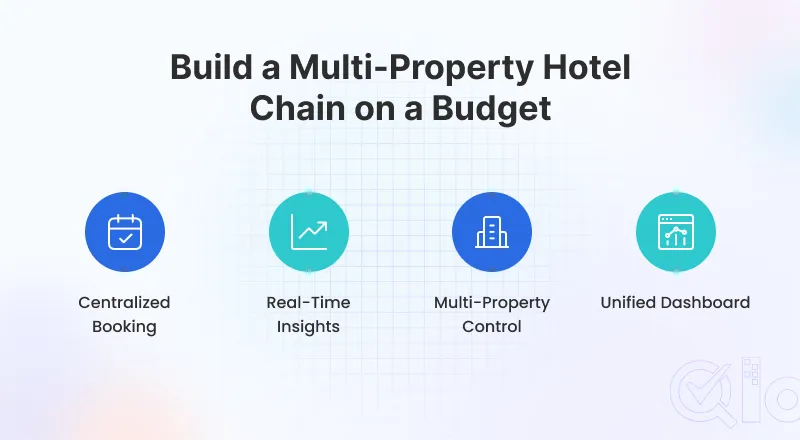
For multiple properties, you need a system that lets you manage everything from one dashboard. Cloud based systems are perfect for this.
You do not need to install anything on local computers. You just log in from any device with an internet connection.
This alone saves you thousands in hardware and installation costs. QloApps also offers a cloud based solution designed specifically for hotel chains.
A cloud-based hotel management software lets you view occupancy across all properties. You can transfer guests between hotels if one is full.
You can run reports for individual properties or the entire chain. The flexibility is exactly what growing hoteliers need.
Centralize Your Reservations and Booking Engine
One of the biggest headaches in running multiple hotels is managing reservations. Guests call one property asking to book at another.
Your front desk staff waste time transferring calls and checking availability. This frustrates everyone involved.
A centralized hotel booking engine solves this problem. You can set up a single website where guests can book any of your properties.
The system shows real time availability for each location. Guests choose their preferred hotel and complete the booking instantly.
This also helps you increase direct bookings across your entire chain. You are not relying on third party sites to fill your rooms.
The setup cost is minimal compared to the revenue you will gain. Guests appreciate the convenience of booking any property from one place.

Use a Channel Manager to Control OTA Distribution
Online travel agencies like Booking.com and Agoda are essential for visibility. But managing them across multiple properties is a nightmare.
Each property has different room types, rates, and availability. Updating each OTA manually for every property takes hours every day.
A hotel channel manager automates this entire process. You update rates and availability once in your system.
The channel manager pushes those updates to all your connected OTAs instantly. This prevents double bookings and rate inconsistencies.
For a small hotel chain, this is non negotiable. You cannot afford the staff time or the mistakes that come with manual updates.
The right channel manager pays for itself within the first month. It also gives you better control over your distribution strategy.
Standardize Operations Without Losing Local Flavor
Consistency matters when you run multiple properties. Guests expect the same quality and service across your chain.
But each property also has its own character and local appeal. The trick is balancing standardization with local uniqueness.
Create standard operating procedures for check in, housekeeping, and guest communication. These should apply to every property.
But let each manager customize their offerings based on local guest preferences. One property might focus on business travelers while another targets families.
A multi-property PMS helps you maintain this balance. You get standard reports and processes across all locations.
But you can also set property specific rates, packages, and promotions. This flexibility helps you compete effectively in each market.
Train Your Staff Once and Deploy Everywhere
Training staff for multiple properties is expensive. You cannot fly everyone to a central location for every new software update.
Choose software that is easy to learn and intuitive to use. This reduces training time significantly.
With QloApps, the interface is consistent across properties. Staff who learn at one property can easily work at another.
You can also create video tutorials and documentation that everyone accesses online. This eliminates the need for expensive on site trainers.
Your front desk staff will feel confident using the system. This translates to better guest service and fewer errors.
Track Performance Across All Properties in Real Time
You cannot improve what you do not measure. This is especially true when running multiple hotels.
A good property management system gives you real-time data on every property. You see occupancy, average daily rate, and revenue per available room instantly.
You can compare performance across properties and identify trends. Maybe one property underperforms on weekends while another shines.
This insight helps you adjust rates and marketing strategies. You make data driven decisions instead of guessing.
The analytics also help you forecast demand and plan staff scheduling. This is how you optimize revenue across your entire chain.
Start Small and Scale Gradually
Do not try to implement everything at once. Start with your existing property and add one more.
Get comfortable with the system before expanding further. This approach minimizes risk and gives you time to solve problems.
Your software should be able to grow with you. QloApps supports unlimited properties without additional licensing fees.
This means you pay one price regardless of how many hotels you add. That is a huge advantage for budget conscious hoteliers.
As you add more properties, your per property cost actually decreases. This makes expansion more profitable over time.
Conclusion
Setting up a multi-property hotel chain on a minimal budget is absolutely possible. You just need to make smart technology choices from the start.
Focus on multi-property-based solutions like QloApps that centralize your operations. Avoid expensive enterprise software that charges per property.
Invest in tools that save you staff time and prevent costly errors. This includes a channel manager and centralized booking engine.
Your growth should be sustainable, not rushed. Take time to train staff and refine processes at each step.
The right software partner makes all the difference in this journey. Choose a platform that grows with you without breaking the bank.
Get in Touch
Expanding your hotel portfolio does not have to drain your budget. QloApps offers an open source hotel management software with multi-property support built right in.
You can manage unlimited properties from a single dashboard without paying licensing fees for each location.
You can download QloApps for free and start testing it against your own hotel chain plans.
Our support team is ready to help if you run into setup questions. You can also explore everything else the platform offers at QloApps.