
You planned that beach trip months ago. Booked a hotel room at the “early bird” rate. Felt smart about saving money.
Then, two weeks before departure, you see the same room costs 40% less.
This happens more than you think. Late bookings often beat early deals. Why? Because hotels price rooms based on real demand, not predictions.
When last-minute rooms sit empty, hotels slash prices. Unexpected cancellations happen. Market demand shifts unpredictably. All of this helps flexible travelers.
It also helps savvy hoteliers who adjust their strategy in real time.
Hotel booking software like QloApps makes these opportunities work for everyone. Let’s dig into how.
The Guest Perspective: Flexibility and Bigger Savings
Why Early Bookings Trap You
Lock in a rate three months early, and you’re stuck with it.
Hotels don’t lower early-bird rates when demand explodes. Your job situation changes. Your family reschedules. You’re committed to a price that no longer makes sense.
Early bookings remove your flexibility when life gets messy.
The psychological aspect matters too. You feel locked in. That peace of mind you thought you were buying often comes with hidden regret when you spot better deals later.
You’re watching your savings disappear in real time, and there’s little you can do about it.
What Waiting Actually Gets You
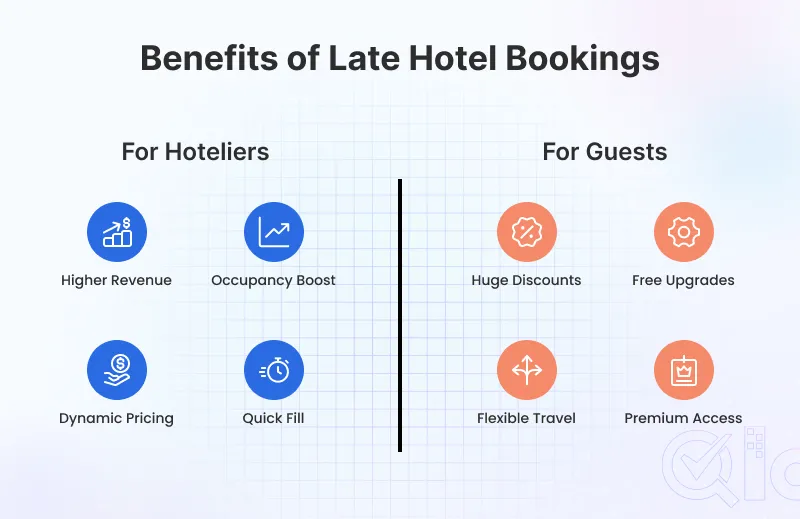
Huge Price Cuts on Empty Rooms: Hotels dread vacant rooms. Three days before your arrival, and they still have availability? Expect 20 to 50% discounts.
A hotel with 30 empty rooms and two days to fill them will cut prices aggressively.
The math is simple: they’d rather earn 50% of their usual rate than earn nothing at all.
Free Upgrades and Perks: A late booking might score you a suite upgrade, and you might enjoy perks like free breakfast, Spa credits, & Late-night room service vouchers.
Hotels use these to fill gaps and create happier guests who become repeat customers. You’re not just getting a cheaper rate; you’re getting added value that early bookers never see.
Better Rooms and Views: Last-minute availability often includes premium inventory. The oceanfront suite that was blocked for early bookers? It might be yours at a discount.
Hotels release choice rooms strategically, and timing your booking right means you benefit.
The Numbers Back This Up: After 2020, booking data showed something clear. Last-minute travelers saved 15 to 30% versus early bookers.
In some cases, we’ve seen savings exceed 35% for bookings made within 7 days of arrival.
The trend isn’t slowing down. It’s accelerating.
The Risk Factor: Is Waiting Really Safe?
We know what you’re thinking: What if all the rooms are actually gone?
Here’s the reality. Hotels intentionally overstock their inventory for last-minute bookings. They know some guests will book early, some will cancel, and some will wait.
They plan for this. You won’t show up two days before your trip to find nothing available. What you’ll find are options—lots of them, and many at prices you didn’t expect to pay.
That said, waiting works best during off-peak and shoulder seasons. Holiday weekends? Book earlier. A random Tuesday in March? You’ve got breathing room.
The Hotelier Perspective: Maximizing Revenue in Real Time
The Problem With Deep Early Discounts
Offer a big discount now to lock in bookings, and you’re banking on demand staying flat.
But if it surges later, you’ve sold your best rooms at weak prices, your margins shrink, and revenue suffers. You’ve essentially promised away profit you could have earned, and you can’t get it back.
Here’s what happens: You offer a 30% discount in January for a June stay. Then spring conferences schedule events, schools plan trips, and suddenly you’re booked solid.
But those early bookers? They’re locked in at that deep discount. You’ve left money on the table—sometimes thousands of dollars per month across your property.
Why Late Bookings Mean Real Profit
Smart hotels embrace last-minute demand.
More Revenue Per Room: Use dynamic pricing (prices that shift with demand) and watch revenue jump 10 to 25% per available room.
Hotels track this as RevPAR (Revenue Per Available Room). This metric matters because it captures both your occupancy rate and the actual revenue coming in.
A fully booked hotel at low rates generates less revenue than a 90% booked hotel at optimized rates.
Strategic Inventory Release: A slow Tuesday looks different on Sunday than three months out. Release rooms at the right price points and fill those nights without cannibalizing premium rates.
You’re not lowering all prices, just being strategic about which rooms sell at which prices, and when.
Occupancy Spikes: Hotels using yield management systems see occupancy rise 15%. Empty becomes full. Loss becomes profit.
More importantly, your reputation improves. Full hotels create better guest experiences, better reviews, and better word-of-mouth marketing.
Reduced Cancellation Impact: Late bookings leave less time for cancellations. When someone books 48 hours before arrival, the likelihood they’ll cancel drops dramatically.
Your revenue becomes more predictable, and your staff can plan better.
How QloApps Solves This
QloApps equips you with dynamic pricing built in.
Your inventory syncs across channels instantly with the help of the integrated Channel Manager.
You’re not juggling bookings across five different platforms, manually updating rates, and hoping you don’t oversell.
Everything flows through one system. Analytics show what actually works. No massive OTA (Online Travel Agency) commissions eating into your profit.
You see, in traditional OTA models, you pay 15 to 25% commission on every booking. Lose 20% of your revenue to commissions, and you’re working much harder just to break even.
With direct booking tools powered by QloApps, you keep that margin.
Last-minute bookings transform from chaos into organized growth. You operate on data, not guesses.
Key Strategies for Late Bookings Success
Guests: Hunt Smarter
Set phone alerts on booking apps: Check daily. You need visibility into real-time price changes.
Most travel apps let you set alerts for specific properties or date ranges. Use them. When prices drop 15% or more, you get notified immediately.
Target mid-week and shoulder seasons: Prices drop furthest in these windows. Business travelers keep Tuesday-Thursday rates high during the off-season.
Hit those days, and you’ll see bigger discounts. Similarly, April and September see lower demand than July or December. Your flexibility multiplies your savings.
Watch for flash deals and holiday-specific offers: Hotels release special inventory around holidays and slow booking periods.
Being aware of these windows means you catch deals others miss. A rainy day in June might trigger a hotel to push flash deals just to move rooms.
Be ready to book immediately: When you spot your deal, don’t deliberate. Last-minute inventory moves fast, and hesitation costs you the room or the rate.
Hoteliers: Release Strategically
Don’t dump all inventory at once: Releasing 50 rooms at once signals desperation and trains guests to wait even longer.
Instead, be methodical.
Stagger releases at different price tiers: Release 10 rooms at your normal rate on Day 7. 15 rooms at a 10% discount on Day 4.10 rooms at a 25% discount on Day 2.
You’re capturing different guest segments and maximizing revenue across the entire price spectrum.
Send email and SMS blasts to past guests: Highlight flash deals to your existing customer base. They’re your fastest-converting audience.
A returning guest who sees your flash deal is far more likely to rebook than a stranger seeing a discount ad. Personalization drives conversion.
Create urgency without being deceptive: “Only 5 rooms left at this price” is honest and drives action. Make sure it’s actually true.
Honesty builds trust, and trust builds repeat bookings.
Leverage loyalty programs: Give past guests early access to flash deals. They feel valued, and you fill rooms with your most profitable customers.
Both Sides Win Together
Transparent platforms like QloApps help everyone. Guests get honest deals. Hoteliers move rooms and maximize revenue. No confusion. Real-time updates and fair prices.
The hospitality industry thrives when trust exists. Guests who feel they got fair deals become loyal.
Hoteliers who maximize revenue sustainably grow. Platforms that facilitate this transparency become indispensable.
Common Myths and Realities
Myth: The early bird gets the worm.
Reality: Worms go on sale at closing time. Early birds overpay. You’re paying for convenience and peace of mind—but the financial cost is real.
Myth: Book late and rooms are gone.
Reality: Hotels over-prepare. They keep inventory ready. Last-minute travelers find plenty. The fear is understandable, but data doesn’t support it.
Myth: Late bookings mean lower quality.
Reality: Late availability often includes premium rooms. Hotels want satisfied guests. A discounted suite beats an early-booked standard room.
2024 booking data confirms this shift is real. Late bookings consistently outperform early deals. More importantly, the gap is widening.
As more hotels adopt dynamic pricing and more guests recognize the trend, early booking discounts are becoming less competitive.
The Sustainability Angle
Here’s something worth considering beyond just price: Late bookings reduce waste.
When hotels fill rooms that would otherwise sit empty, they optimize resource use.
Fewer empty rooms mean less wasted energy on unoccupied space. It also means fewer canceled reservations, disrupting staff schedules, and more efficient operations overall.
Booking strategically means waiting for that last-minute deal. This actually supports more sustainable hospitality practices.
You’re part of a system that fills rooms efficiently. That’s better than incentivizing early discounts that often lead to cancellations.
Conclusion
Late bookings give you three things early deals can’t: value, flexibility, and honest economics.
The industry is shifting. So are smart travelers and hoteliers. The old model—book months early for peace of mind—is becoming outdated.
The new reality? Prices reflect real demand, and real demand emerges close to arrival dates.
See firsthand how strategic pricing, real-time analytics, and smart inventory management transform your bottom line.
Why settle for early regrets when late wins are waiting?
Get In Touch
Managing last-minute availability doesn’t have to be stressful, not when you have the right tools by your side.
With QloApps, you can effortlessly update your availability in real-time, promote flash deals, sync across platforms, and keep your bookings flowing even at the last minute.
Download QloApps today and discover just how easy it is to turn unbooked nights into steady revenue.
Have questions or need a hand? Our friendly support team is just a click away and always happy to help you make the most of every booking opportunity.


Be the first to comment.