How IoT Improves Hotel Operations and Guest Experience
Technology has quietly changed how hotels operate, and one of the biggest shifts comes from IoT in hotel industry.
It may not always be visible, but it plays a strong role in how smoothly things run behind the scenes and how comfortable a guest’s stay feels.
From smart room controls to automated systems, the use of IoT in hotel industry is helping hotels manage daily operations more efficiently while also improving guest satisfaction.
It is not just about adding new technology. It is about making everyday processes easier for both staff and guests.
How IoT Improves Daily Hotel Operations
Hotels manage multiple tasks at the same time. Rooms need cleaning, guests need assistance, and maintenance requests need attention.
Without proper coordination, small errors can happen. A room may be marked ready when it is not, or a request may get delayed.
IoT helps by providing real-time updates across departments. Staff can see what is happening and respond quickly.

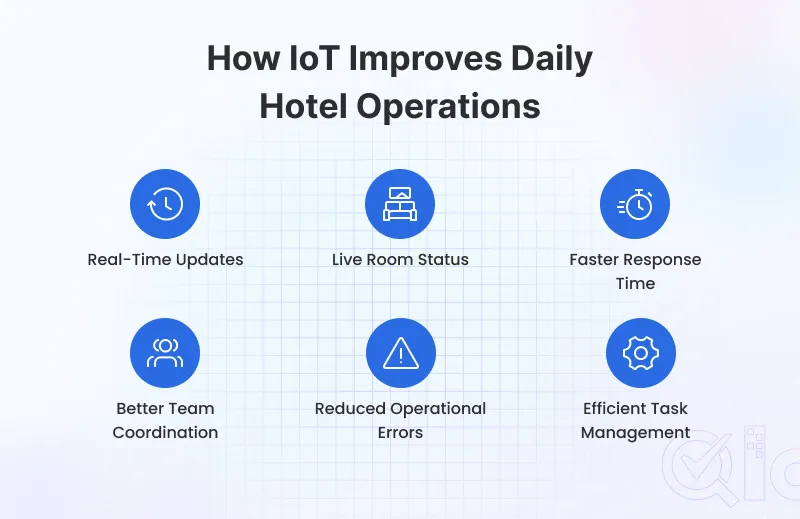
When this is combined with hotel automation systems, IoT in hotel industry improves operational efficiency and reduces confusion.
Smart Room Technology in Hotels
IoT plays a major role in creating smart rooms. Guests can control lighting, temperature, or even curtains with simple controls, sometimes from their phone.
When a guest leaves the room, energy usage can adjust automatically. When they return, settings shift back to a comfortable level. This reduces unnecessary usage while keeping the experience smooth.
These small changes make a noticeable difference, which is why IoT in hotel industry is often linked directly with better guest comfort.
How IoT Enhances Guest Experience in Hotels
Guests may not focus on the technology itself, but they do notice how smooth everything feels.
Quick responses, simple controls, and fewer delays all contribute to a better experience.
Being able to adjust the room environment or request services easily creates a sense of comfort and control.
This is where IoT in hotel industry directly improves guest satisfaction without making the experience feel complicated.
Improving Coordination Between Hotel Departments with IoT
Behind the scenes, hotel operations depend on coordination between teams. Housekeeping, front desk, and maintenance all rely on accurate updates.
IoT systems help by sharing information instantly. When a room is cleaned, the status updates right away. If there is a maintenance issue, it gets flagged without delay.
With tools like QloApps, this coordination becomes smoother, allowing teams to stay aligned and work more efficiently.
How IoT Reduces Errors in Hotel Operations
Many operational problems come from small communication gaps. A missed update or delay can affect the guest experience.
IoT improves visibility and helps staff act earlier instead of reacting later. This becomes especially useful during busy periods when there is less room for error.
This allows staff to act earlier instead of reacting after a problem has already occurred. It becomes especially useful during busy periods when there is less room for mistakes.
As a result, IoT in hotel industry helps maintain consistency across daily operations.
Energy Efficiency in Hotels Using IoT
Energy usage is a major concern for hotels. IoT systems allow lighting and temperature to adjust based on whether a room is occupied.
This reduces unnecessary consumption without affecting guest comfort. Over time, it helps lower operational costs and supports sustainability efforts.
For many hotels, IoT in hotel industry has become both a practical and cost-effective solution.
Practical Implementation in Hotels
Getting started with IoT does not have to be complicated. Most hotels begin with small changes that solve everyday problems.
It might be simple, like using sensors to manage energy better or making sure room status updates reach housekeeping without delays, especially when supported by automated housekeeping systems.
What matters more is whether it actually helps in daily work. If staff find things easier and guests feel the difference, then it is working.
Over time, hotels expand gradually. That is usually how IoT in hotel industry becomes part of regular operations without adding unnecessary complexity.
Conclusion
IoT works quietly in the background, improving small parts of hotel operations that add up over time.
Guests may not always notice the technology directly, but they do notice when things feel smooth and well-managed.
For hotels, it helps reduce errors, improve coordination, and create a more consistent experience.
In the end, IoT in hotel industry is not about adding more systems. It is about making sure everything works better together.
Get in Touch
Managing hotel operations becomes easier when systems are connected and organized.
With QloApps, hotels can manage bookings, coordinate teams, and handle daily operations without confusion.
It brings everything into one place so staff can focus more on guests and less on manual work.
If you are looking to improve your hotel operations, starting with simple and practical solutions can make a real difference.
Have questions or ideas? You can connect with the QloApps community and share your thoughts.