How Hotels Increase Profit With Non-Refundable Rates
Hotels always look for smart ways to increase revenue. Non-refundable rates are one of the best strategies they use today.
These rates lock in payment early and reduce last-minute cancellations. They help hotels plan better and stay profitable all year.
Here we’ll see why smart hotels rely on non-refundable rates to stay profitable. You will also get practical tips to make them work for your property.
What Are Non-Refundable Rates?
A non-refundable rate is a discounted room price that guests pay upfront. Once booked, the hotel keeps the payment even if the guest cancels.
These rates are usually more affordable than flexible rates. Guests get a lower price, and hotels get guaranteed bookings.
Hotels offer these rates through their website or Online Travel Agencies (OTAs). They are simple, clear, and work well for both sides.
How Non-Refundable Rates Increase Hotel Profit
Non-refundable rates give hotels a strong financial advantage. They reduce uncertainty and help hotels earn more with less risk.
Guests who book these rates are serious about their trip. This means fewer surprises and more confirmed stays for the hotel.
Hotels that use these rates effectively see better results. They spend less time chasing cancellations and more time on the hospitality experience.

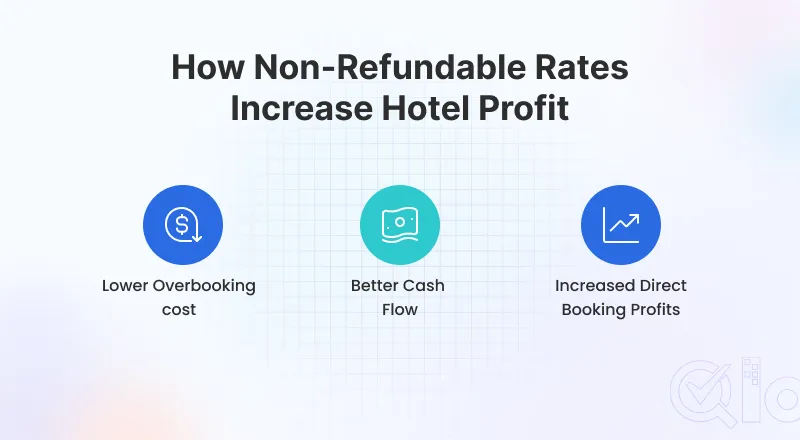
1. Better Cash Flow and Reliable Income
Non-refundable bookings bring cash in early, before the guest even arrives. This gives hotels a steady income stream they can count on every month.
Even if a guest cancels, the hotel keeps the payment and loses nothing. This protects revenue during slow seasons and unpredictable periods.
Early cash helps hotels pay staff, buy supplies, and plan operations with confidence. It removes financial stress and keeps the hotel efficient.
2. Lower Overbooking Costs
Overbooking happens when too many guests cancel at the last minute. Hotels then scramble to fill those empty rooms quickly.
Non-refundable rates reduce cancellations, so hotels face fewer empty rooms. This means less money lost and fewer unhappy guests to deal with.
Lower overbooking also protects the hotel’s reputation and guest trust. A hotel that runs smoothly earns better online reviews and more repeat bookings.
3. More Profit From Direct Bookings
Hotels earn more when guests book directly through their own hotel website. Non-refundable rates work especially well as a direct booking incentive.
Offering a lower non-refundable price on the hotel site attracts budget-aware guests. These guests skip OTAs and help the hotel save on commission fees.
More direct bookings mean higher profit margins on every reservation. It also helps hotels build a stronger relationship with their guests.
Flexible Rates vs. Non-Refundable Rates
Flexible rates give guests the freedom to cancel without losing money. Non-refundable rates offer a lower price in exchange for a firm commitment.
Flexible rates work better during low seasons when hotels need to attract hesitant travelers. Non-refundable rates shine during peak seasons when demand is already high.
Business travelers usually prefer flexible rates because plans change often. Leisure travelers with fixed dates are more comfortable locking in a non-refundable deal.
The smartest hotels do not choose one over the other. They offer both and use data to decide which rate to push at the right time.
A balanced rate strategy helps hotels attract more guest types and maximize revenue. It gives your property the flexibility to perform well in any season.
Best Practices for Offering Non-Refundable Rates
1. Price Them the Right Way
The discount on a non-refundable rate should feel worth it to the guest. A 10 to 15 percent discount is a good starting point for most hotels.
If the discount is too small, guests will just pick the flexible rate instead. The price gap needs to be attractive enough to drive a real decision.
Use dynamic pricing to adjust your non-refundable rates based on demand and season. Test different discount levels and stick with what your guests actually respond to.
2. Be Open and Honest With Guests
Always show the cancellation policy clearly before the guest confirms their booking. Hidden conditions lead to complaints, bad reviews, and unhappy customers.
Use simple language that anyone can understand without reading the fine print twice. Guests should know exactly what they are agreeing to before they pay.
Transparency builds trust, and trust brings guests back to your hotel again. Honest communication is always good for long-term business growth.
3. Open and Close Rates at the Right Time
Non-refundable rates work best during peak seasons and high-demand periods. Turn them on when your hotel is likely to fill up fast anyway.
During low seasons, flexible rates may attract more hesitant travelers. Use data from past bookings to decide when each rate type performs better.
Smart timing helps you get the most value from every rate you offer. It also keeps your pricing strategy balanced and competitive throughout the year.
4. Match Rates to the Right Guests
Business travelers often need flexibility, so non-refundable rates may not suit them. Leisure travelers with fixed vacation dates are your best target audience here.
Use guest data and booking patterns to identify who books non-refundable rates the most. Then promote those rates to the right people at the right time.
Matching your rates to the right guests improves both conversion and satisfaction. It also reduces the chance of disputes or refund requests after booking.
How Technology Supports Non-Refundable Rates
A Hotel Property Management System makes rate management easy. It lets hotels create and manage non-refundable rates without any technical hassle and manual work.
You can set up different cancellation policies for each rate plan in just a few clicks. This gives your team full control over how each rate behaves.
It also supports direct bookings through a built-in booking engine. This helps hotels grow revenue while keeping full control of their pricing strategy.
Conclusion
Non-refundable rates are a simple and effective way to grow hotel profit. They reduce cancellations, improve cash flow, and create a reliable revenue all year.
When used with the right pricing and clear communication, these rates benefit both the hotel and the guest. Everyone gets a fair deal and fewer surprises along the way.
Start using these rates as a core part of your hotel pricing strategy today. With the right tools and approach, your hotel can earn more and run more smoothly every day.
Get In Touch
If you’re ready to increase your hotel’s revenue or have any questions, QloApps is here to assist!
Let’s collaborate to streamline your processes and enhance guest satisfaction.
Discover how QloApps’ Property Management System and Channel Manager solutions can simplify your operations and boost your revenue.
Get in touch now, and future-proof your business for the future of hospitality.