
Most people who visit a hotel website leave without booking a room. Hotel remarketing exists to bring these visitors back and turn that interest into a real reservation.
A guest might check room photos, compare prices, then close the tab to think it over. Hotel remarketing follows that guest across the web with a reminder to finish the booking.
This guide explains how hotel remarketing works and how to set it up. It also covers how a strong PMS (Property Management System) makes campaigns easier.
What Hotel Remarketing Actually Means
Hotel remarketing shows ads only to people who already visited the hotel’s website. These are not cold strangers; they are travelers who already showed real interest.
This targeting makes hotel remarketing far more efficient than a generic display ad. A person who viewed the deluxe room page is much closer to booking than a random browser.
Retargeted ads also convert at a far higher rate than standard display ads. Hotels running retargeting ads often see click rates ten times higher.
That gap exists because remarketing reaches people already mid-decision, not people starting from zero. The ad simply nudges a near-ready guest back toward the booking button.
Why Most Website Visitors Leave Without Booking
Travelers rarely book on their very first visit to a hotel site. Most compare several properties, check dates again, and come back later to decide.
A slow booking engine also pushes many visitors away before they finish. If a page takes more than a few seconds to load, guests often just leave.
Price hesitation is another common reason visitors close the tab unbooked. A guest may love the room but still want to see if a better rate appears elsewhere.
Hotel remarketing exists precisely to catch this group of undecided visitors. Without it, that interest usually ends up booked through an OTA instead of the hotel directly.
How to Set Up a Hotel Remarketing Campaign
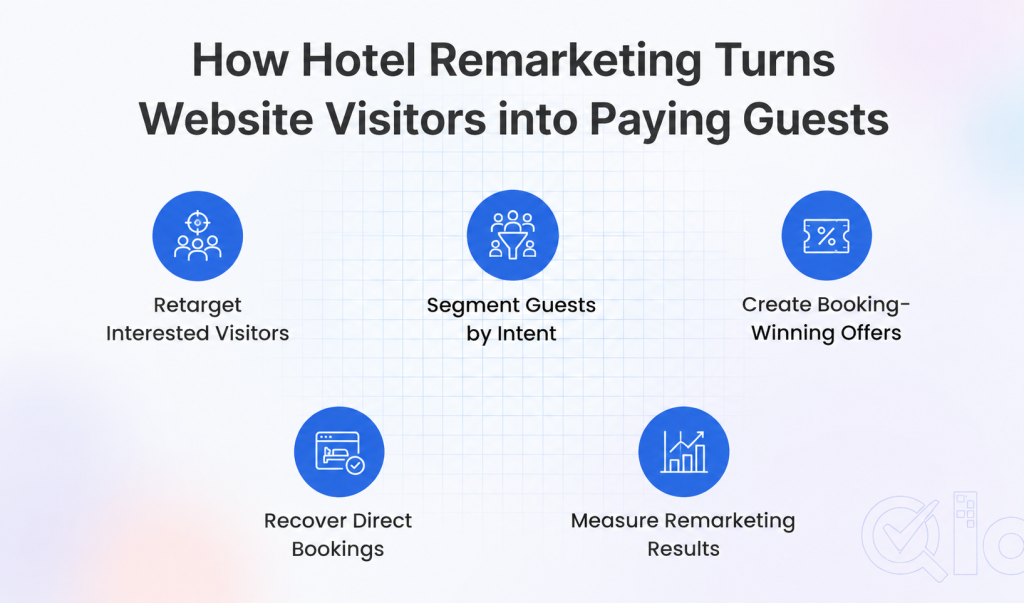
Start by installing a tracking tag across every page of the booking engine. This tag is what lets ad platforms recognize a return visitor later on.
Segment visitors by what they actually did on the site, not just that they visited. Someone who reached checkout deserves a different ad than someone who only viewed the homepage.
Tools like the Google Retargeting add-on let hotels tag rooms and rates for ad platforms. This keeps ads accurate to real prices.
Timing also matters more than most hotels realize at first. Reaching a visitor within 24 to 72 hours after their visit delivers the strongest recovery results.
Crafting Offers That Actually Recover Bookings
A generic ad rarely pulls a hesitant visitor back to complete a booking. The offer needs a clear reason to act now instead of waiting longer.
Small, direct incentives work well for this kind of nudge. A limited-time discount or a free breakfast add-on can push a guest toward finishing the booking.
Email remarketing deserves just as much attention as paid display ads. A guest who leaves at checkout with an email on file can be reached at almost no extra cost.
Pairing these tactics with a broader marketing plan keeps the funnel working end to end.
Protecting Direct Bookings From OTA Leakage
Every visitor recovered through hotel remarketing is a booking that skips OTA commission. That difference adds up fast across a full season of bookings.
Hotels also need to guard their own brand name in these campaigns. Some competitors and OTAs bid on a hotel’s own name to intercept that same traffic.
Watching for hotel brandjacking protects the value that remarketing budget creates. A recovered visitor should land on the hotel’s own site.
Measuring What Hotel Remarketing Actually Delivers
Impressions and clicks look good on a report but rarely tell the full story. The number that matters most is completed bookings tied back to the campaign.
Compare the cost of each recovered booking against the commission an OTA would have charged. In most cases, hotel remarketing costs far less than losing that same guest to a third party.
Segment performance by device type too, since mobile and desktop visitors often behave differently. A guest browsing on mobile may need a shorter, simpler ad than one on a desktop screen.
Reviewing results weekly helps hotels catch a weak offer before it wastes budget. Small adjustments to timing, offer, or audience often lift results significantly.
Pairing paid ads with a strong social media presence extends this recovery effort. Repeat visibility builds trust, and trust drives bookings.
Final Thoughts
Hotel remarketing turns a hotel’s own website traffic into one of its best booking channels. It recovers guests who already showed interest instead of chasing new ones from scratch.
A frequency cap also matters, since the same ad shown too often can annoy rather than persuade. Three to five impressions over a week or two is usually enough to prompt a decision.
Set up clean tracking, segment visitors by intent, and offer a real reason to return. Done well, hotel remarketing quietly becomes one of the highest-return tools in a hotel’s marketing plan.
Get in Touch
Ready to take your hotel operations to the next level? Get in touch to explore the right solutions for your property, from seamless bookings and distribution to smarter day-to-day management.
If you have any suggestions, you can share them on the QloApps forum. For any technical assistance, kindly raise a ticket.

Be the first to comment.