
Hotel room status keeps hotel operations running smoothly. When a guest checks out and housekeeping finishes cleaning, the front desk often doesn’t know the room is ready for the next guest.
Staff shouldn’t have to rely on phone calls or hallway conversations just to confirm hotel room status. Improving front desk operations with the right technology helps every department stay in sync.
Many of these delays begin at the front desk, where timely room updates help keep the guest journey running smoothly.
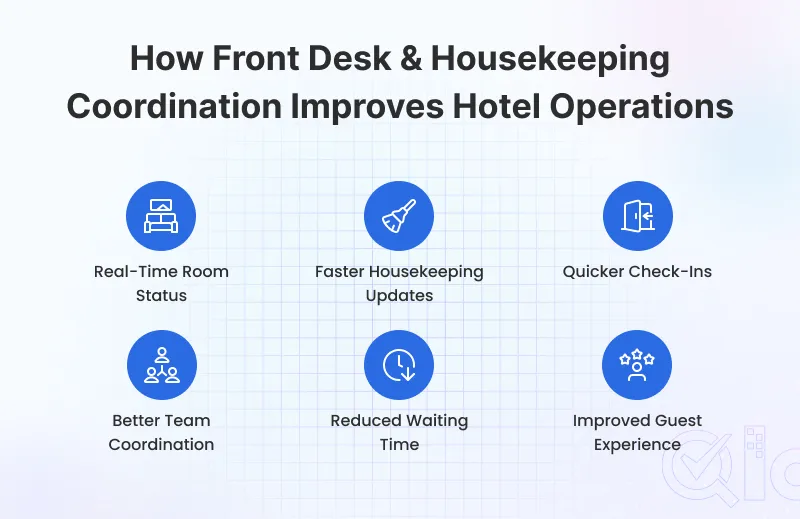
Why Status Delays Cost You Guests
When guests arrive early, one of their first questions is whether their room is ready. If the front desk doesn’t have an answer, the wait becomes even more frustrating.
That uncertainty erodes trust quickly because an inaccurate hotel room status leaves guests waiting for rooms that are already clean.
A few minutes here and there may not seem important, but they quickly pile up during busy weekends or peak seasons.
It also adds pressure on front desk staff, who spend busy shifts answering the same questions again and again.
The cost isn’t measured only in guest patience. Staff who spend their time chasing room status updates have less time to focus on guests.
Give Front Desk and Housekeeping the Same Real-Time View
Both teams work best when they’re looking at the same live hotel room status instead of relying on separate updates.
A shared, real-time room status board removes this kind of guesswork, since housekeeping marks a room clean and the front desk sees it instantly.
Today, many hotels use digital tools to keep room status visible to everyone who needs it.
Without a shared system, staff end up relying on radios, sticky notes, or memory, none of which scale well as occupancy grows.
Even a well-trained team eventually loses track of a few rooms during a busy checkout window, simply because there’s no single place recording what’s actually happened.
Build a Housekeeping Workflow That Updates Automatically
Most hotel room status mistakes don’t happen during cleaning—they happen while information is being passed from one team to another.
Automated housekeeping systems solve this by tracking real-time room status and syncing it directly with the front desk.
Automation isn’t only useful for large hotel chains. Smaller properties benefit just as much because everyone works from the same room information.
Task assignments update automatically as rooms move from dirty to clean and then to inspected, so nothing depends on someone remembering to update a board.
Reduce Time Between Checkout and Room Readiness
The time between checkout and room readiness often determines how efficiently a hotel operates.
As soon as a guest checks out, that change in status should trigger a housekeeping task immediately, rather than waiting until someone notices the room is empty.
This is exactly where a property management system makes a difference.
A PMS updates the hotel room status the moment a guest checks out, letting housekeeping mark it clean once finished.
For a closer look at what actually happens during this window, this breakdown of housekeeping after guest checkout walks through each step.
Use a PMS to Keep Every Department in Sync
Tracking this information isn’t only a housekeeping concern, as maintenance, front desk, and management all depend on the same accurate data.
A property management system connects these departments through one shared source of truth, so every team sees the same room status at the same time.
The housekeeping module within a PMS tracks tasks and maintenance needs together in a single place.
Instead of checking multiple systems or asking different departments, staff can see the latest room status in one place.
This matters most during busy periods, when even a small mismatch between departments can snowball into delayed check-ins across several rooms at once.
Train Staff to Trust the System, Not Just Habit
Technology only helps if staff actually rely on it instead of falling back on old habits, which is why training matters as much as the software itself.
Staff need to trust that the room status shown on screen is accurate and current, or they will keep double-checking manually anyway.
If you’re introducing a new system, integrating a new PMS is worth reviewing before rollout.
Setup order affects how smoothly staff adopt the new workflow.
Once the team trusts the system, checking room status becomes second nature instead of an extra task.
Conclusion
Hotel room status delays seem small individually, but they add up to slower check-ins, frustrated guests, and wasted staff time.
Connecting front desk and housekeeping through one accurate, real-time system solves most of this without adding extra work for anyone.
Start by identifying where your current updates break down, and then fix that single point first.
Get in Touch
Looking for an easier way to manage bookings while creating better guest experiences? QloApps can help.
QloApps helps hotels manage reservations, housekeeping, room readiness, and daily operations from a single platform.
Have suggestions? Join the QloApps Forum and share your thoughts.

Be the first to comment.