Dynamic Pricing Lessons From the FIFA World Cup
Every four years, the world stops for football. People plan trips years ahead. They save money, apply for visas, and fly thousands of miles just to be in the stadium.
During the FIFA World Cup, host cities experience a huge increase in demand, causing hotel rooms and flights to fill quickly and prices to rise significantly.
But this does not happen by chance. There is a clear reason behind it, and hotels can learn many useful lessons from it.
Understanding Dynamic Pricing in Hospitality
Let me explain dynamic pricing in the simplest way possible. You charge more when people really want your rooms. You charge less when they do not.
A hotel near a cricket stadium charges differently on match days versus off days. A resort town charges more in summer than in January.
You look at what is happening around you, and you set your price accordingly.
Hotels that react to this movement make noticeably more money than hotels running on a fixed rate list they printed two years ago.
Why Prices Rise During Major Events
When thousands of football fans come to one city in just a few days, they all need hotels, food, and transport, which increases demand for these services.
But the city only has so many hotel rooms. That number does not change just because demand went crazy.
So, prices go up not because hotels want to charge more, but because the demand becomes much higher than the available rooms.
But when ten people want the same room, the room naturally goes to whoever pays the most.
This is exactly why event-based demand is one of the most powerful revenue drivers in hospitality.
Supply and Demand: The Biggest Pricing Lesson
Your room has a different value depending on the day, the season, and what else is happening in your city.
A room on a random day in March is worth very different money than the same room during a long weekend in December.
When your property is sitting at thirty percent occupancy and nobody is asking, holding a high rate out of pride is just leaving money on the table in a different way
A room that earns something is always better than a room that earns nothing.
This push and pull between occupancy and revenue is at the heart of every smart pricing decision a hotel makes
Event-Based Pricing Strategies Hotels Can Learn
The hotels that make the most money during busy periods are not the ones reacting fastest. They are the ones who planned three months earlier.

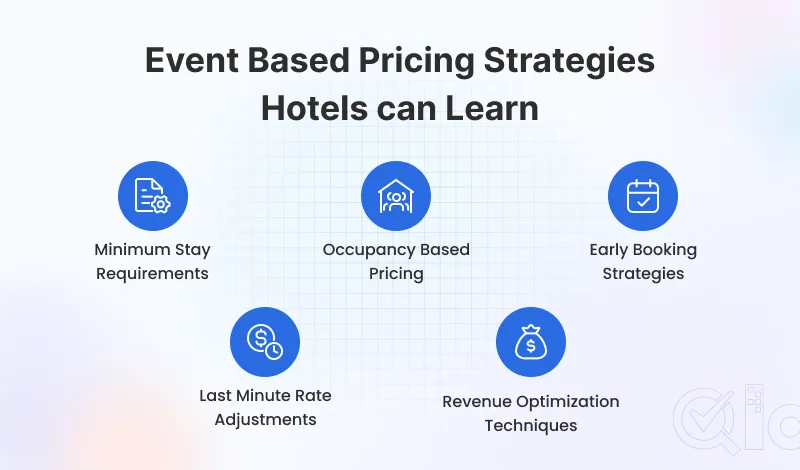
- Minimum Stay Requirements: If a big event runs over a weekend, require a two-night minimum. You earn more per booking and avoid the messy one-night gaps in your calendar.
- Occupancy-Based Pricing: It means your rates move as your rooms fill. Your last five rooms should never be priced the same as your first five. Scarcity is real, and your pricing should show that honestly.
- Early booking strategies: This strategy will reward guests who plan ahead. Offer a slightly better rate to people booking six or eight weeks out. You get confirmed revenue early.
- Last-Minute Rate Adjustments: This will give you flexibility right before check-in. Is demand still strong the night before? Keep your price exactly where it is.
- Revenue Optimization Techniques: If you pull all of this together into one consistent approach, rather than random decisions made day by day.
Dynamic Pricing Mistakes Hotels Should Avoid
Pushing rates too high too fast is one mistake. Guests are not loyal to your property when a cheaper option is three clicks away.
Going too low is just as damaging. Cheap rates attract a certain type of guest. They also train your regular customers to wait for discounts rather than booking at full price.
If every hotel nearby is charging a certain rate and you are way above or below it without a clear reason, guests will notice and question it.
Getting competitive pricing right means staying aware of what the market is doing without blindly following it.
Applying FIFA World Cup Pricing Lessons to Your Hotel
Your city does not need to host a World Cup for any of this to apply to you right now. Think about what already brings people to your area.
Start looking at your city’s calendar with fresh eyes. Mark the dates when demand historically picks up.
Build your pricing plan around those dates well in advance. Talk to your front desk team about what patterns they notice.
The Future of Dynamic Pricing in Hospitality
A few years ago, dynamic pricing was something only big hotel chains with dedicated revenue managers could pull off properly.
Today, there are affordable tools that small and mid-sized hotels can actually use. They track the local demand signals.
Many hotels already use smart pricing tools. If you still change rates manually once a week, you may fall behind competitors who adjust prices based on demand and market trends.
The gap will keep growing. Technology in hotel pricing is not slowing down. Getting familiar with even the basics now puts you in a much stronger position heading into the next few years.
Conclusion
The World Cup is loud, dramatic, and full of unforgettable moments. But underneath all of that, it is also a masterclass in how markets behave under pressure.
Hotels that study that behaviour and apply those lessons to their own operations will always outperform the ones that ignore it.
You do not need a massive budget or a full revenue team to start. You need a calendar, some booking data, and the willingness to move your rates when the moment calls for it.
Get In Touch
If you’re ready to elevate your hotel’s operations or have any questions, QloApps is here to assist!
Let’s collaborate to streamline your processes and enhance guest satisfaction.
Discover how QloApps’ Property Management System and Channel Manager solutions can simplify your operations and boost your revenue. Get in touch now!