Hotel Metrics Made Simple (2026): ADR, RevPAR and TRevPAR
Standard hotel metrics fail to show the truth. Occupancy rates seem clear, but they conceal actual profits.
ADR, RevPAR, and TRevPAR display actual business success. Working together, they measure pricing, daily efficiency, and overall guest value.
This guide explains all three simply, with real formulas and actionable steps. No revenue management background is needed to follow it or put it to use.
What Is ADR (Average Daily Rate)?
ADR tracks the average rate your guests pay each day. To see yours, simply divide your daily room income by the total rooms sold.

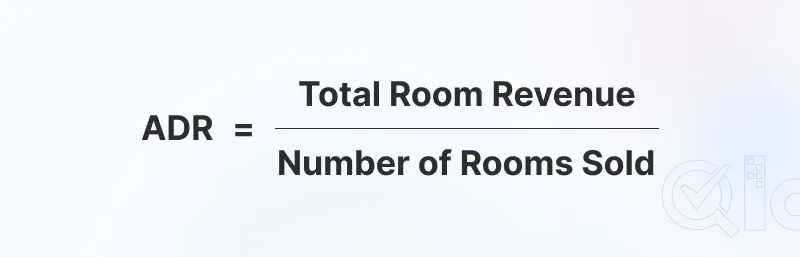
Guests booked 30 spaces and paid a grand total of $3,000. Your front office walked away holding a clean $100 room average.
ADR ignores empty beds, which makes your performance look artificially high. You make far less on a handful of pricey bookings than on a wave of discount volume.
What Is RevPAR (Revenue Per Available Room)?
Evaluating RevPAR exposes the real earning velocity across your entire room footprint. The metric balances out pricing strength directly against overall occupancy levels.

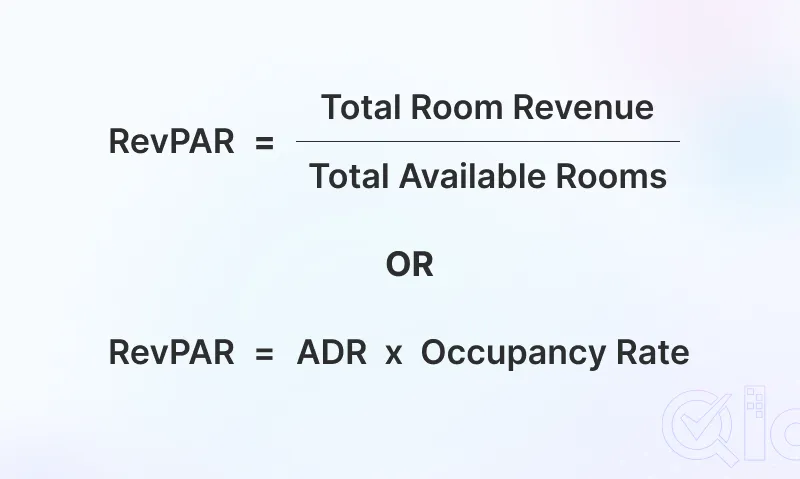
A 70% occupancy run on a $100 ADR pulls your daily RevPAR down to $70. That one data point exposes your actual performance better than pricing alone.
Managers track RevPAR every morning during the morning audit. However, this metric blinds you by ignoring all guest spending outside of room keys.
What Is TRevPAR (Total Revenue Per Available Room)?
TRevPAR adds up everything a property earns, not just room revenue. Divide total revenue from rooms, dining, spa, and other services by total available rooms.

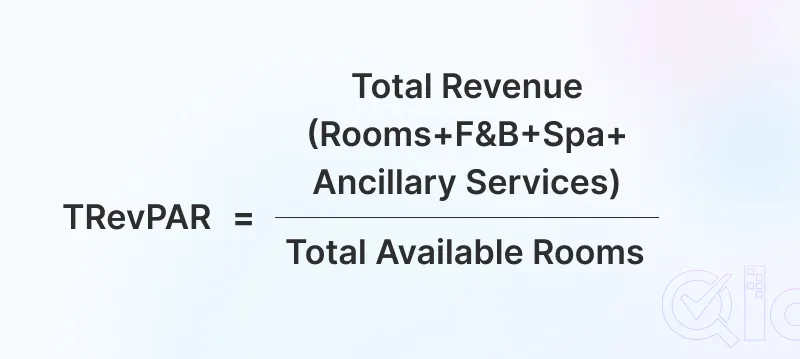
A $140 TRevPAR means your 50 rooms did way more than just sleep guests. They pulled $5,000 in lodging plus $2,000 combined from dinner and spa receipts.
Guests today spend real money beyond the bed. Spa bookings, curated dining, and activity packages are no longer extras — they are expected revenue for any alert property owner.
ADR vs. RevPAR vs. TRevPAR: Hotel Metrics Side-by-Side

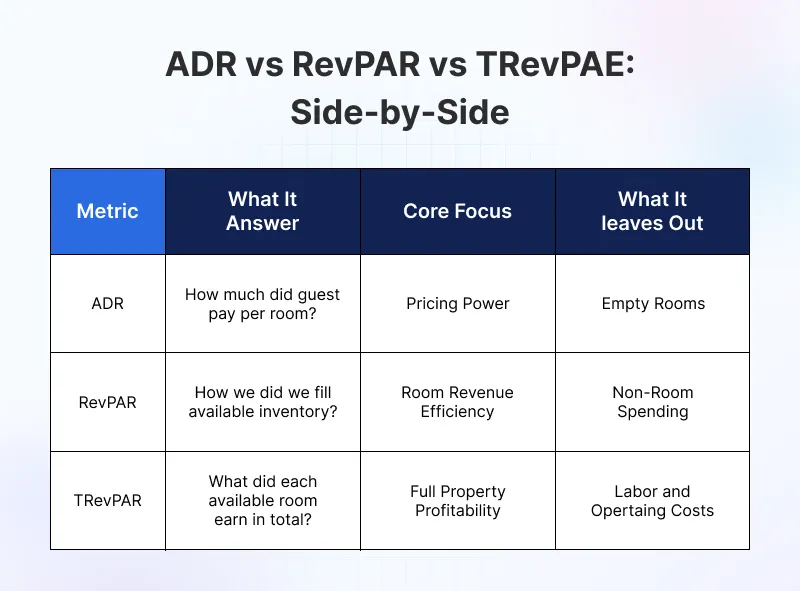
ADR is your pricing signal. It tells you what the market will pay right now, but says nothing about the rooms that sat dark all night.
RevPAR fixes that by tying your rate to volume. Multiply ADR by occupancy, and suddenly every empty room shows up in the number.
TRevPAR goes further still. A guest who books a room and spends $120 across the property is worth far more than the room rate alone will ever show you.
7 Strategies That Actually Move These Hotel Metrics
1. Automate your pricing
Manual rate changes are too slow for sudden demand shifts in your local market. A good property management system adjusts rates in real time without anyone watching a spreadsheet.
Rate automation also removes human error from your ADR calculations. One person forgetting to update a weekend rate can drag your weekly numbers down by a surprising amount.
Automation acts like a 24-hour night manager for your hotel rates. The software intercepts holiday demand spikes instantly while your staff sleeps.
2. Win more direct bookings
OTA platforms charge 15 to 25 percent per booking before you see a dollar. Every guest who books directly keeps that commission on your side and lifts your RevPAR without changing a single rate.
A seamless direct hotel website converts travelers trying to escape online travel agencies (OTAs) markups. They visit your domain to compare, so the checkout process needs an immediate hook.
Small perks work well here: free early check-in, a complimentary breakfast, or a room upgrade. The guest feels rewarded, and you protect your margin.
3. Price around local demand
A sudden trade expo or a global sporting event like the FIFA World Cup completely packs out the city for days. Without dynamic pricing active, faster competitors grab that premium revenue first.
Quarterly event tracking keeps your automated revenue tools aligned with local demand spikes. Even a minor ten-dollar bump across forty keys builds massive volume.
Local demand spikes also lift your TRevPAR if you plan for them. Add a special dinner menu or event package, and guests arriving for that occasion will spend well beyond their room rate.
4. Bundle non-room services into packages
Room-only options limit your overall property revenue. Attaching dining vouchers and amenity credits to bookings pushes wallet share higher without moving base rates.
Packaging rooms with perks changes the psychology of the purchase. Guests willingly pay a $150 premium for breakfast bundles over a basic $120 room charge.
Monitoring a small rotation of specialized packages reveals clear consumer spending trends. Monthly booking data highlights exactly where guests open their wallets.
5. Reduce rate leakage across OTA channels
Rate parity keeps your official booking engine competitive against massive third-party platforms. Undercutting your own domain via an OTA just funnels fees to rivals.
A Channel manager permanently fixes fragmented online pricing. One swift PMS adjustment instantly ripples across all external booking channels.
Rate leakage is a silent drain on ADR that many independent properties never notice until they audit their bookings channel by channel. Set a monthly check as a habit.
6. Upsell at check-in and during the stay
The front desk is a revenue touchpoint most properties underuse. A quick offer at check-in — room upgrade, spa booking, airport transfer — costs nothing to ask and often lands.
Front desk agents find success by pitching a single, highly tailored upgrade during check-in. Bombarding exhausted travelers with too many choices kills the sale.
Pairing this with automated upselling scales the habit beyond just check-in. Scaling that volume across dozens of weekly arrivals drives major annual growth.
7. Review your hotel metrics weekly, not monthly
Monthly reviews are too slow to catch pricing mistakes before they compound. A weekly look at ADR, RevPAR, and TRevPAR lets you course-correct while the damage is still small.
A dedicated Monday morning audit locks in a reliable year-over-year performance baseline. Comparing identical calendar weeks highlights shifting demand trends instantly.
Weekly hotel reports also make forecasting easier. When you know what your RevPAR does the week before a local festival, you can price the next one with confidence instead of guesswork.
How to Track Hotel Metrics Without the Headache
Doing these calculations by hand works for a 10-room guesthouse. For anything bigger, manual tracking creates errors and eats hours you simply do not have.
A modern PMS calculates all essential hotel metrics. The moment a booking is confirmed or a guest checks out, the numbers update on your dashboard and stats without a single formula.
Disconnected tools are the bigger risk. Separate systems for bookings, front desk, and restaurant turn your TRevPAR into a guess — and bad guesses cost real money.
Conclusion
ADR, RevPAR, and TRevPAR are not rivals. Each of the three hotel metrics answers a different question about your property’s financial health.
ADR guards your rate. RevPAR shows how well you fill rooms at that rate. TRevPAR reveals what your guests are truly worth once they walk through your door.
Open your dashboard right now and check all three. If your system cannot show them in real time, that is the first thing worth fixing today.
Get In Touch
If you are a hotelier who wants to measure your hotel’s performance and KPIs in real time, then start using QloApps Today.
QloApps is a free hotel management software that provides a complete integrated solution of a hotel website, PMS, and a booking engine.
For more details about QloApps, please feel free to connect with our support team.