
Operating a hotel requires 24/7 people management. Getting the daily staff schedule right is a high-stakes responsibility for any manager.
Labor costs consume 25 to 35 percent of hotel revenue. An inefficient schedule diminishes profit margins every week.
This guide covers everything hoteliers need to know about Hotel staff scheduling in 2026. Whether you run a small or large property, these steps will help you build better shifts.
Why Hotel Staff Scheduling Matters in 2026
Hotels run 24 hours a day with distinct needs. A single gap in coverage directly affects how guests experience your property.
Rising Labor Costs
Hotel workers cost more to hire this year. Every extra hour of unplanned overtime makes it harder for managers to control the budget.
Unpredictable Demand
Global events like the FIFA World Cup push hotel demand higher in unexpected ways. A schedule built last week can become outdated overnight.
Real Business Impact
Poor scheduling hurts finances and online reviews. Over time, bills grow, service slips, and good staff look for more stable jobs.
Outdated Tools
Most hotels still rely on spreadsheets or WhatsApp Groups. That breaks down fast when occupancy changes, and teams are stretched thin.
Common Hotel Staff Scheduling Challenges
Fluctuating Occupancy and Demand
Demand can double over one weekend if a group arrives. Staff for what is on the books now instead of relying on stale averages.
Managing Multiple Departments
Hotels manage multiple departments simultaneously. Kitchen operations peak during breakfast, housekeeping mid-morning, and the front desk at check-out.
Last-Minute Absences and No-Shows
A single absence disrupts operations. Build a proactive plan using hotel staff training and development to cross-train your team.
Labor Law Compliance
Most employment laws require a minimum rest gap between shifts. Quick turnarounds can get you fined in many areas.
High Employee Turnover
Hospitality turnover is high, and erratic shifts make it worse. Workers quit when they can never plan their lives ahead of time.
Department-by-Department Scheduling Guide
Front Desk
Ensure that reservations staff support the front desk from 10 AM to 2 PM. Use consistent shifts to maintain team morale and consistency.
Housekeeping
Maintain a stable housekeeping ratio to protect your team from split shifts. Proper workflows maximize the importance of housekeeping in hotel management.
Food and Beverage
The morning and evening meals require two different teams. Avoid scheduling back-to-back closing and opening shifts for staff.
Maintenance and Security
Book maintenance work when the hotel is quiet. Keep a technician on call, and ensure security covers every night shift with a clear plan.
Seasonal Scheduling Strategy for Hotels
Peak Season
Onboard seasonal hires early to ensure proper training. Streamlining these workflows helps optimize hotel staffing for peak season rushes
Off-Season
Cut hours before cutting staff to keep your core team intact. Use this time for training so your team comes back stronger.
Shoulder Season
Shoulder periods are variable. Use proven tricks for handling hotel occupancy fluctuations during low-demand windows.
How to Build a Hotel Staff Schedule Step by Step
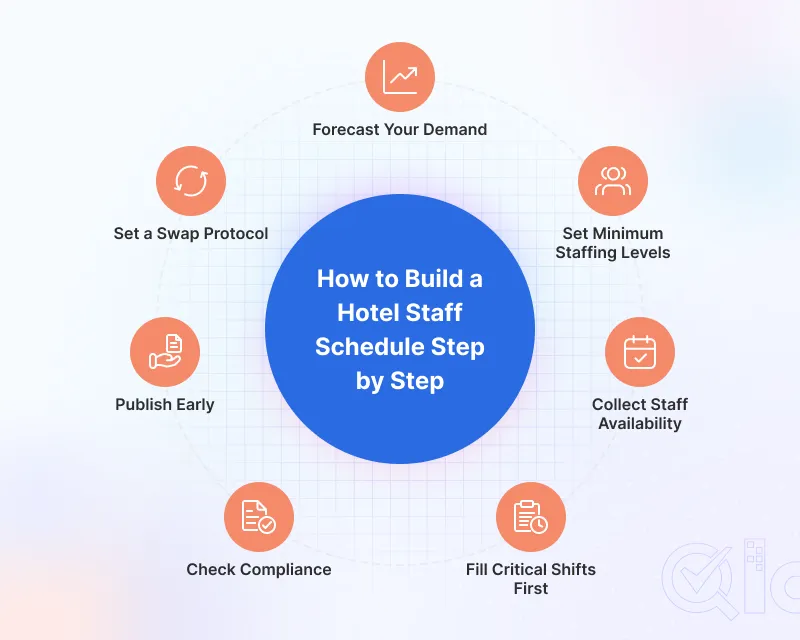
Good schedules follow a clear process. Here is the step-by-step method that works for most hotel properties.
Step 1: Forecast Your Demand
Actual booking data must dictate shift distribution. Optimize this process by integrating hotel financial forecasting with AI platforms.
Step 2: Set Minimum Staffing Levels
Establish a clear staffing floor for each shift. Documenting these baselines within your operational guidelines maintains service standards.
Step 3: Collect Staff Availability
Gather staff availability before drafting the schedule. Securing these details in advance minimizes subsequent shift adjustments and conflicts.
Step 4: Fill Critical Shifts First
Begin by covering the toughest slots, including overnights and weekends. Once these critical shifts are secure, you can easily map out the rest.
Step 5: Check Compliance
Check every shift for rest gap violations and overtime breaches. Fix every issue before the schedule leaves your desk.
Step 6: Publish at Least 7 to 10 Days Early
Share schedules early to ensure team reliability. Waiting until the last minute creates stress and leads to staff no-shows.
Step 7: Set a Swap Protocol
Define a clear approval process for all shift trades. Without this policy, changes trigger workplace confusion and arguments.
Hotel Staff Scheduling Best Practices in 2026
Good hotel staff scheduling comes down to a few basic routines. These everyday routines work for properties of any size.
Cross-Train Your Team
Target a 30% cross-training rate across departments. Internal backup means a sudden sick call won’t throw off the whole shift.
Track HPOR (Hours Per Occupied Room)
Track HPOR to evaluate weekly operations. Use this data to make your hotel staff more productive.
Control Housekeeping Labor Costs
Target housekeeping labor below 10 percent of room revenue. Your HPOR data will show exactly where hours are being wasted.
Use Float Shifts Over Overtime
When demand spikes, use float shifts before approving overtime. Overtime costs more and burns out your reliable staff fast.
Reward Schedule Reliability
Tie small rewards to punctuality and shift coverage. Giving reliable workers extra visibility sets a standard for the team.
The Role of Hotel Management Software in Staff Scheduling
PMS and Staff Scheduling
Manual tracking falls short as the occupancy scales. Implement a dedicated property management software to automate complex shift rotations efficiently.
Real-Time Occupancy
Modern scheduling tools sync with live booking data. When occupancy numbers shift, adjust your coverage on the fly to save costs.
All-in-One Dashboard
Centralize occupancy, scheduling, and labor budgets. An integrated dashboard and stats help build a better business by eliminating human error.
Mobile Access
Staff who check schedules on their phones respond faster. Mobile tools ensure teams see real-time updates and reduce no-shows.
Centralized Chat
Replace fragmented group chats with a unified system. A secure internal network lets you broadcast updates and message specific teams instantly.
Easy Shift Swaps
Eliminate administrative friction caused by manual trades. Utilizing dedicated hotel automation software simplifies operations seamlessly.
Labor Compliance
Tracking overtime and rest laws manually is tough. Software flags conflicts before publication, avoiding costly penalties.
Conclusion
Good scheduling balances costs and service. Hoteliers must control budgets while offering teams the stability needed to stop turnover.
Manual processes are no longer practical. Booking habits shift rapidly, and a single mistake impacts reviews and your bottom line.
Start with a clear process, use real occupancy data, and publish early. Those three habits will quickly improve your operations.
Connecting your bookings to your staffing is the next logical step. Accurate data makes everyday management seamless.
Get In Touch
If you are a hotel owner looking for a hotel reservation & online booking system to manage your property. Then QloApps is the best solution for you.
QloApps offers various features to enhance your hotel business. Such as Hotel Channel Manager, Virtual Tours, Tours and Packages, Front Desk, Cloud PMS, 100+ Add-ons, and many more.
To get started with this user-friendly software. Just download it and add your property on QloApps.
If you have any suggestions, you can share them on the QloApps forum. For any technical assistance, kindly raise a ticket.

Be the first to comment.