
The FIFA World Cup brings travellers from basically everywhere, and for hotels that usually means one thing at first glance: more bookings, fuller rooms, and a busier front desk for a few weeks.
Most properties stop there. They fill the rooms, ride the wave, move on.
But there’s a bigger play sitting right under that surge, and it’s the one most hotels never quite bother with making sure those guests want to come back once the tournament’s long gone.
The Opportunity Hidden Behind World Cup Tourism
Here’s the thing about a World Cup crowd: a lot of them are new to the city, sometimes new to staying in a hotel at all.
So whatever they experience becomes the reference point. Good stay, and maybe they’re back next year for a wedding, or a work trip, or just because the place stuck with them.
Bad stay, and they’re never thinking about that hotel again, World Cup or not.
One booking made during a few weeks of football can turn into years of repeat business. Or it can turn into nothing.
Create Memorable Guest Experiences During the World Cup
People showing up for matches are usually running on adrenaline and not much sleep. They want somewhere easy, not flashy. A match played on a lobby screen costs nothing.
A front desk staffer who actually knows where to eat nearby is worth more than people think.
Even a small welcome gift, nothing fancy, just something that doesn’t feel copy-pasted. can work the way personalized welcome notes.
None of this is expensive. It’s just attention, and guests notice when it’s missing just as much as when it’s there.
Use Personalized Communication Throughout the Stay
A quick message before they arrive. A check-in mid-stay that isn’t just “How is everything?” sent to a thousand people at once.
Send a personal thank-you after checkout with relevant updates, local tips, and offers based on guest interests.
This is essentially what automated guest messaging is built for, timing the right note at the right moment without it feeling robotic.
It’s not complicated. It just has to feel like someone was paying attention instead of running a script.
Turn Event Guests Into Loyalty Program Members
A lot of these guests are hearing about the hotel’s loyalty programme for the first time, right when they’re already forming an opinion of the place.
That timing matters. Lay out what they actually get discounts, points, quicker bookings, whatever’s on offer, and let people decide for themselves.
Guests join loyalty programs when the benefits are clear. Once enrolled, hotels can stay connected and encourage future bookings with targeted offers.
Common Mistakes Hotels Make During Major Sporting Events
- Focusing Only on Occupancy: Full rooms feel like a win in the moment, sure. But occupancy alone doesn’t bring anyone back.
The hotels still getting bookings two years after the tournament are the ones that cared about the stay itself, not just the headcount.
- Ignoring Guest Data Collection: Guest preferences, travel habits, and contact details are valuable. Missing the chance to collect them during a busy event like the World Cup is a lost opportunity.
It’s the stuff that makes future marketing actually land instead of feeling generic.
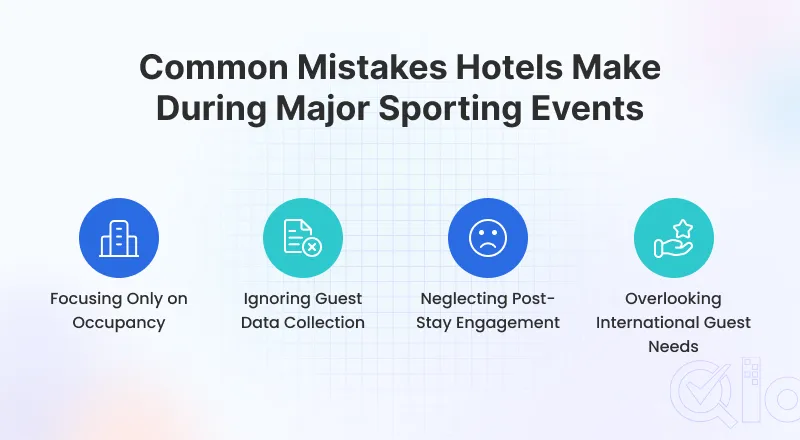
- Neglecting Post-Stay Engagement: Plenty of hotels nail the stay and then just go silent. No follow-up email, no feedback request, nothing.
And that silence is exactly when guests forget you were ever there, which is why it helps to have a plan for getting positive hotel reviews from guests.
- Overlooking International Guest Needs: Different countries, different languages, and not every hotel adjusts for that.
A guest who can’t get a straight answer because of a language gap isn’t walking away impressed, no matter how nice the room was.
This is exactly the gap that multi-language and multi-currency hotel booking support.
Offer Incentives for Future Visits
Doesn’t need to be much. A discount on the next stay, some loyalty points, maybe a free upgrade down the line.
Small stuff, but it gives someone an actual reason to book again instead of just comparing prices on some other site.
People remember when a place gave them a reason to come back, and that’s really the core idea behind maximizing repeat bookings during peak season.
Use Technology to Build Strong Guest Relationships
Nobody’s keeping up with hundreds of guests by hand, not realistically.
A decent CRM, emails that don’t read like a robot wrote them, and guest profiles that actually get used – this is what makes personal touches possible at scale.
Staff save time, guests get offers that make sense for them, and the whole thing runs without anyone burning hours on it.
Knowing how to implement a hotel CRM system effectively is what lets the human part survive past a few hundred guests.
Conclusion
A World Cup gives hotels more than a good few weeks of bookings; it hands them a one-shot chance to turn strangers into regulars.
But that only happens if the tournament gets treated like a starting point instead of the whole story.
Great service, personal communication, and meaningful offers help turn short-term event bookings into loyal guests who return for years.
The matches end. There’s no reason the relationship has to.
Get In Touch
If you want to learn about the functionality of QloApps, then you can visit this link: All-In-One Property Management System
In case of any query, issue, or requirement, please feel free to raise it on the QloApps Forum

Be the first to comment.