
Guest satisfaction in a hotel depends on how well the property is maintained. Every system—HVAC units, elevators, plumbing, lighting, and kitchen equipment—must work smoothly every day.
When something breaks, it causes delays, raises costs, and harms the guest experience.
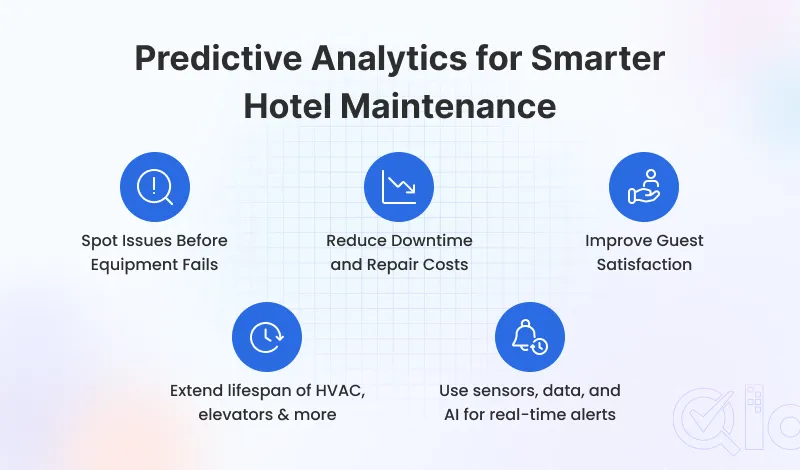
Predictive analytics is helping hotels avoid these problems. Instead of waiting for equipment to fail, hotels can now predict issues before they happen.
This guide explains what predictive analytics is, why it matters, and how hotels can use it easily.
What Is Predictive Analytics in Hotel Maintenance?
Predictive analytics uses data and smart technology to predict future problems.
Predictive analytics is becoming one of the major hotel technology trends, helping properties stay efficient.
In hotels, it gathers information from:
- Sensors placed on equipment
- Past maintenance and repair records
- Occupancy levels and how often equipment is used
- Daily energy usage patterns
- This data helps the system understand what is normal and what is not. It then warns you early when something may go wrong.
The system studies this information and predicts when equipment might fail. This helps hotels fix problems at the right time.
Traditional maintenance has two main types:
- Reactive maintenance: Fixing things only after they break
- Preventive maintenance: Servicing equipment on a schedule, even if it is still working
Predictive maintenance is better.
It gives clear, real-time alerts before a breakdown happens.
It lowers risk, saves money, and makes daily hotel operations much smoother.
Why Predictive Maintenance Is Important for Hotels
Hotels operate non-stop. Even a small problem can affect guests.
Predictive maintenance helps prevent many of these issues. Here are the main benefits:
1. Less Downtime
Predictive tools spot early warning signs. Hotels can schedule repairs when guests are least affected.
2. Lower Maintenance Costs
Emergency repairs cost more. With predictions, hotels can fix issues early and avoid expensive breakdowns.
Predictive maintenance aligns perfectly with modern hotel cost-saving strategies.
3. Longer Equipment Life
Regular, timely maintenance keeps important systems healthy. HVAC units, elevators, and boilers last longer and work better.
4. Better Guest Experience
Guests enjoy comfort and reliability. When systems work smoothly, reviews improve, and repeat stays increase.
This directly improves comfort and connects with broader guest satisfaction strategies.
5. Smarter Decisions
Analytics helps managers understand trends, plan budgets, assign staff, and prioritize repairs with confidence — all of which are strengthened when hotels apply effective data analytics practices.
Key Parts of a Predictive Maintenance System
To use predictive analytics successfully, hotels need several key elements:
1. Strong Data Collection
Data is the core of predictive maintenance. Hotels collect data from:
- IoT Hotel Sensors
- Service logs
- Occupancy levels
- Utility usage
Better data leads to more accurate predictions.
2. Machine Learning
Machine learning studies the data to spot unusual patterns, such as:
- Higher vibration levels
- Rising temperatures
- Increased electricity use
- Irregular machine behavior
These signs usually mean a breakdown may happen soon.
3. Predictive Models
These models use statistics and AI to predict:
- When equipment might fail
- Which machines are at risk
- How usage trends affect performance
4. Dashboards and Reports
Clear dashboards show predictions in simple visuals. This helps maintenance teams act quickly and plan.
How to Start Predictive Maintenance in Your Hotel
Here is a simple step-by-step method to implement predictive maintenance:
1. Review Current Maintenance
Identify systems that break often or cause frequent complaints.
2. Install Sensors
Place sensors on major systems like:
- Air-conditioning units
- Elevators
- Boilers
- Refrigerators
- Pumps
Sensors provide real-time performance data.
3. Gather Past Data
Collect old maintenance logs, energy reports, and repair notes. These help the system learn accurate patterns.
4. Choose the Right Analytics Tool
Pick a platform that connects with your Property Management System and maintenance operations. It should offer easy dashboards and simple alerts.
5. Train the Team
Show the maintenance team how the system works. Train them to read alerts and take action quickly.
6. Start With High-Impact Equipment
Begin with HVAC or elevators—these affect guests the most. Then expand to other equipment.
7. Improve Over Time
As your hotel gathers more data, your predictions become stronger. Keep adjusting the system for better accuracy.
Extra Benefits of Predictive Analytics
Predictive analytics does more than prevent failures. It also helps hotels in other important ways:
1. Better Energy Use
Predictive tools detect inefficiencies early. Fixing these issues lowers electricity and water costs.
2. Smarter Inventory
Hotels only buy spare parts when needed. This saves storage space and reduces waste.
3. Smooth Operations
Maintenance can be scheduled around housekeeping, check-in times, and events. This reduces guest disturbance.
This shift improves overall hotel operations by reducing downtime.
4. Improved Budget Planning
Predictive insights show when major repairs might happen. This helps managers prepare accurate budgets.
Common Challenges and Easy Solutions
Predictive maintenance is powerful, but hotels may face a few challenges:
1. High Initial Costs
Sensors and platforms need investment.
Solution: Start small with key equipment to cut early costs.
2. Poor Data Quality
Bad or incomplete data causes weak predictions.
Solution: Ensure sensors work well and all repairs are recorded properly.
3. Staff Resistance
Teams may hesitate to use new systems.
Solution: Provide simple training and show how it makes their job easier.
These challenges are easy to manage with clear planning.
Conclusion
Predictive analytics is changing how hotels handle maintenance. It helps hotels shift from reacting to problems to planning.
By utilizing sensors, gathering data, and applying AI, hotels can identify issues before they occur.
This approach lowers costs and improves guest comfort. It also extends equipment lifespan and enhances daily productivity.
Today, predictive maintenance is not optional. It is becoming essential for modern hotels.
Hotels that use predictive analytics gain a strong advantage. Operations run smoothly. Their reviews improve. Their long-term performance gets stronger.
In a competitive industry, staying ahead of problems is the key to giving guests a great experience every single day.
Get in touch
If you’re ready to elevate your hotel’s operations or have any questions, QloApps is here to assist!
Let’s collaborate to streamline your processes and enhance guest satisfaction.
Discover how QloApps’ Property Management System and Channel Manager solutions can simplify your operations and boost your revenue. Get in touch now!


Be the first to comment.