
Anyone who has managed a hotel during peak season knows how fast things change.
One day, bookings look normal. A few days later, rooms start selling quickly.
Phones ring often. Walk-ins increase. Staff feel the pressure.Seasonal demand brings good income, but it also brings stress.
Over time, many hotel owners learn that handling busy periods is not about working longer hours. It is about being prepared early.
This is where a Property Management System becomes very helpful.
Why busy seasons feel stressful for hotels
Every hotel has busy months. Holidays, festivals, tourist seasons, and wedding periods come every year.
Even when we expect them, the rush can still feel sudden. Bookings arrive from many channels at the same time.
Room availability must stay correct. Prices need updates.
One small mistake can cause overbooking or guest complaints.Hotels that keep all bookings in one system usually avoid these problems.
Many owners face issues during peak times when managing online hotel bookings without proper control.
How PMS gives clear visibility
During high occupancy, guessing does not help. Hotels need clear information.
A PMS shows:
- Which rooms are free
- Which rooms are occupied
- Upcoming check-ins and check-outs
- Where bookings are coming from
When everything is visible on one screen, work becomes easier.
Front desk staff do not need to check papers or switch between systems. This helps hotels improve front desk efficiency, especially during busy hours.
Managing room prices during seasonal demand
Busy seasons are also about pricing. When demand increases, room prices should change at the right time.
Manual price updates during peak season often cause mistakes. Some hotels forget to update prices.
Confusion is created when hotels list different rates on various online travel agencies.
A Property Management System allows hotels to set their seasonal rates in advance, which will change automatically depending on the hotels’ demand and how busy they are.
A PMS will help hotels make better revenue plans for each season and make it easier for them to manage their pricing accurately.
Helping staff during occupancy spikes
During seasonal demand, hotel staff are just as stressed and busy as the guests staying at the hotel.
Staff will need to prepare rooms more quickly due to the increased number of guests arriving, handle more calls, process more maintenance requests from the increased volume of guests, etc.
The absence of clear planning and communication between staff members leads to quickly becoming fatigued.
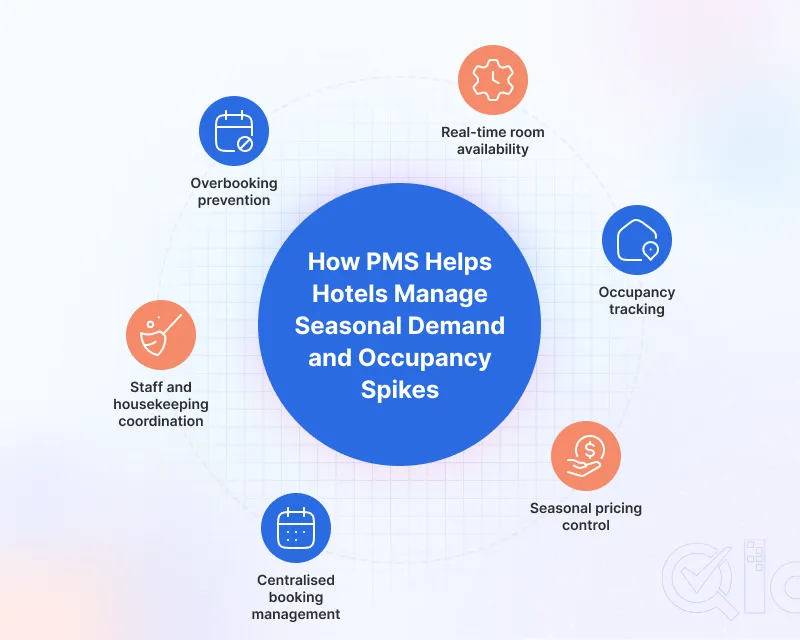
A PMS will benefit hotels by providing :
- Showing room status clearly
- Reducing manual follow-ups
- Helping teams work together
Hotels that organise daily tasks better often provide smoother service during busy seasons. This also improves the overall guest satisfaction.
Avoiding overbooking and guest complaints
During the peak season, guests may be disappointed by a lack of communication from hotels about when they will receive their confirmed reservation.
The majority of overbookings occur because room availability was not updated in a timely manner.
A PMS keeps room inventory updated across all booking channels. This reduces mistakes and helps guests get the room they booked.
Guests are aware of the high demand for hotel rooms at certain times, but they cannot accept poor planning by a hotel.
By preventing double bookings, you will be protecting your hotel’s image
Using data to plan for future seasons
After the busy season ends, hotels can learn a lot from data.
A PMS helps track :
- Occupancy history
- Peak days
- Reservation trends
- Revenue figures
These pms stats allow hoteliers to better prepare for the next peak season because they can make good decisions instead of just guessing.
As you gather more information over the years, the management of your peak seasons will become easier.
Conclusion
Seasonal demand will always test hotels. Every property feels the pressure at some point.
The difference between stress and control often comes from preparation.
A Property Management System does not replace experience, but it supports it. It helps hotels stay organised during busy times.
Guests may not see your system, but they feel its effect in smooth check-ins, clean rooms, and calm service.
Get in Touch
If you are a hotel or property owner looking to manage seasonal demand more easily.
QloApps offers a Property Management Software(PMS), Booking Engine, and Booking Website for your property that supports inventory management, reporting, pricing, daily operations and more.
You can download and install QloApps on your system or server.
If you have any further topics of discussion, then please connect with our QloApps Support Team
The right system can make busy seasons easier for your staff and more comfortable for your guests.


Be the first to comment.