What Is a Hotel Night Audit? How It Works (2026)
A hotel night audit is the daily accounting process that closes one business day and opens the next. It checks every guest charge against the revenue the hotel actually earned.
Hotels run around the clock, so this check cannot happen mid-shift without disrupting guests. A hotel night audit usually runs late at night, when check-in activity slows down.
This guide explains what the process covers, who runs it, and how modern tools have changed it. It also shows where automation now removes most of the manual work involved.
What a Hotel Night Audit Actually Does

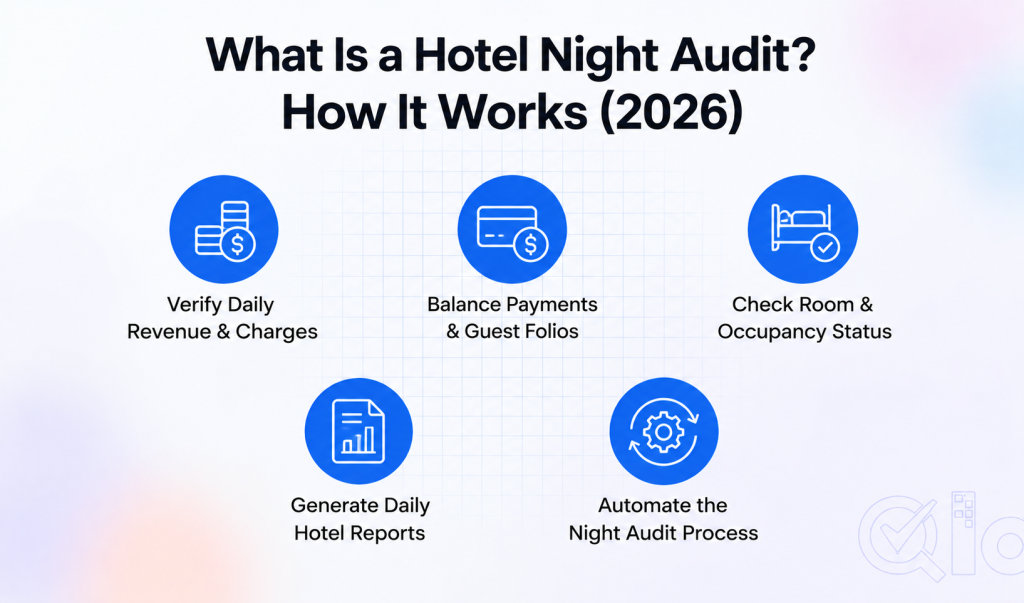
At its core, a hotel night audit verifies that every charge posted to a guest folio matches actual revenue. This includes room charges, taxes, food and beverage, and any other billable service.
The process also checks cash, card, and other payments made during the day. Any gap between what was charged and what came in gets flagged here.
Non-guest accounts, like vendor payments, get checked in this same step. A full hotel night audit balances both guest and non-guest activity before the books close.
Room status also gets checked against actual occupancy at this stage. Rate discrepancies, incorrect room assignments, and unresolved holds surface clearly during this review.
For a full checklist auditors follow, see this night audit procedures breakdown. It walks through each step before the books close.
Why Hotels Still Need This Process in 2026
Some assume automation has made a hotel night audit unnecessary, but that is not accurate. Automated systems handle the calculations, yet someone still needs to verify and approve the results.
Tax compliance depends heavily on accurate daily reporting. A hotel night audit ensures collected taxes match what gets reported, protecting the property from compliance issues later.
Accurate numbers also protect hotels from disputes at checkout. When every charge is checked daily, guests rarely question their final bill.
Management decisions rely on these numbers too. Daily revenue and occupancy reports from the audit give owners a clear view of how the property is doing.
Who Performs the Night Audit
Night auditors are usually senior front desk staff trained for this exact role. They are responsible for any gaps found during the process.
In smaller hotels, the same person often manages both the audit and the overnight front desk shift. Larger properties may staff a dedicated auditor separate from other overnight duties.
Better front desk tools make this role easier to staff. Fewer manual steps means fewer errors. Using front desk automation cuts this manual work down fast. Staff can focus on checking, not typing.
The Hotel Night Audit Process, Step by Step
The process starts by checking arrivals, departures, and the current guest list. This confirms room status matches what actually happened that day.
Next, the auditor checks all payments, including cash, card, and other types. Every posted charge gets checked against the actual revenue taken in.
Gaps get logged with a clear owner and next step, instead of left open. This stops small issues from turning into big ones at month-end.
Finally, the system builds daily reports on revenue, occupancy, and open balances. These reports roll the date forward and get the hotel ready for the next day.
Using front desk reports that auto-generate daily summaries removes most manual reporting work. Teams start the day with numbers ready.
How Technology Has Changed the Hotel Night Audit
Manual audits with paper receipts and spreadsheets used to be the norm. This approach was slow and left a lot of room for human error.
A connected property management system now does most of this math on its own. This makes the whole process faster and more exact.
This links to broader cost control too. A look at cutting hotel operating costs shows how daily data guides smarter spending.
Common Mistakes to Avoid
Skipping the audit on slow nights is a common shortcut that backfires later. Missed gaps pile up fast once a few unreviewed nights stack together.
Posting charges to the wrong date is another common issue in manual setups. This confuses both guests and staff trying to explain a final bill.
Treating the audit as a formality instead of a real check defeats its purpose. A hotel night audit only protects revenue when it’s done with care each night.
Final Thoughts
A hotel night audit remains one of the most important daily steps in hotel accounting. It protects revenue, keeps compliance in check, and gives owners solid numbers to act on.
Modern tools have made this process faster, but the underlying discipline still matters. Hotels that treat their nightly close as a real review protect their numbers far better.
Get In Touch
Looking to simplify your hotel’s daily operations and night audit process? Get in touch with the QloApps team to explore the right solution for your property.
If you have any suggestions, you can share them on the QloApps forum. For any technical assistance, kindly raise a ticket.