
Ask any general manager what worries them in Q4, and next year’s budget tops the list. Hotel budgeting is not glamorous, but hotels that get it right decide from data all year.
This guide walks through how to build a 2026 hotel budget that survives contact with reality. It also covers the small mistakes that quietly wreck otherwise solid plans.
Why 2026 Is a Harder Year to Budget For
Energy, food, and labor costs are not just rising; they are rising unevenly across markets and months. A property in one city can see very different cost pressure than one just a state away.
That unevenness is exactly why hotel budgeting matters more this year than in the past. Without a real plan, a hotel often only spots overspending once year-end numbers land on someone’s desk.
Building flexibility into the plan from day one changes that outcome. Inflation-proofing a hotel budget can help in building that flexibility.
A working budget does three things well for any property. It tracks spend by department, flags cash crunches early, and gives ownership a number to hold the GM to.
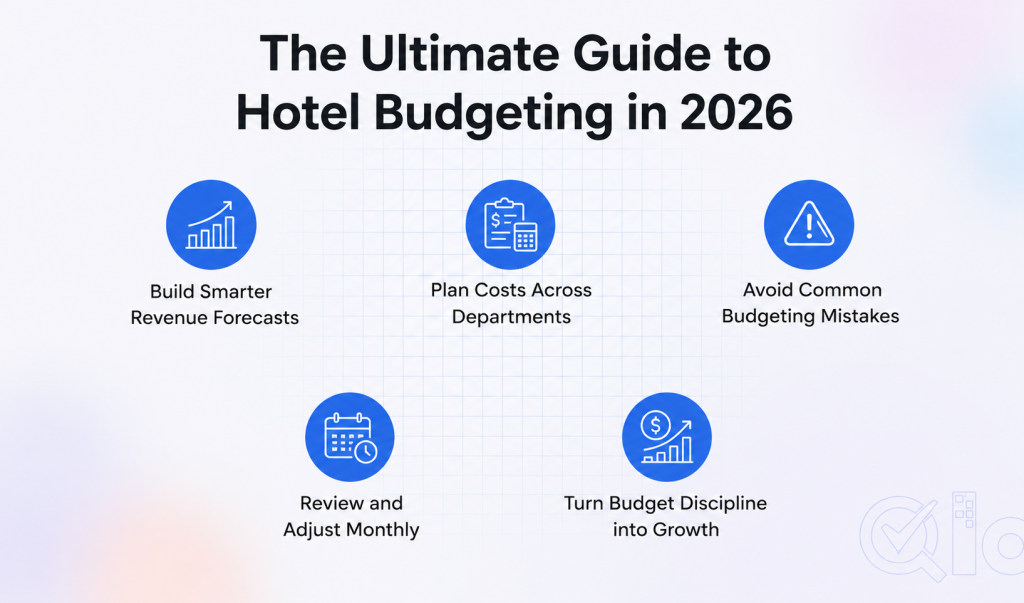
The Building Blocks of a Hotel Budget
Room revenue forms the foundation that almost every other line item scales from. Getting this single number wrong means the rest of the budget inherits that same error.
Food, spa, parking, and other ancillary income sit on top of room revenue. These lines get under-forecasted often, mostly because teams treat them as an afterthought instead of their own category.
Operating costs like payroll, utilities, and supplies move the most throughout the year. This is where most hotel budgeting plans quietly drift off course without monthly review.
Marketing spend should align with expected room sales and demand forecasts, making hotel marketing planning more strategic and effective.
Capital costs, including renovations, upgrades, and new equipment, need a full cycle of lead time. Surprise capital spending remains one of the fastest ways to break an otherwise careful budget.
Forecasting Is What Makes the Budget Real
A budget without a forecast behind it is really just a spreadsheet of hopeful guesses. Real hotel budgeting comes from booking pace, occupancy history, and known local events shaping demand.
A structured hotel forecasting approach turns that raw data into targets worth building around. Guesswork rarely holds up once the year starts.
Pull at least two years of occupancy and rate history before setting new targets. One year of data is rarely enough to separate a real pattern from a one-off fluke.
Track booking pace against the same period last year, not just this year’s target. Separate forecasts for transient, group, and corporate segments matter, since blending hides problems.
AI tools are extending how far ahead this forecasting can reach. Reviewing AI-driven finance forecasting helps teams still using spreadsheets.
How to Actually Build the Budget
Start by pulling two full years of financials before writing a single new number. Patterns like a March dip or a September conference spike surface in data long before memory catches them.
Bring every department head into the process instead of building it in isolation. The front desk knows why no-shows spiked last winter, and housekeeping knows which vendor raised prices.
Set a monthly review cadence instead of treating the budget as one yearly document. A budget checked once a year is closer to a postmortem than an actual management tool.
Build in a contingency line worth three to five percent of total operating costs. Something will go wrong eventually, whether a burst pipe or a sudden utility rate hike.
Where Good Budgets Turn Into Growth
The real payoff of a tight budget is not the savings alone but what those savings fund. A hotel running lean on controllable costs gains room to reinvest in the moves that matter.
This is exactly where hotelier growth and disciplined hotel budgeting intersect. Budget discipline quietly funds the upside later on.
Hotel budgeting done well is not about cutting spending everywhere at once. It’s about knowing exactly where to spend more, and defending that choice with real numbers.
Common Hotel Budgeting Mistakes
Copying last year’s numbers forward is a common and costly shortcut. Markets move fast, and a budget that’s just last year plus a flat increase is already stale by February.
Ignoring small departments like laundry and maintenance hides real cost creep. These smaller lines rarely get scrutiny, which is exactly why problems build there quietly.
Treating an approved budget as final removes most of its real value. The moment a hotel budgeting plan stops getting adjusted, it stops being useful to anyone.
Tools That Make This Easier
Spreadsheets can work for a single small property but break down fast at scale. Manual entry errors tend to surface only at year-end, once they are far harder to fix.
A connected hotel management system pulls occupancy, rate, and cost data into one view. This frees up hours for real analysis.
Final Thoughts
A good 2026 hotel budget is not a restriction; it’s a decision-making tool for the whole property. Pair it with a forecast that gets updated monthly and a contingency line that is not just for show.
Hotel budgeting done this way stops being a year-end grading exercise. It becomes the thing that actually tells a hotel where to spend next.
Get in Touch
Ready to take your hotel operations to the next level? Get in touch to explore the right solutions for your property, from seamless bookings and distribution to smarter day-to-day management.
If you have any suggestions, you can share them on the QloApps forum. For any technical assistance, kindly raise a ticket.

Be the first to comment.