How Global Conflict Impacts Hotels: A Survival Guide
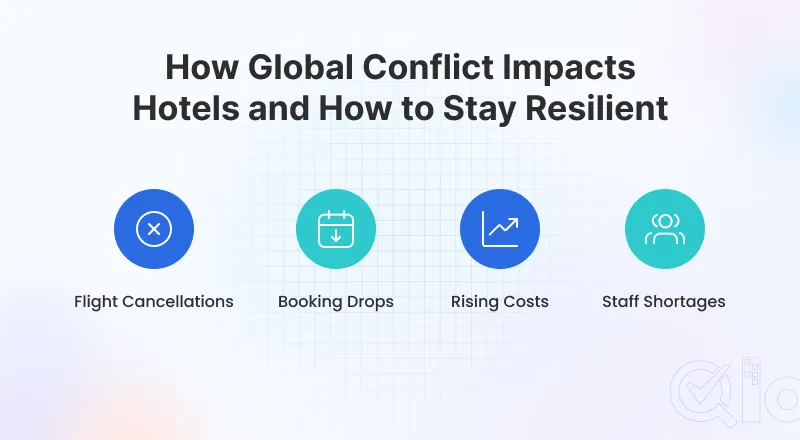
When war breaks out or political tensions escalate, the hospitality industry is among the first to feel the ripple effects. Flights get cancelled. Borders closes, and Bookings vanish overnight.
If you’re new to running a hotel, this might feel distant. Even a small property in a “safe” destination takes a hit when the world gets uncertain.
This guide helps you understand what global conflict does to your hotel and how to survive it.

The Immediate Blow: Bookings Drop Overnight
The moment a conflict makes headlines, travelers get nervous.
Corporate managers pull teams out of regions. Leisure travelers cancel. Tour operators suspend packages.
Cancellations pour in within 48 hours, even if your property is nowhere near the conflict zone. Fear doesn’t care about geography. Perception drives bookings.
The Indirect Effects Nobody Warns You About
The damage isn’t always direct. A conflict far away can still reach your front desk in ways you don’t expect.
- Fuel and supply costs spike. Wars disrupt oil markets. When fuel rises, so do your food and supply costs. Margins shrink even if occupancy holds.
- Currency volatility hits revenue. When exchange rates swing wildly, your revenue becomes unpredictable. A booking made months ago can be worth far less at check-in.
- Staffing becomes harder. Visa restrictions and border closures can create sudden staff shortages, especially if you rely on international hospitality workers.
Which Hotels Are Most Vulnerable?
Properties that depend on international tourism or corporate travel are most exposed.
If most of your bookings come from one source market tied to a conflict, you’re at serious risk.Smaller hotels have less financial cushion.
A large chain absorbs months of low occupancy. A 20-room property often cannot. This is why cash flow management must be an ongoing habit, not a seasonal fix.
What Smart Hoteliers Do During a Crisis
The hotels that survive global instability share a few common habits.
- They diversify their guest mix. Domestic tourists, long-stay guests, and local corporate clients help offset lost international arrivals. Build those relationships before you need them.
- They stay flexible with pricing. Rigid rates hurt during crises. Responding quickly to demand shifts is essential. Learn how dynamic pricing can help you stay competitive even in slow periods.
- They communicate proactively. Don’t wait for guests to ask if it’s safe. Send calm, clear emails. Update your website. Silence during a crisis is the worst strategy.
- They tighten cost controls. Audit supplier contracts, reduce non-essential services, and review rosters. Lean operations keep you solvent without hurting the guest experience.
Building Resilience Before the Next Crisis
The hotels that struggle most are the ones that hadn’t prepared. Resilience can be built in advance and doesn’t require a huge budget.
During conflicts, OTAs respond slowly and commissions still cut into shrinking revenue. Learning to drive direct bookings becomes critical when distribution channels get disrupted.
Keep a cash reserve. Three months of basic operating expenses can be the difference between closing and riding out the storm.
The Long View
Hotels have survived wars, pandemics, and financial crises before. The industry is resilient. But individual properties are not automatically resilient. That takes planning.
Stop treating crisis preparation as something you’ll handle later. Later arrives without warning.The owners who sleep well during turbulent times built strong habits during the quiet ones.
The world will keep moving. Your job is to make sure your hotel moves with it.
Conclusion
Global conflict is something no hospitality course really prepares you for. You open a hotel dreaming of full rooms and happy guests, not geopolitical disruptions. But crises will come.
The hoteliers who survive aren’t always the biggest. They’re the ones who moved fast, planned ahead, and had the right habits in place before things went wrong.
You built this to serve people and create something of your own. Don’t let a crisis you didn’t cause undo it. Stay adaptable, plan ahead, and treat resilience as part of the job.
Get in Touch
If global conflict has taught hoteliers anything, it is that running a lean and well-organized operation is not optional.
Having the right systems in place before a crisis hits is what separates hotels that survive from those that don’t.
QloApps provides a property website, booking engine, and Property Management System designed to simplify daily operations, so you stay in control even when the market gets unpredictable.
You can download and install QloApps on your system or server. If you have any further topics of discussion, then please connect with our QloApps Support Team.