
Change management helps hotels handle major transitions without disrupting daily operations. New guests, updated rules, and evolving tools keep things constantly changing.
However, significant changes like new software or staff training require a structured plan. A clear process ensures every step is handled properly and nothing is overlooked.
This blog explains what makes change management effective in hotels and how to do it right.
What Is Change Management in Hotels?
Change management is the process of planning and guiding your hotel through big shifts in a smooth and organised way. It covers everything from new software to updated service steps.
In hotels, it touches every department, from front desk to housekeeping management. Every team member plays a role in making a change work.
Simply put, think of it as a roadmap that keeps your staff confident and your guests unaffected during any transition. It turns a complex process into a clear and manageable journey.
Why Hotels Need Change Management Now More Than Ever
Guests want more than ever, but technology is evolving too fast for hotels to keep up. The pressure to change is real, and it’s only getting faster.
Online reviews, digital check-ins, and smart room features have changed what guests expect on arrival. Hotels that are slow to change risk losing guests to competitors who are already ahead.
As a result, a solid approach to change management helps hotels stay strong and move with confidence. It keeps the team ready and the business growing, no matter what comes next.
Key Challenges Hotels Face During Change
Changing how a hotel operates is tough. Without a good plan, you will encounter challenges that prolong the process.
Therefore, understanding these challenges helps you plan better. It also helps your team feel confident when tough moments come up.
Staff Resistance
Some staff members resist change. They feel comfortable with the traditional way of doing things.
Fortunately, the best way to handle this is to communicate with your team immediately. Explain the changes clearly and give them a chance to share their thoughts.
Communication Gaps
Misunderstandings happen when staff get different versions of a story. Prevent this by keeping everyone in sync.
That is why involving staff in conversation is important so that everyone knows the what, when, and why of the change.
Running 24 Hours a Day
Hotels never close, which makes training and updates tricky. You cannot stop all work to hold a big training session.
Break training into short, flexible sessions. This way, you can train every shift without getting in the way of guest service.
Old and Disconnected Systems
Many hotels still use old software that does not connect well with new tools. This creates extra work and slows down updates.
Therefore, choosing the right technology partners and testing them before launch makes a big difference. A smooth system switch keeps your team confident.
High Staff Turnover
Hotels often have high staff turnover. Constantly training new hires takes a lot of time and effort.
Good onboarding and staff training guides help new staff catch up quickly. In addition, they also protect progress when someone leaves.
Multiple Properties, Different Setups
Hotel groups with many properties often face different challenges at each location. What works at one hotel may not work at another.
Tailoring your approach for each property gives better results. Keep the core plan the same, but allow flexibility in how it is applied.
What Makes Change Management Actually Successful?
Some hotels handle change really well, while others struggle with the same steps. The difference is rarely about budget or hotel size. It comes down to how the change is led.
So here are some approaches that make change management truly work in the hotel industry.
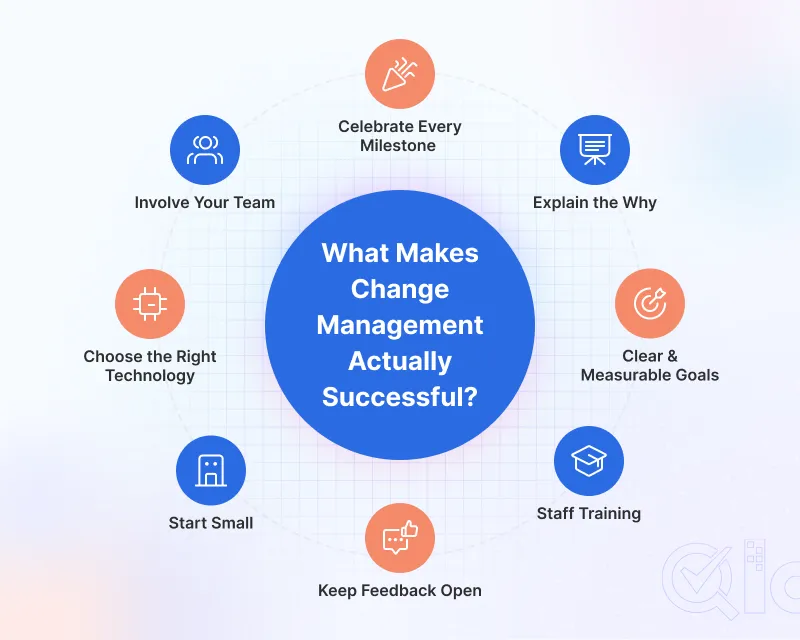
Start Small and Win Early
Big changes are difficult to implement, so start small. A small success shows the team that change works and makes everyone feel more comfortable.
Early wins build trust and excitement across the whole team. That positive energy carries forward when the bigger changes arrive.
Always Explain the Why
People are more willing to change when they understand why it is happening. Just telling your team you are switching systems or changing the process isn’t enough to get them to support the change.
As a result, when staff understand the purpose behind a change, they stop resisting and start contributing. A clear reason turns doubt into genuine support.
Involve Your Team Early
Do not plan changes behind closed doors and then announce them to your staff. Bring your team into the conversation from the very beginning.
When people help shape a plan, they feel a sense of ownership over it. That ownership makes them work harder to see it succeed.
Set Clear and Measurable Goals
Vague goals make it hard to know if your change is actually working. Set targets that are specific, realistic, and easy for everyone to track.
Measurable goals also help you catch problems early. If results are not moving in the right direction, you can step in and fix things fast.
Choose the Right Technology
A right hotel property management system software can make a change feel smooth and simple for your team. It reduces confusion, accelerates operations, and builds momentum.
Look for technology built specifically for hotels, something your staff can learn quickly without weeks of training. A good fit means less friction and faster results.
Train for Real Confidence
Staff training is not just about showing staff which buttons to press. It is about helping them feel genuinely ready and confident in the new way of working.
Confident staff make fewer mistakes and naturally help their teammates learn. Good staff training is one of the smartest investments you can make during any change.
Keep Feedback Channels Open
Change is a two-way street, and your team will notice things on the ground that leaders might miss from the top. Their daily experience is one of your most valuable sources of information.
Staff feedback is just as important as guest feedback. Acting on both shows everyone that their voice matters and helps you keep improving the plan as the change rolls out.
Celebrate Every Milestone
Change is hard work, and your team deserves to feel recognised along the way. Do not save all the praise for the very end of the journey.
Celebrating small wins keeps morale high and energy strong. It reminds your team how far they have already come and motivates them to finish strong.
The Role of Technology in Hotel Change Management
Good technology makes change management easier for hotels. It speeds up communication, simplifies training, and tracks progress.
Hotel management software with a great user experience brings all your operations together in one place. This makes it easier to roll out and manage changes across your property.
When your tools connect well, your team spends less time solving tech problems and more time serving guests. Technology is a key partner in any successful hotel change.
Conclusion
Change management is not a one-time project. It is an ongoing mindset that helps your hotel grow and improve over time.
When you plan well, involve your team, and use the right tools, change becomes something your hotel does confidently. Your guests feel it too.
Start with small steps, stay consistent, and keep your team informed. A hotel that manages change well is a hotel built to last.
Get In Touch
If you are a hotel owner and are looking for Free hotel booking software to manage your property. Then QloApps is the best solution for you.
QloApps offers various features to enhance your hotel business. Such as Virtual tours, Tours and Packages, Channel Manager, Front Desk, Cloud PMS, 100+ Add-ons, and many more.
To get started with this user-friendly software. Just download it and add your property to QloApps.
If you have any suggestions, you can share them on the QloApps forum. For any technical assistance, kindly raise a ticket.


Be the first to comment.