
Guests now expect fast replies, easy bookings, and offers that fit their needs. Old hotel software cannot deliver any of this on its own.
This gap is why more hotels are moving to an AI-ready hotel management system. It links booking, pricing, and guest data into one working system.
It also replaces paper logs, manual rate updates, and scattered guest records. Hotels of every size now use this shift to cut daily workload.
What Makes a Hotel System Truly AI-Ready
A true AI-ready hotel management system does more than store bookings. It studies live data to predict demand and set smarter room prices.
It also uses guest history to send offers that match real interests, not generic emails. This same data feeds pricing and staffing decisions in real time.
This kind of insight only works when all hotel data sits in one system. A split-up setup cannot feed an AI engine clean, complete data.
That is why a full property management system is the base every AI-ready hotel needs. Without it, AI tools work with gaps and guesswork.
The Problem With Old, Split-Up Hotel Tools
Many hotels still run one tool for bookings and a separate one for room status. Each tool holds its own version of the truth.
Staff then spend hours updating rates by hand across every booking site. A single missed update can cause a room to sell twice.
Without a synced channel manager, rate errors and double bookings become routine. Guests lose trust fast after one bad mix-up.
An AI-ready hotel management system removes this risk by joining every task into one screen. Bookings, payments, and guest details update in real time everywhere.
This cuts manual errors and frees staff from constant rate-checking work. Front-desk teams can then spend that time on actual guests.
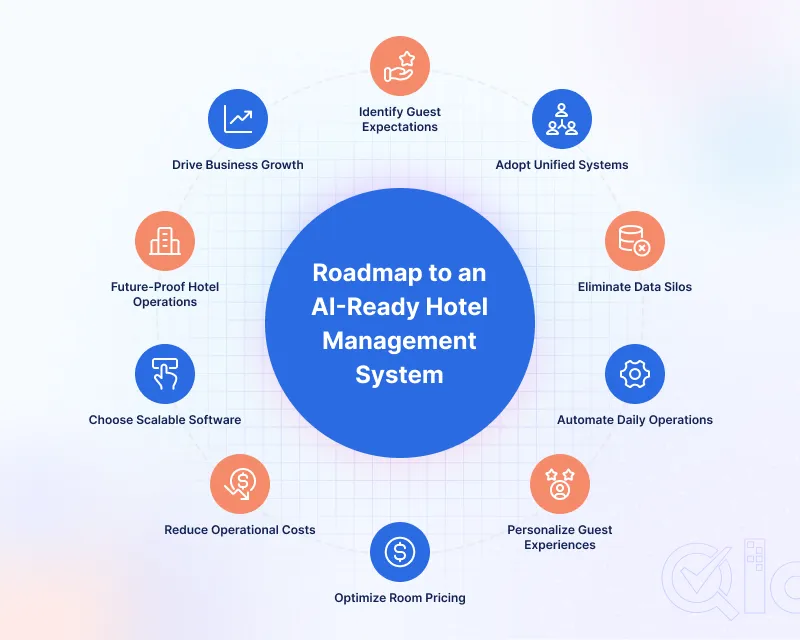
How AI Changes Daily Hotel Work
Room pricing gets more precise once AI studies real booking patterns. Hotels can apply dynamic pricing rules instead of guessing rates.
Knowing demand ahead of time lets hotels staff rooms correctly. A clear demand forecasting plan preps teams weeks before a busy stretch.
Guest care also improves once the system knows past guest habits. It can suggest room upgrades and build guest loyalty with timely offers.
Automated chat tools handle routine questions like check-in times any hour of the day. This leaves staff free to focus on guests who need real, personal help.
An AI-ready hotel management system also catches problems most managers would miss until later. It can flag a slow housekeeping team or a sudden drop in bookings within hours.
Why Guests Now Want Smart Hotel Tools
Guests already compare hotel booking flows to apps like Amazon and Uber. They expect instant confirmation, clear pricing, and offers built around their own habits.
A hotel without an AI-ready hotel management system struggles to match that standard. The gap shows up the moment a guest hits a slow, generic booking process.
Staying close to shifting hotel trends keeps small hotels competitive with bigger chains. Guests remember which hotels felt easy and outdated.
How This Saves Time and Money
One AI-ready hotel management system replaces the cost of several separate tools. Hotels stop paying for software licenses that never share data with each other.
Staff costs drop too, since AI handles routine tasks like rate updates and simple replies. Smart, demand-based scheduling stops hotels from overstaffing slow weeks or understaffing busy ones.
Fewer manual errors also mean fewer refunds, fewer complaints, and fewer one-star reviews. Each of those directly protects revenue that would otherwise be lost to mistakes.
How to Pick the Right AI-Ready System
Not every tool labeled “AI-ready” actually uses your hotel’s own data. Some simply apply generic industry averages instead of real, live numbers from your property.
Growth matters too, so check if the system supports more rooms or locations later. A strong AI-ready hotel management system should scale without forcing a full software change.
Open-source tools give hotels more control over cost and future features. Owners can adjust the system to fit their exact size and budget, not the other way around.
Look for built-in demand forecasting, dynamic pricing, and automated guest messaging as a baseline. These specific features separate a genuinely AI-ready system from one using the label loosely.
What This Means for Real Hotels
Small hotels often assume smart tools are built only for large chains. In practice, a small team gains the most from an AI-ready hotel management system.
Fewer staff can then manage more guests without hiring extra front-desk help. Owners also get a single, clear view of performance instead of piecing together weekly reports.
Hotel groups gain a similar edge by running every property from one shared system. Managers can compare occupancy, rates, and guest feedback across locations without switching tools.
Conclusion
Hotels are shifting fast toward smart, connected technology instead of separate, disconnected tools. Properties that delay this shift risk losing guests to faster, more responsive competitors.
An AI-ready hotel management system is no longer reserved for large hotel brands. It has become core infrastructure for independent hotels and growing groups alike.
Adopting it now means fewer errors, better pricing, and guests who keep coming back. Hotels that make this move early will set the pace for their market.
Get in Touch
Ready to Future-Proof Your Hotel? AI is transforming how hotels attract guests, manage operations, and increase revenue.
With QloApps’ AI-ready hotel management system, you can automate daily tasks, deliver better guest experiences, and grow direct bookings from a single platform.
If you have any suggestions, you can share them on the QloApps forum. For any technical assistance, kindly raise a ticket.

Be the first to comment.