
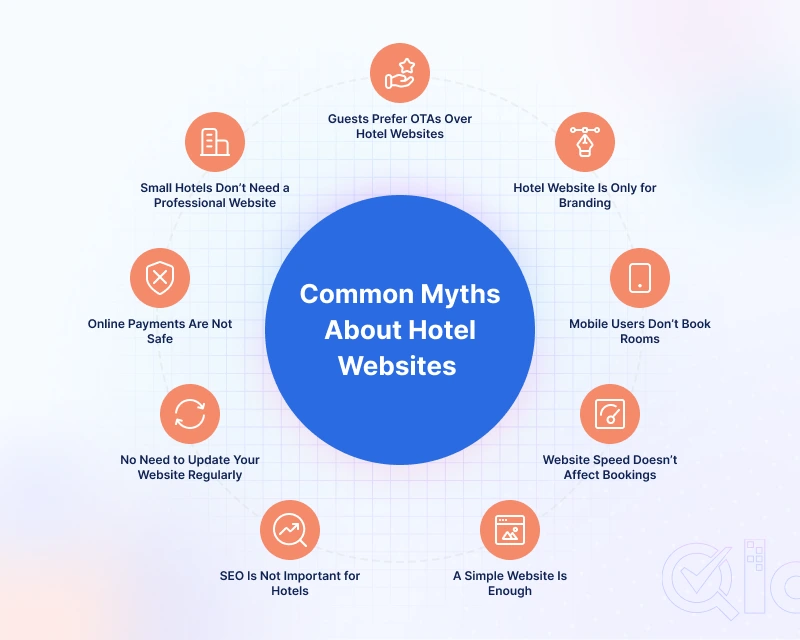
Hotel websites are often misunderstood, as many owners believe outdated ideas that they only show photos and cannot generate real bookings.
In reality, hotel websites play a very important role in attracting guests and increasing direct bookings.
Understanding the difference between myths and facts helps hotels make smarter decisions, and this blog clears common confusion about hotel websites.
Myth 1: Guests Prefer OTAs Over Hotel Websites
While many hotels believe guests always book through OTA (Online Travel Agency), this view comes from how common and well-established OTAs are in the market.
However, this belief is not entirely correct.
Over time, many guests visit hotel websites before booking, as they trust them for clear policies, detailed information, and the option to contact the hotel directly.
Therefore, finding the right balance between OTAs and hotel direct bookings helps hotels maintain visibility while also building loyalty and better margins
Myth 2: A Hotel Website Is Only for Branding
Many people think a hotel website is only made to show the hotel name, logo, and photos. They believe it is just for branding and not for real business. This is a common myth.
A hotel website does much more than look good. It helps guests check room details, prices, and availability.
Guests can book rooms directly from the website. This proves that a hotel website is not only for branding but also an important tool for getting bookings and growing revenue.
Myth 3: Mobile Users Don’t Book Rooms
Some hotel owners think that people only search on mobile phones and do not book rooms from them. This is not always true.
Many travelers use their phones to compare hotels and make bookings. Since mobiles are easy to use and always available, a mobile-friendly website encourages guests to book instantly.
Myth 4: Website Speed Doesn’t Affect Hotel Bookings
Some hotel owners think that website speed is not very important for bookings. They feel guests will wait even if pages load slowly. This is a common misunderstanding.
When a hotel website takes too long to open, many visitors leave quickly. Slow pages can make guests feel frustrated or unsure.
They may move to another website that loads faster. This shows that website speed does affect hotel bookings more than many people think.
A fast-loading hotel website built with tools like QloApps can significantly improve user experience and encourage visitors to stay and book.
Myth 5: A Simple Website Is Enough for Hotels
Many hotel owners believe that having a very simple website is enough. They think just a few pages and photos will work. This is a common myth.
Guests expect more when they visit a hotel website. They want clear room details, prices, booking options, and useful information.
If a website feels too basic, guests may not trust it. This shows that hotels need more than just a simple website to attract and convert guests.
Myth 6: SEO Is Not Important for Hotel Websites
Some hotel owners think SEO is not important for their website. They feel guests will find the hotel anyway through ads or OTAs. This is a common belief, but it is not fully true.
When a hotel website is not optimised, it is hard for guests to find it on search engines. Many travelers search online before booking a stay.
SEO helps your hotel website appear in relevant search results and attract organic visitors instead of relying only on paid ads or OTA listings
Myth 7: Hotel Websites Don’t Need Regular Updates
Many hoteliers think websites don’t need updates, but guests expect fresh, accurate information when visiting a hotel website.
If a customer’s visit to your site displays old content, pictures or inaccurate information, the customer may not trust your hotel’s credibility.
Conversely, hotels that post updates to their website develop a level of credibility in the eyes of prospective guests. This indicates the necessity of updating hotel websites frequently.
Myth 8: Online Payments Are Not Safe on Hotel Websites
Some people think that making payments on hotel websites is not safe. They worry about sharing card details online.
This fear comes from outdated experiences or lack of awareness, as modern hotel websites use PCI-compliant security systems to protect card data and reduce fraud risk.
Guests can pay safely when proper security is in place. When a website looks trustworthy and secure, guests feel more comfortable paying online.
This shows that online payments on hotel websites are safer than many people believe.
Myth 9: Small Hotels Don’t Need a Professional Website
Many small hotel owners think that a professional website isn’t necessary because there are so many large chain hotels. This belief is an incorrect assumption.
Competitive small hotels are fighting for the same type of guests as all other types of hotels.
Therefore, having a professionally designed site gives a building credibility and trust as well as displaying how professional a small hotel is.
Therefore, small hotels should consider their need for a professionally designed site.
Conclusion
Many beliefs about hotel websites are based on old ideas and confusion.
Understanding the facts behind hotel website myths helps owners improve trust, increase bookings, and make better decisions across speed, mobile, SEO, and payments.
A strong website is no longer optional but an important part of hotel success.
Get In Touch
If you’re ready to elevate your hotel’s operations or have any questions, QloApps is here to assist!
Let’s collaborate to streamline your processes and enhance guest satisfaction.
Discover how QloApps’ Property Management System and Channel Manager solutions can simplify your operations and boost your revenue. Get in touch now!

Be the first to comment.