
Hotel management software is one of the biggest technology investments for any hotel.
Hotel owners often ask the same question: should they choose open-source or SaaS, and which option saves more money over five years?
Honestly, it depends upon growth plans, comfort with tech, how long you plan to run the property, and all of it matters more than people admit.
SaaS platforms feel simple on day one. Hoteliers sign up, pay monthly, and the vendor handles servers, updates, and backups so they can only focus on operations.
Open source hotel management software works differently. Users own the code, control their data, and pay only for hosting and support they actually need.
The Real Cost of SaaS Subscriptions Over Five Years
SaaS pricing looks small until you multiply it by sixty months and stack on every “premium” add-on you eventually need.
Most vendors also raise prices yearly, something subscription hotel revenue models are built around by design.
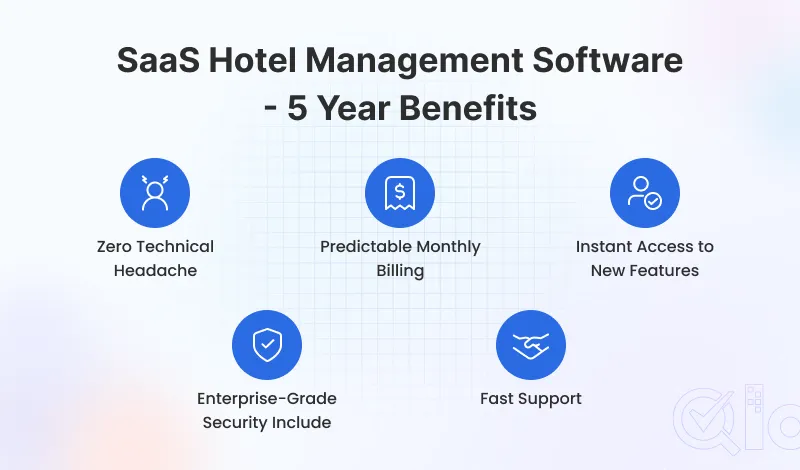
A property paying $150 a month today can be paying $300 by year four. Multiply that across rooms, locations, or extra staff logins, and the five-year total climbs fast, even with a solid vendor.
What Open Source Hotel Mangement Software Actually Costs You
Open source isn’t free. Anyone who tells you otherwise isn’t being straight with you.
You pay for hosting, occasional developer help, maybe a support contract if you want faster turnaround. But those costs stay mostly flat.
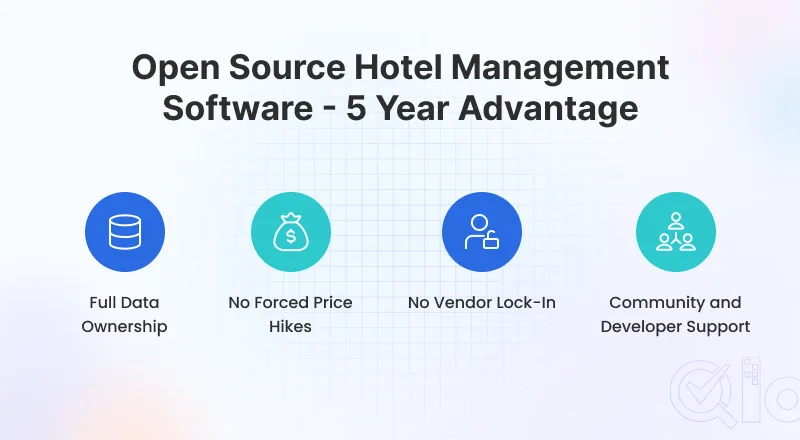
You’re not locked into price hikes some vendor decided on without asking you. Once your open source software setup is stable, yearly spending rarely jumps the way SaaS subscriptions do.
Ownership and Data Control Matter More Than You Think
With SaaS, your guest data, booking history, and pricing rules sit on the vendor’s servers. That’s fine, as long as you trust that vendor for the long haul.
QloSaaS is upfront about this tradeoff, but it’s still a tradeoff. Open source flips it entirely: your data sits where you choose, and you can switch hosts without asking anyone’s permission
Customization Needs Change As You Grow
A ten-room guesthouse and a fifty-room hotel need very different things from a booking engine.
SaaS platforms often lock features behind pricing tiers, so growth means paying more just to unlock what you already need.
Open source lets you modify the software directly as your property grows. No waiting on someone else’s roadmap for a feature your competitor already has.
Support and Maintenance: Two Different Models
SaaS support comes built into your subscription. That’s genuinely convenient if you’ve got no in-house tech team and want one predictable bill, so you can adopt SaaS hotel management software.
Open source support depends on who you hire. You get to pick faster, more dedicated help if that matters to you, but finding good help is real work.
Scalability for Tier 2 and Tier 3 Hotels
Smaller market hotels get overlooked by big SaaS vendors built for chains and luxury brands.
Owners in this spot usually do better looking at open source PMS software for tier 2 and tier 3 hotels, where the gap actually gets addressed.
These properties often save more with open source because they need flexibility, not enterprise features they’ll never touch.
Conclusion
Neither option wins outright. The right pick depends on your hotel, not on whichever one sounds more modern this year.
SaaS suits owners who want zero technical hassle and a predictable bill from day one. Open source suits owners who want control, lower long-term costs, and room to shape the software as they grow.
Get In Touch
Choosing between open source and SaaS doesn’t have to be a guessing game, and that’s exactly why QloApps built both.
Whether you want full control with our open-source platform or a managed setup that just works, we can help you figure out which one fits your property.
Want to own your setup end to end? Download the open-source version and run it on your own hosting server.
Prefer to have us handle hosting and maintenance? Explore the managed option at QloSaaS.
Not sure which one makes sense, or need a hand during setup? Reach our support team to learn more.

Be the first to comment.