
Hotels spend thousands making their properties look beautiful online. New photos, updated room descriptions, better pricing.
But then a guest from Japan or Germany or Saudi Arabia lands on the website, and the booking page makes no sense to them.
Simply because nobody thought about language. That one oversight costs bookings every single day.
What Is a Booking Engine?
At its core, a booking engine is the reservation system sitting inside a hotel’s own website.
Guests use it to check which rooms are free, see what they cost, and confirm a stay without picking up the phone or heading to Booking.com.
It handles the whole process in one place. Dates, room selection, payment, confirmation. That is really it. Simple when it works well. Frustrating when it does not.
Multi-Language Booking Engine
Now take that same system and make it work in Arabic, Mandarin, French, Spanish, or whichever language the guest actually speaks.
Why does this matter so much? Because booking a hotel room in a foreign language is genuinely stressful.
They wonder if they selected the right dates, whether the price they are seeing is accurate, and what a particular term actually means.
A booking engine that speaks the guest’s language removes all of that. The process feels familiar. Comfortable. Worth completing.
Key Booking Engine Features
1) Language Support
When a guest reads every step of the booking process in their own language, something changes in how they feel about the hotel.
It is not just convenience — it signals that the hotel actually prepared for them. That impression matters, and it starts before they ever check in.
2) Currency Options
Displaying the rate in the guest’s own currency is such a simple fix, but it makes a real difference in how confident they feel pressing “confirm”.
The way multiple payment gateways work alongside currency options is something every hotel handling international guests should understand.
3) Mobile-Friendly Booking
People book hotels from their phones constantly now. During a commute. At an airport. Late at night, when they finally sit down to plan a trip.
A booking engine that does not work well on a small screen is not a minor inconvenience; it is a direct reason guests leave without booking.
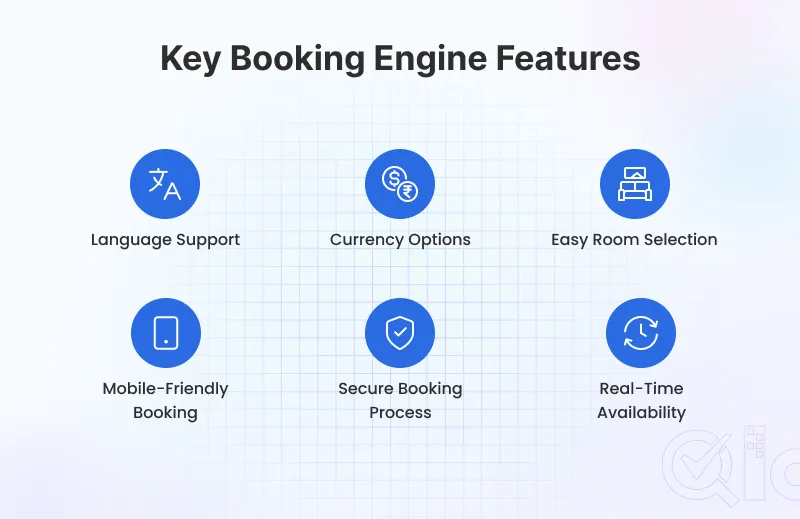
4) Secure Booking Process
An international guest entering their card details on an unfamiliar hotel website is already taking a small leap of faith.
If anything about the payment process looks unclear or untrustworthy, that leap becomes too big.
Security is not a feature to mention in passing; it is what keeps guests in the process when they are closest to completing it.
5) Easy Room Selection
Guests comparing hotels across three or four different countries at the same time do not have patience for a confusing layout.
Clean, well-organized room selection does exactly that; it keeps guests moving forward rather than bouncing back to a search page.
6) Real-Time Availability
There is a specific frustration that comes from filling out a booking form, reaching the final step, and discovering the room is gone.
Real-time availability prevents that entirely. Guests see accurate options for their actual dates, right from the start, and the whole process stays efficient.
Booking Engine & Direct Sales
Third-party travel platforms take a cut of every reservation, sometimes 15%, sometimes more.
When a hotel website offers the right language, currency, and a seamless mobile experience, international guests book direct, with no need for third-party sites.
The hotel keeps more revenue and builds a direct relationship with the guest from the very beginning.
The benefits of direct booking using a booking engine explain exactly what that difference looks like in practice.
Challenges Without a Booking Engine
Without a proper booking system, hotels end up in a reactive position.
Guests cannot find a clear way to reserve a room, so they either send enquiry emails, which take time to answer, or they simply move on.
International guests in particular do not wait around. If a website cannot handle their language or currency, they will find one that does.
Hotels in this situation slowly become dependent on OTAs for their international business, paying commissions on bookings that could have come in for free.
Choosing the Right Booking Engine
A genuinely good system supports the languages and currencies that reflect where a hotel’s guests actually come from, not just the obvious ones.
It works properly on mobile without requiring any workarounds. It processes payments in a way that feels secure and clear.
And it fits naturally within the hotel website rather than looking like a separate tool plugged in at the last minute.
Conclusion
International guests decide a lot about a hotel before they arrive. The booking process is part of that first impression, sometimes the biggest part.
A multi-language booking engine makes sure that the process works properly for guests coming from anywhere.
For hotels serious about welcoming international travellers, getting this right is not optional. It is the foundation on which everything else builds.
Get In Touch
If you want to learn about the functionality of QloApps, then you can visit this link: All-In-One Property Management System
In case of any query, issue, or requirement, please feel free to raise it on the QloApps Forum

Be the first to comment.