
Biometric check-in in hotels is transforming the way hotels deliver guest experiences. Hotels are no longer just places to sleep—they now focus on speed, comfort, trust, and seamless arrivals.
Guests expect quick check-ins, minimal waiting, and safe, contactless interactions. To meet these needs, many hotels are now using modern technology.
One of the most popular solutions today is biometric check-in in hotels.
This technology allows guests to check in quickly without physical contact. However, it also raises serious concerns about data privacy.
Guests appreciate the convenience and speed of biometric systems, but they are also concerned with how their personal data is stored and utilized.
In this blog, we explain how biometric systems work, why hotels use them, the risks involved, and how hotels can find the right balance between convenience and privacy.
Understanding Biometric Check-In in Hotels
Biometric check-in confirms a guest’s identity using their unique physical features.
These features are hard to copy and belong only to the guest.
Common biometric methods used in hotels include:
- Facial recognition
- Fingerprint scanning
- Iris or eye recognition
Instead of showing an ID and filling out forms, guests can simply look at a camera or scan a fingerprint.
The system verifies the identity and completes the check-in process within seconds. This makes biometric check-in in hotels a powerful tool for improving arrival experiences.
Why Hotels Are Adopting Biometric Check-In Systems
Hotels face increasing pressure to provide faster service without adding more work for staff. Biometric technology helps hotels meet this challenge.
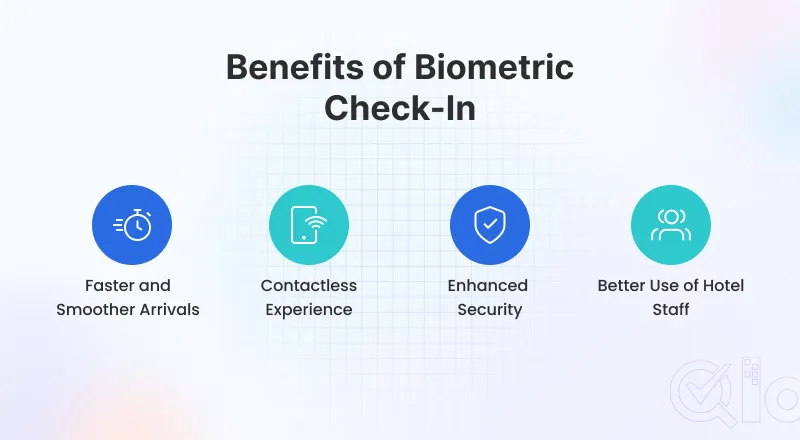
Faster and Smoother Arrivals
After a long journey, guests do not want to wait in long lines. Biometric check-in reduces waiting time and helps guests reach their rooms quickly.
Contactless Experience
Contactless services have become a priority. Biometric systems reduce physical contact with front desks, documents, and key cards.
For insights into how technology is shaping hotel operations, this blog on hospitality tech trends may be helpful.
Better Use of Hotel Staff
With automated identity checks, front desk staff spend less time on paperwork. This allows them to focus more on guest needs.
As a result, service quality improves, and staff feel more satisfied with their work.
Enhanced Security
Biometric traits are unique and difficult to fake. This reduces the risk of data theft threats and unauthorized access.
Due to these benefits, biometric check-in in hotels is gaining popularity rapidly across luxury and business hotels.
Privacy Risks of Biometric Check-In in Hotels
While the advantages are clear, biometric data is extremely sensitive. Unlike passwords, biometric information cannot be changed if leaked.
Major Privacy Risks
1. Data Breaches
If biometric data is hacked, guests face long-term risks. A stolen fingerprint or facial scan cannot be replaced.
2. Lack of Guest Awareness
Many guests are unsure how their data is collected, stored, or used.
3. Misuse of Information
Without clear policies, biometric data could be used beyond check-in, such as tracking guest behavior.
4. Legal Issues
Hotels must comply with stringent data protection laws, such as the General Data Protection Regulation (GDPR). Violations can result in heavy penalties and loss of trust.
Because of these risks, hotels must be careful while implementing biometric check-in.
How Hotels Can Balance Biometric Check-In and Privacy
The success of biometric systems depends on how responsibly they are used. Convenience should never come at the cost of trust.
1. Make Biometric Check-In Optional
Guests should always have a choice. Traditional check-in methods must remain available for those who are uncomfortable with biometrics.
2. Take Clear and Informed Consent
Hotels should clearly explain what data is collected and why. Consent should be simple, clear, and voluntary.
3. Be Transparent
Guests should know:
- What biometric data is stored
- How long is it kept
- Who can access it
Transparency builds confidence and reduces fear.
4. Limit Data Storage
Biometric data should be deleted after checkout unless the guest agrees to keep it for future stays. Short data retention reduces risk.
5. Use Strong Security Measures
Encrypted storage, secure servers, and regular audits are essential. Hotels must work only with trusted technology providers.
Guest Experience Still Comes First
Technology is only useful if guests feel comfortable using it. Some guests love innovation, while others prefer human interaction. Hotels must respect both preferences.
Biometric check-in should improve guest experience, not replace personal service completely. A warm welcome and helpful staff still matter.
When guests feel respected and informed, they are more willing to accept new technology.
The Future of Biometric Check-In in Hotels
As technology improves, biometric systems will become more accurate and secure.
In the future, hotels may use biometrics for:
- Seamless check-out
- Personalized room settings
- Faster loyalty program recognition
However, privacy will always be the key concern. Hotels that focus on ethics and transparency will earn guest trust.
When used wisely, biometric check-in can become a standard feature instead of a risky experiment.
Final Thoughts
Biometric technology is changing how hotels work. It provides the speed, safety, and efficiency that today’s guests expect.
At the same time, biometric data is very personal and needs strong protection.
The key is to find the right balance. Hotels must responsibly use new technology. When done right, biometric check-in offers convenience without losing guest trust.
Hotels that respect privacy, give guests clear choices, and communicate clearly will stand out in today’s digital hospitality world.
As guest expectations change, hotels that use technology thoughtfully will stay ahead of the competition.
Biometric check-in is not only about speed. It helps create a smoother and safer journey from arrival to departure. When used carefully, it reduces stress for both guests and staff.
In the end, trust decides the success of biometric systems in hotels. Hotels that listen to guest concerns, protect data carefully, and stay transparent build long-term relationships.
In a digital world, trust remains the most valuable asset in the hotel industry.
Get In Touch
If you’re ready to elevate your hotel’s operations or have any questions, QloApps is here to assist!
Let’s collaborate to streamline your processes and enhance guest satisfaction.
Discover how QloApps’ Property Management System and Channel Manager solutions can simplify your operations and boost your revenue. Get in touch now!

Be the first to comment.