
Keeping a hotel clean is a significant task. Every day, guests check out, and new guests arrive. Rooms must be cleaned quickly and carefully.
Hotels today need to work faster and smarter. Guests want clean rooms without waiting, and automated housekeeping helps make that possible.
When housekeeping connects with a Property Management System (PMS), hotels can easily see room status, guest check-outs, repair needs, and cleaning schedules in real time.
Automation reduces extra work, saves time, and helps hotel teams be more productive while keeping guests happy.
What Is Automated Housekeeping?
Automated housekeeping is a clever way for hotels to keep rooms clean using easy-to-use software and digital tools.
Instead of writing room numbers on paper or checking each room by hand, staff can see which rooms are clean, dirty, or ready for guests on a screen.
This makes work faster and easier. Hotels stay organized, save time, and ensure guests get clean, ready rooms without any delays.
Difference between traditional and automated housekeeping
Traditional housekeeping is when people do all the cleaning work by hand and manage tasks using paper or verbal instructions.
In hotels, staff may carry printed lists to know which rooms need cleaning.
Automated housekeeping is different because it uses smart systems and simple computer programs to help with the work.
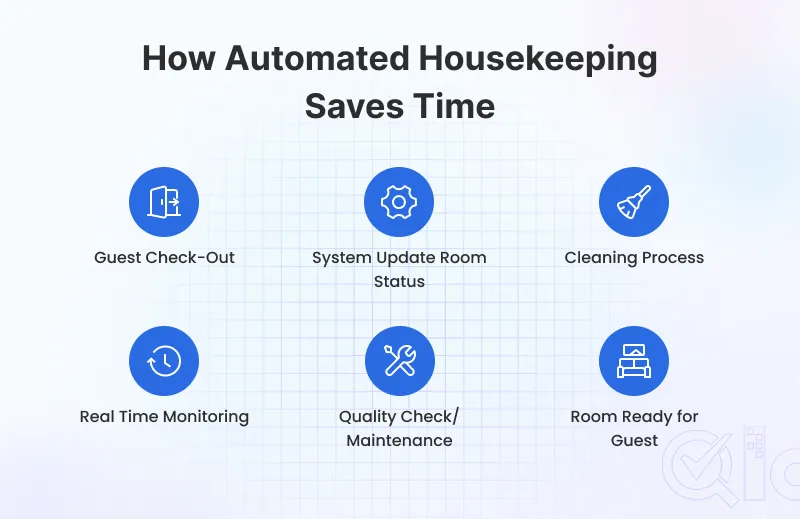
Instead of paper lists, staff can see room status on a screen. When a guest checks out, the system can automatically show that the room needs cleaning.
In traditional housekeeping, everything depends on manual effort. In automated housekeeping, technology helps people work faster, stay organized, and make fewer mistakes.
Ways Automated Housekeeping Saves Time
Smart Scheduling and Task Automation: Hotels can now plan cleaning routines in advance. Each housekeeper knows which rooms to clean and when.
This saves managers from calling or checking repeatedly and helps staff work faster and smarter.
Real-Time Monitoring and Reporting: Managers can see which rooms are clean, dirty, or ready for guests without walking to every floor.
The manager can also put rooms under maintenance when something needs fixing.
Reduced Human Error: With the system giving clear steps, staff can clean every room properly each time, making their work easier and more consistent.
This means fewer mistakes and fewer repeated tasks. Rooms get ready faster, and guests are happier.
Time-Saving Benefits in Different Settings
Automated housekeeping brings big time-saving benefits to hotels, homes, and other places where cleaning is important.
Faster room turnover: After guests leave, rooms can be cleaned quickly so new guests can check in faster. This makes the hotel run more smoothly and helps guests have a happy and comfortable stay.
Digital housekeeping management systems: With housekeeping management tools, staff and managers always know what needs to be done.
Managers can quickly see which rooms are clean, dirty, or need maintenance. This helps them keep track of work without walking around all the time.
Improved staff productivity: Staff can work smarter with the help of automated schedules and reminders.
Housekeepers finish their jobs faster, and everything gets done on time. This reduces stress and helps them feel proud of their work.
Additional Benefits Beyond Time Savings
Cost Efficiency: Smart systems help track cleaning schedules and supplies so hotels spend less money on wasted materials.
Staff can focus on important tasks, which reduces extra work and overtime.
Improved cleanliness standards: With step-by-step guidance from digital tools, housekeepers can clean every room properly.
Consistently clean rooms make guests happy and help the hotel keep a good reputation.
Future of Automated Housekeeping
AI-driven predictive cleaning: The future of hotel housekeeping technology is exciting, as new tools make cleaning faster, smarter, and more efficient.
AI-driven systems can tell which rooms get messy quickly or need more attention. This helps housekeepers focus on the rooms that really need cleaning.
Fully autonomous cleaning systems: With these systems, cleaning becomes faster and more organized. The machines follow schedules and can cover multiple areas at the same time.
Staff no longer need to worry about small or repetitive cleaning jobs.
Instead, they can spend more time making sure guests have everything they need and that rooms are in perfect condition.
Integrate with smart building Ecosystems: Housekeeping systems will connect with smart building devices.
This means cleaning tools can work together with things like smart lights, temperature controls, and security systems.
When a room is ready for cleaning or needs maintenance, the system can send a message to the staff automatically.
Conclusion
Automated housekeeping helps hotels save time and work more efficiently. Cleaning routines are planned in advance, rooms are tracked in real time, and staff get reminders.
Automation also improves productivity. Staff no longer have to repeat small tasks or look through paper logs.
Automated housekeeping saves time, reduces stress, and helps keep every room neat and ready for guests.
Get In Touch
Looking for an easier and smarter way to manage hotel cleaning? QloApps has the tools to help.
Whether you want to streamline room turnover, track housekeeping progress in real time, or improve staff productivity, QloApps provides the tools you need.
Have questions or need support? Feel free to reach out to our QloApps Support Team—we’re here to help!


Be the first to comment.