
Every hotel sits somewhere on a clear technology curve, whether staff notice it or not. Hotel technology maturity describes how far a property has moved from paper toward smart systems.
Knowing your stage matters, since it shapes guest experience, staff workload, and revenue. This guide breaks hotel technology maturity into five clear stages to help you find yours.
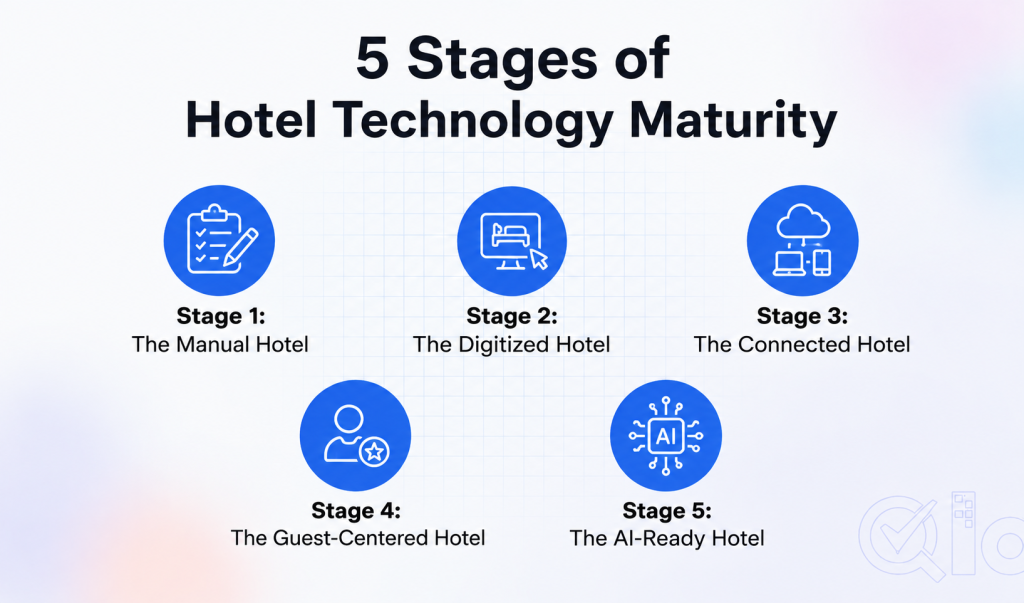
Stage 1: The Manual Hotel
At this stage, most tasks still run on paper, spreadsheets, or memory alone. Bookings get written in a logbook, and rates get updated by hand across a few channels.
Staff spend hours each week on tasks a system could handle in minutes. Errors like double bookings and missed rate updates are common at this earliest stage.
Guests at manual hotels often notice slow check-in and inconsistent service the most. Hotel technology maturity at this level leaves almost no room for guests to help themselves.
Reviews at this stage often mention long waits and mixed-up bookings. Streamlining operations starts the move forward.
Stage 2: The Digitized Hotel
Hotels here have adopted basic software but still run each tool separately. A booking engine, a spreadsheet for housekeeping, and a separate payment system rarely talk to each other.
This stage feels like progress, but the disconnection still causes real friction. Staff still copy data between tools, which keeps errors and wasted time in the picture.
Guests may book online now, but the in-stay experience still feels dated. Hotel technology maturity stalls here until these separate tools get pulled into one system.
Seeing what a full property management system replaces makes this gap clear. Many hotels sit here longer than they think.
Stage 3: The Connected Hotel
This is where real hotel technology maturity starts to show in daily operations. Bookings, rates, payments, and guest data finally live inside one connected system.
Staff stop re-entering the same information across five different logins. This single shift alone tends to cut daily admin work by a noticeable margin.
Guests also start to feel this shift, often without knowing exactly why. Faster check-in, accurate rates, and fewer mix-ups all trace back to this one change.
Hotels here often add mobile key technology as a natural step. This tends to lift reviews fast.
Stage 4: The Guest-Centered Hotel
Connected systems here start actively shaping the guest experience, not just backend work. The hotel now uses guest data to personalize offers, upgrades, and communication.
This stage is where hotel technology maturity starts paying off in reviews and repeat stays. Guests notice when a hotel remembers their preferences from a past visit.
Service improves fast once staff see full guest history. A look at smart service tools shows why.
Positive reviews increase here because guests feel recognized rather than processed. Word-of-mouth referrals also tend to climb once this stage is reached and sustained.
Stage 5: The Predictive, AI-Ready Hotel
At the top of the curve, hotels use AI to predict demand and guest needs. Pricing adjusts automatically, staffing follows forecasted occupancy, and messaging reaches guests at the right moment.
This is the clearest sign of full hotel technology maturity across every department. Few hotels reach this stage fully, but the ones that do pull ahead fast.
Reviewing current hotel tech trends shows how AI is reshaping this top tier. Hotels here treat tech as a growth engine, not a chore.
Guests at this stage rarely think about the tech at all, which is the real goal. Everything simply feels fast, personal, and easy from booking through checkout.
Why Footfall and Reviews Follow This Curve
Guests notice friction even when they can’t name the cause behind it. Low hotel technology maturity shows up as slow service, and slow service shows up in star ratings.
Hotels further along this curve tend to earn more repeat bookings over time. Positive reviews compound too, since each good stay makes the next booking decision easier for someone new.
Improving housekeeping with smart tech is a fast way to lift cleanliness and staff speed. Small wins show up in reviews fast.
How to Move Up a Stage
Start by mapping which stage your hotel actually sits in today, honestly. Most owners overestimate their stage until they compare daily workflows against each level here.
Pick one weak point, like disconnected booking tools or manual check-in, and fix it first. Small, focused upgrades move a hotel forward faster than one huge, delayed overhaul.
Track guest reviews before and after each upgrade to measure real impact. Reviews tend to shift noticeably once a hotel moves from Stage 2 into Stage 3.
Final Thoughts
Hotel technology maturity is not about owning the newest gadget on the market. It’s about how well your systems, staff, and guest experience work together as one.
Most hotels can move up one full stage within a year with focused effort. The properties climbing this curve fastest are already pulling ahead on footfall and reviews.
Get In Touch
Ready to take your hotel to the next stage of technology maturity? Get in touch with the QloApps team to explore the right solutions for your property.
If you have any suggestions, you can share them on the QloApps forum. For any technical assistance, kindly raise a ticket.

Be the first to comment.