
A single fake email can cost a hotel far more than a bad review ever could. Hotel phishing has become the top way attackers break into hotel systems this year.
These emails no longer look clumsy or obvious like older scams once did. Hotel phishing attempts now mimic OTAs, vendors, and even a hotel’s own general manager convincingly.
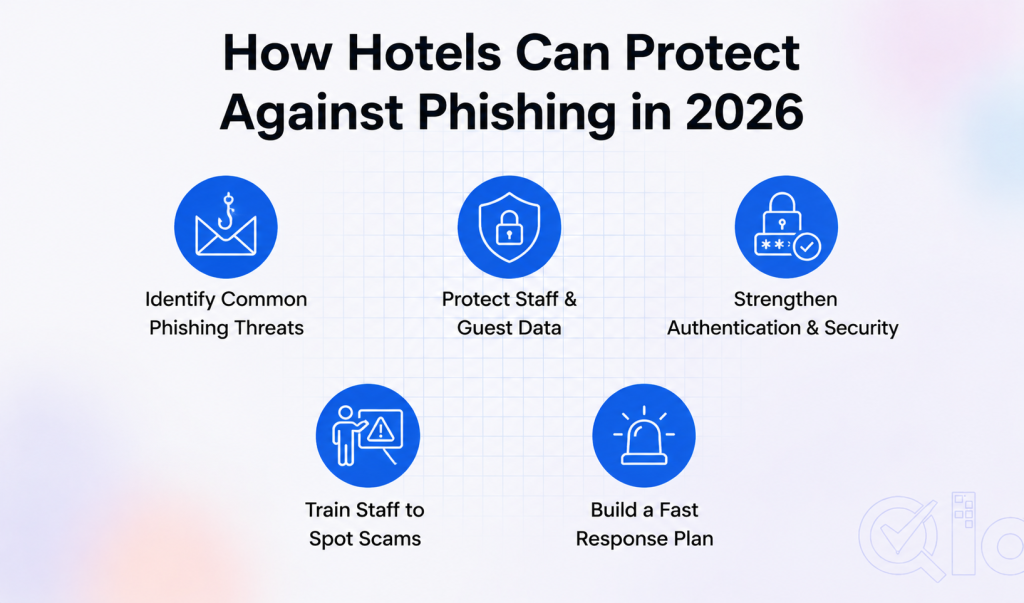
This guide breaks down how hotel phishing works and how staff can stop it. It also covers the tools and habits that keep guest data safe in 2026.
Why Hotels Are a Prime Target
Hotels handle huge volumes of sensitive data across many connected systems each day. Names, passport numbers, and card details all pass through booking, PMS, and payment tools.
High staff turnover makes hotel phishing especially effective compared to other industries. New staff rarely know which requests are normal and which ones are fake.
Fast-paced communication also works in an attacker’s favor here. A front desk team juggling calls and check-ins has little time to double-check every single email.
How Hotel Phishing Actually Works
Most attacks start with an email that looks like it came from a trusted source. It might appear to be from Booking.com, a vendor, or a hotel’s own head office.
A common version warns staff that a reservation will cancel unless they confirm login details fast. That fake urgency pushes people to click before they think it through.
Attackers also target guests directly through fake booking confirmations and payment requests. Hotel phishing extends well beyond staff inboxes into guest-facing messages too.
Some campaigns even use malicious PDF attachments disguised as reservation inquiries. Opening one can quietly install malware built to extract guest data from hotel systems.
The Real Cost of a Successful Attack
A single breach can compromise thousands of guest records in one incident. That kind of exposure often leads to identity theft risk for guests long after the attack ends.
Ransomware frequently follows a successful phishing attempt inside hotel systems. Encrypted files can shut down check-in, billing, and room access all at once.
A deeper look at data breaches in hotels shows how fast these costs add up. Guest trust also takes a lasting hit.
Core Defenses Every Hotel Needs
Multi-factor authentication is a top defense here. See setting up MFA for hotels for the rollout.
Even if a password gets stolen, MFA still blocks most unauthorized access attempts. This single step alone stops a large share of successful attacks before they start.
PCI compliance also limits damage from payment scams. Reviewing PCI compliance for hotels shows how to keep card data safe.
Reviewing common cybersecurity threats helps teams spot warning signs earlier. Awareness alone stops many attacks before real damage happens.
Training Staff to Spot Hotel Phishing
Annual training slideshows rarely stick with staff for very long. Short, realistic exercises work far better than one long session once a year.
Simulated phishing emails let staff practice spotting suspicious requests safely. Following up with quick, supportive coaching helps the lesson actually stick.
Make reporting a suspicious email as easy as clicking one button. The faster IT hears about a suspicious message, the faster they can contain any real threat.
Protecting Guest Data and Staying Compliant
Guest data protection ties directly into rules like GDPR and PCI DSS. A guide on hotel data privacy compliance covers what hotels need.
Encrypting stored data and limiting staff access both reduce risk sharply. A connected property management system with SSL keeps this built in.
Bookmarking OTA login pages instead of searching for them avoids one common trap. This small habit blocks a surprising number of fake login page attempts.
Signs Every Front Desk Team Should Know
A request for payment through text or a random third-party link is rarely legitimate. OTAs almost never ask guests or staff to pay outside their normal, established channels.
Urgent language is one of the clearest signs of hotel phishing in action. Real vendors rarely threaten instant cancellation over one unanswered email.
Mismatched sender addresses are another easy tell once staff know to check. A domain that looks almost right, but not quite, is a common trick worth training staff to catch.
Building a Response Plan Before an Attack Hits
Every hotel needs a written plan for what happens after a suspected phishing attempt. Waiting until an actual incident to figure this out wastes valuable, damage-limiting time.
The plan should name who gets notified first and how systems get isolated fast. A clear chain of command turns hotel phishing chaos into a controlled, manageable response.
Final Thoughts
Hotel phishing is not slowing down in 2026, and attackers keep getting more convincing. Staff awareness, strong authentication, and compliant systems together form the real defense.
No single tool stops every attempt on its own. Hotels that build these habits into daily routine, not just annual training, will stay ahead of most attacks this year.
Get In Touch
Looking to strengthen your hotel’s digital security? Get in touch with the QloApps team to explore reliable solutions for managing your hotel operations and protecting your business.
If you have any suggestions, you can share them on the QloApps forum. For any technical assistance, kindly raise a ticket.

Be the first to comment.