
Hotel room pricing was not always this complicated. Earlier, hotels fixed room prices and kept them the same for a long time.
Rates were changed only during busy seasons or special days. At that time, this method was enough.
But in 2026, things are very different. Guests check prices online all the time. Competition is high in almost every city.
Dynamic pricing helps hotels change prices based on demand and market situations. Many hotels are now moving from manual pricing to AI-based pricing systems.
What Is Dynamic Pricing in Hotels?
Dynamic pricing means hotel room prices do not stay fixed. Prices change based on different conditions.
When many people are booking rooms, prices usually increase. When fewer people are booking, prices may decrease.
Hotels also consider the season and market demand. This helps them decide how much to charge at a given time.
Dynamic pricing allows hotels to respond to changes instead of waiting. It also helps them compete with other hotels nearby.
Manual Dynamic Pricing: How Hotels Traditionally Managed Rates
In the past, hotels managed pricing manually. Hotel managers checked booking numbers and occupancy levels.
They also reviewed seasonal trends and upcoming dates before adjusting room rates.
In most cases, prices were updated weekly or only during peak seasons after checking competitor rates on travel websites, which made the whole process slow and time-consuming.
Additionally, everything was done by hand, and errors were common. As the hotel market started changing faster, this method became difficult to handle.
Why Manual Pricing No Longer Works in 2026
Manual pricing does not work well in today’s hotel market. Demand can change within hours.
Competitor prices change many times in one day. It is not easy for hotel staff to track all this manually.
Decisions are often based on limited information. This can lead to pricing mistakes. Rooms may be priced too high or too low.
Manual pricing takes time and effort. In 2026, hotels need faster and flexible pricing methods. Many now use automated tools like revenue management systems.
Key Factors Influencing Hotel Dynamic Pricing
1) Demand & Seasonality: Demand changes during different times of the year. Holidays and peak seasons bring more guests. Prices usually go up during these periods.
2) Competitor Rates: Hotels often check the prices of nearby hotels. If competitors change their rates, hotels adjust their own prices. This helps them stay competitive and avoid losing bookings.
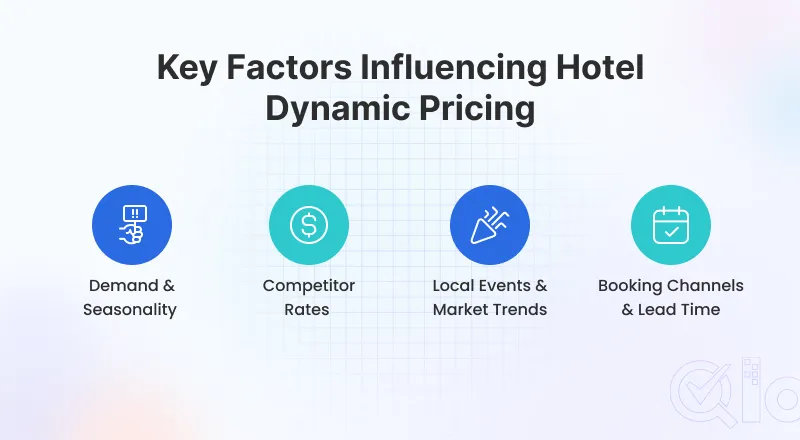
3) Local Events & Market Trends: Conferences, concerts, and festivals boost room demand. Hotels raise prices during such events. Market trends also affect pricing.
4) Booking Channels & Lead Time: Room prices may vary based on booking source. Direct bookings and OTA bookings can have different prices. Rooms booked closer to the stay date often cost more.
What Is AI-Powered Dynamic Pricing?
AI-powered dynamic pricing uses software to update room prices automatically. The system looks at different types of data.
This includes demand, booking activity, season, and competitor prices. It also studies past booking data.
Based on this, prices are adjusted. These updates happen quickly. Hotel staff do not need to change prices manually every time.
This helps hotels respond faster to market changes. It also reduces pricing errors caused by manual work.
How AI Improves Hotel Pricing Decisions
AI-powered pricing helps hotels adjust prices on time. It studies booking trends and demand changes.
The system can notice changes early. Prices are adjusted on time. AI also checks competitor prices and local demand together.
This helps reduce wrong pricing decisions. Pricing becomes more accurate. Hotel staff can spend less time on rates and more time on daily operations and guests.
Manual vs AI Pricing: Key Differences
Manual pricing and AI pricing work in very different ways. In manual pricing, hotel staff check data and change prices by hand.
This process takes time and depends on personal judgment. Changes are usually slow and limited.
In AI pricing, the system updates prices automatically using real-time data. It looks at demand, bookings, and competitor rates at the same time.
Prices can change quickly without human effort. AI pricing is faster, more accurate, and easier to manage compared to manual pricing.
Conclusion
Hotel pricing has changed a lot over the years. Manual pricing worked earlier, but it is no longer enough in 2026.
The hotel market changes quickly. Hotels need faster pricing decisions. It reduces manual effort and pricing mistakes.
Hotels that use AI pricing can stay competitive and improve revenue. In the future, smart pricing will become a normal part of hotel operations.
Get In Touch
If you’re ready to elevate your hotel’s operations or have any questions, QloApps is here to assist!
Let’s collaborate to streamline your processes and enhance guest satisfaction.
Discover how QloApps’ Property Management System and Channel Manager solutions can simplify your operations and boost your revenue. Get in touch now!

Be the first to comment.