
Today’s digital world sees most hotel guests visit a hotel website prior to making reservations.
If the hotel website is slow or difficult to use, many times guests will abandon the reservation. This is when User Experience (UX) plays a major role.
A fast-loading hotel website with an easy and logical user interface helps guests quickly locate the information they need to reserve their hotel room without any confusion.
A positive UX develops a sense of trust, saves guests time, and allows guests to feel comfortable when reserving a hotel room.
The Digital First Impression in the Hospitality Industry
For most hotels, the website is the first place where guests form an opinion. When someone opens a hotel website, they decide within a few seconds if they want to stay or leave.
If the site looks clean, loads fast, and is easy to use, it creates a good first impression. But if the website is slow or confusing, guests may lose interest quickly.
In the hospitality industry, this first digital impression matters a lot because it affects trust. A positive UX helps guests feel confident and makes them more likely to continue with the booking.
How Website Speed and User Experience Impacts Hotel Conversions
Website speed plays a big role in hotel conversions. When a hotel website takes too long to load, guests often lose patience and leave.
- Page Load Time and Guest Patience: Page load time has a direct effect on guest patience. When a hotel website takes time to open, many visitors leave without waiting. Guests usually want quick results and smooth browsing.
- Mobile Speed: Many travelers search for hotels on their phones. They often do this while traveling or planning quickly. If a hotel website is slow on mobile, guests may close it and move to another option.
- SEO Benefits of Faster Hotel Websites: Website speed also helps with SEO. Search engines prefer websites that load faster. A fast hotel website can rank higher in search results.
The Direct Link Between UX and Higher Booking Rates
A clear connection exists between good user experience (UX) and improved booking rates.
When guests find a hotel website easy to navigate with clear pricing and availability, they trust it more and book. QloApps’ booking engine ensures a smooth, simple, and reliable experience.
Simply put, when potential customers perceive that it’s easy and straightforward to book, the likelihood of converting that visitor into a paying customer increases.
How Hotel PMS and Booking Engines Support Better User Experience
Hotel PMS and booking engines work together to make hotel websites easier, faster, and smoother for guests to use.
- Simple Navigation and Clear Booking Flow: Simple navigation is very important for hotel websites. Guests should move from one page to another without confusion. The booking process should be clear and short.
- Visual Design, Trust Signals, and Content Clarity: Visual design plays a big role in User Experience. Clean layouts and good images make the website look professional. Trust signals like reviews, ratings, and secure payment signs help guests feel safe.
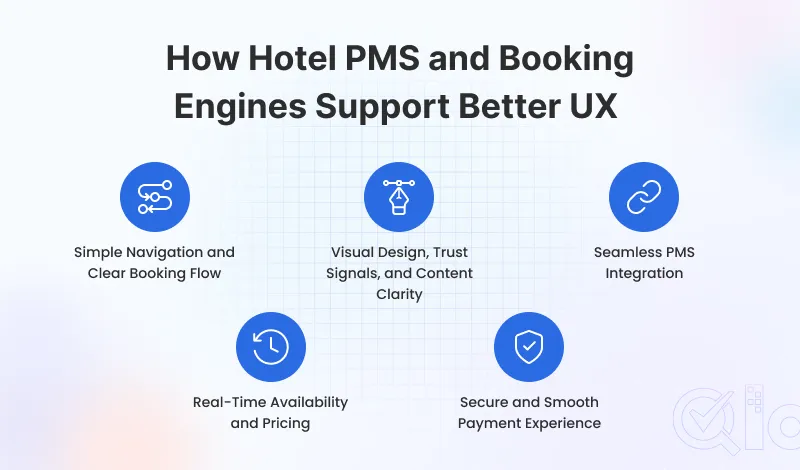
- Seamless PMS Integration: A hotel PMS helps manage bookings, rooms, and guest details in one place. When the PMS(Property management system) is well integrated with the website, everything works smoothly. Guests can see correct information without delays or errors.
- Real-Time Availability and Pricing: Guests expect to see real and updated room availability. Real-time pricing helps them trust the website. If prices or room status are wrong, guests may leave the site.
- Secure and Smooth Payment Experience: Payment is the final step in the booking process. If it feels unsafe or slow, guests may cancel. A secure payment system builds trust. A smooth payment flow also saves time.
Best Practices to Optimize Website Speed and UX
Websites for hotels can achieve faster page loading, better user experience (UX), and overall improved website performance through several best practices.
Image compression reduces load time by shrinking image sizes. A clean website design without heavy elements also helps pages load faster and improves user experience.
A well-designed UX focuses on a simple, easy-to-understand layout with clear buttons and menus that guide users through a short and seamless booking process.
In fact, many hotels unknowingly repeat design errors that negatively impact usability and conversions, as discussed in UX Mistakes You Are Making on Your Hotel Websites.
Conclusion
Ultimately, hotel bookings are highly impacted by website speed as well as user experience.
When a hotel offers a speedy, efficient, low friction user interface (UI), it puts guests at ease and builds trust.
Guests can quickly locate the information they desire and book a room without hassle. Improved UI decreases guest frustration and saves them time.
Hotels that optimize their website will experience increased success in today’s competitive landscape within Hospitality.
Get In Touch
If you’re ready to elevate your hotel’s operations or have any questions, QloApps is here to assist!
Let’s collaborate to streamline your processes and enhance guest satisfaction.
Discover how QloApps’ Property Management System and Channel Manager solutions can simplify your operations and boost your revenue. Get in touch now!

Be the first to comment.