
Hospitality for remote work teams and off-site hotels is transforming how companies meet and collaborate.
Many teams now work from home or from different cities. When they meet in person, those days need to be easy, useful, and memorable.
Why In-Person Time Still Matters
Remote workers depend on chats, emails, and video calls. Still, some things are easier when people share the same room.
In‑person time helps teams fix problems faster and build trust. Offsite Hotels give them that chance. With the right support, one or two days together can create strong results that last for months.
Designing Spaces for Remote-Ready Hospitality
A hotel should not feel like a normal meeting in a dull space. Remote‑ready hospitality starts with the way a property is set up. Teams need quiet corners, open areas, and flexible rooms.
They should be able to move from a workshop to a casual talk without stress. Hospitality for remote work teams means thinking about the whole day, not just one session on the agenda.
The Role of Reliable Connectivity
Good internet is the first must‑have. Hotel Wi‑Fi should be strong in guest rooms, meeting rooms, and shared spaces.
People may need to join a call from their room early in the morning. Others may check emails from a terrace or lounge.
Simple details like many power outlets, comfortable chairs, and good light help people stay focused and relaxed.
Flexible and Functional Hotel Design
The hotel design matters too. A single fixed layout often does not work for full‑day hotels. Teams need rooms that can change quickly from theater style to small groups.
Soft seating in corners and outdoor spots invites quieter talks. When the building supports movement and choice, people feel freer and creative.
Seamless Technology for Productive Collaboration
Hotel Technology should be simple to use. Screens, speakers, and cameras must work with common laptops and devices.
Clear sound and good microphones help everyone hear, including those joining online.
It should not take ten minutes to get a slide deck on the screen. When tech “just works,” teams can focus on ideas instead of cables.
Service That Supports Flexibility
Service has a big impact on the guest experience of a hotel. Remote workers like flexibility and control in their day.
Staff should be friendly, fast, and ready to adapt. If a team wants to extend a session, move chairs, or shift a break, the property should handle this with ease.
Hospitality for remote work teams is about support that feels smooth, not strict.
Food That Fuels Focus and Energy
Food can make or break the day. Heavy lunches often make people tired later.
Lighter meals with fresh ingredients keep energy steady.
It helps to offer clear options for different diets like vegetarian, vegan, or gluten‑free. Snacks, fruits, and drinks placed near work areas reduce long breaks and keep people comfortable.
Wellbeing and Balance for Remote Workers
Health & Wellness is very important for remote workers. Many spend long hours at home in front of a screen.
A hotel is a chance to reset the body and mind. Simple features such as a garden, a walking path, or a quiet room give people space to breathe.
Short guided sessions like stretching, yoga, or a calm walk can fit between meetings and reduce stress.
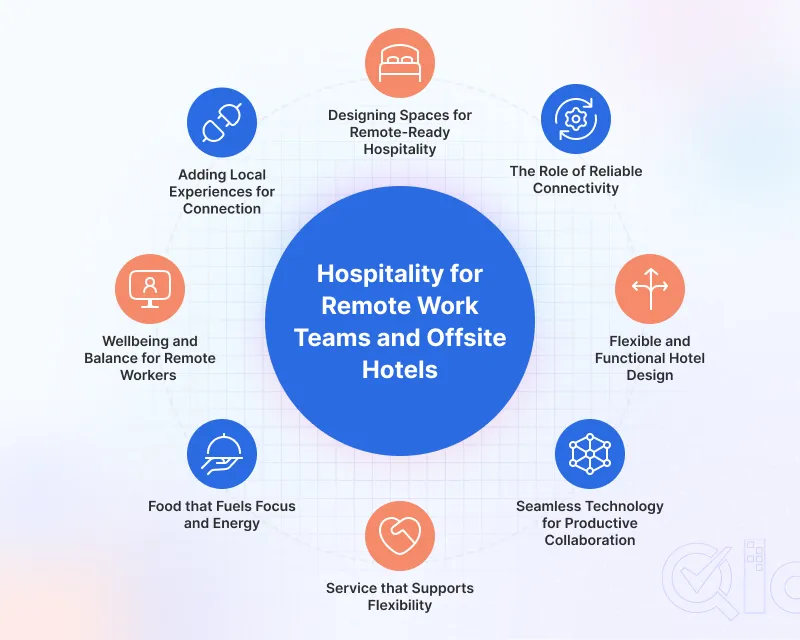
Adding Local Experiences for Connection
Local experiences make hotels special and memorable. Instead of filling every hour with meetings, teams can try a local activity.
This might be a cooking class, a short hike, a city walk, or a visit to a local market.
When colleagues share new experiences, they learn about each other as people, not just job titles. These memories help build trust that continues online.
Planning Support That Simplifies Logistics
Planning support is another key part of hospitality for remote work teams. Many organizers do this work in addition to their normal tasks.
A dedicated contact at the property can make everything easier.
That person can help shape the agenda, suggest times for breaks, and share ideas that have worked for other groups.
Clear emails and guides before arrival help guests know what to expect and what to bring.
Comfortable Rooms for Rest and Privacy
Room setup also affects how people feel. Some teams prefer single rooms so that everyone has space to rest.
Others may choose shared rooms to save costs or increase bonding. Quiet rooms, good beds, and dark curtains help guests sleep well.
A small desk or a table in each room can help those who need to catch up with different time zones or tasks.
How Hotels Can Market to Remote Teams
Properties that want to attract this type of guest should describe their offer in simple, direct language.
It helps to state clearly that they provide hospitality for remote work teams and off-site hotels.
They can list things like Wi‑Fi speed, number of meeting rooms, wellness options, and planning support. Real examples of past hotels give planners confidence.
Sustainable Practices That Appeal to Remote-First Companies
Many remote‑first companies also care about the planet and the local community.
Venues that reduce waste, save energy, and support local suppliers will stand out.
Sharing these efforts honestly and clearly builds trust. Teams feel better about traveling when they know their stay has a lower impact and helps the local area.
The Future of Remote Work Hospitality
As remote work grows, the need for smart, human‑centered gathering spaces will grow too.
Teams will keep searching for places that understand how they work and what they value. The properties that succeed will be those that truly focus on hospitality for remote work teams.
When space, service, and mindset all support this goal, hotels become more than a break from routine. They turn into powerful shared moments that strengthen people, teams, and results over time.
Conclusion
Hospitality for remote work teams and off-site hotels is no longer a niche idea. It is becoming an important part of how modern companies connect, plan, and grow.
While remote tools handle daily tasks, in-person time creates deeper trust, faster problem-solving, and stronger team bonds.
Hotels that succeed in this space understand that it is not just about meeting rooms or Wi-Fi.
It is about designing flexible spaces, offering reliable technology, serving food that supports focus, and creating an environment where people feel comfortable, valued, and inspired.
When service is adaptable and planning is simple, teams can use their limited time together in the best possible way.
Looking ahead, remote-first companies will keep seeking places that align with their values—wellbeing, sustainability, simplicity, and human connection.
Hotels that truly commit to hospitality for remote work teams will stand out.
They will not just host meetings; they will help create meaningful experiences that teams remember long after they return to their screens.
Get In Touch
If you’re ready to elevate your hotel’s operations or have any questions, QloApps is here to assist!
Let’s collaborate to streamline your processes and enhance guest satisfaction.
Discover how QloApps’ Property Management System and Channel Manager solutions can simplify your operations and boost your revenue. Get in touch now!

Be the first to comment.