
Finding the right balance between OTAs and direct bookings is not an easy task for most hotels.
When hotels manage both effectively, they gain greater visibility, higher profits, and build a strong, recognisable hotel brand.
The following blog post will offer examples of simple and effective strategies that will enable you to manage both simultaneously without confusion.
Why OTAs and Direct Bookings Matter for Hotels
Both OTAs and direct bookings are two of the fundamental building blocks of a successful hotel’s business model; both serve a purpose.
OTAs help hotels get a lot of visibility because many people use them every day to search and compare hotels.
Direct bookings, on the other hand, help hotels earn more because there are no commission charges. Both should work together to support the hotel.
Role of OTAs and Direct Bookings in Hotel Growth
OTAs and direct bookings help a hotel grow in different ways. OTAs act like an online shop window where many people can see your hotel.
Online travel agents (OTAs), such as Expedia and Booking.com, provide an opportunity for your property’s visibility to those who have never heard of or seen the hotel.
Direct bookings through your hotel website build brand trust and help guests clearly understand your services and offerings.
It gives full access to guest information, making it easier to personalise their stay and offer extra services.
When a hotel uses both wisely, it creates a steady and strong flow of reservations.
Benefits and Limitations of OTAs and Direct Bookings
OTAs boost your hotel’s online visibility by allowing travellers to compare prices, photos, and reviews easily, helping generate bookings even during low-demand periods.
Direct bookings, on the other hand, help hoteliers to enjoy more profit. Because no commission is paid to OTAs when a guest books directly from your website.
But both channels have some limitations too:
OTAs charge high commissions, while direct bookings require ongoing marketing and website effort. This is why hotels must balance both channels instead of relying on just one.
How to Find the Right Mix Between OTAs and Direct Bookings
The right balance varies for every hotel and depends on location, guest type, seasonality, and the strength of the hotel’s website and online presence.
The information you gather will allow you to understand:
- The number of booked reservations from each OTA you use
- The dollar amount of commission you are paying to each OTA
- The number of unique visitor views each OTA receives on its website
- The number of visitors who complete a reservation on each OTA’s website
- The number of repeat guests staying at each hotel you manage
Knowing this information allows for better planning and allocation of resources.
Strategies to Boost Direct Sales While Still Using OTAs
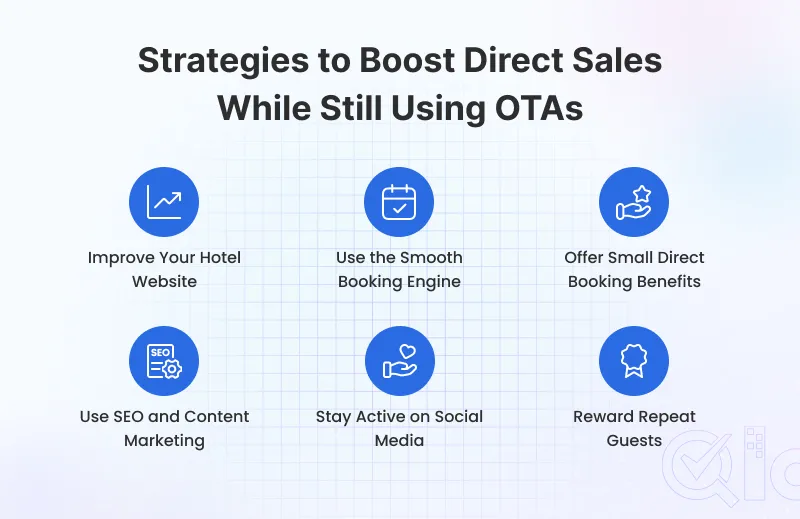
Improve your website and booking process to make guests choose direct bookings.
Simple ways to do this:
- Make your website fast, easy, and mobile-friendly.
- Use a smooth booking engine.
- Offer small perks like early check-in, late check-out, or free upgrades.
- Use SEO and blogs to attract visitors.
- Stay active on social media.
- Give simple loyalty rewards for repeat bookings.
- These steps help you increase direct bookings while still benefiting from OTAs.
How to Use OTAs and Direct Bookings Smartly Together
Using OTAs and direct bookings together helps attract new guests and encourage repeat direct bookings, building brand loyalty and maximizing return on investment.
Once you find the OTAs that work best for your business, remove any OTAs that are not producing sales for your hotel. When both are managed properly, your hotel gets a steady flow of guests all year.
Common Mistakes Hotels Make With OTAs and Direct Bookings
Common mistakes include offering lower prices on OTAs, poor website maintenance, over-reliance on OTAs, ignoring guest data, and neglecting search engine optimisation and social media.
Making a conscious effort to eliminate these mistakes will help a hotel find a balance between OTA bookings and direct reservations, increase its earnings, and encourage repeat business from guests.
Conclusion
Balancing both isn’t about choosing one over the other—it’s about using both in a smart way.
OTAs help you reach more people, while direct bookings help you keep more profit and build trust with your guests.
By tracking key metrics and avoiding common mistakes, hotels can manage both channels smoothly, increase bookings, strengthen their brand, and encourage repeat guests.
Get in touch
If you’re ready to elevate your hotel’s operations or have any questions, QloApps is here to assist!
Let’s collaborate to streamline your processes and enhance guest satisfaction.
Discover how QloApps’ Property Management System and Channel Manager solutions can simplify your operations and boost your revenue. Get in touch now!

Be the first to comment.